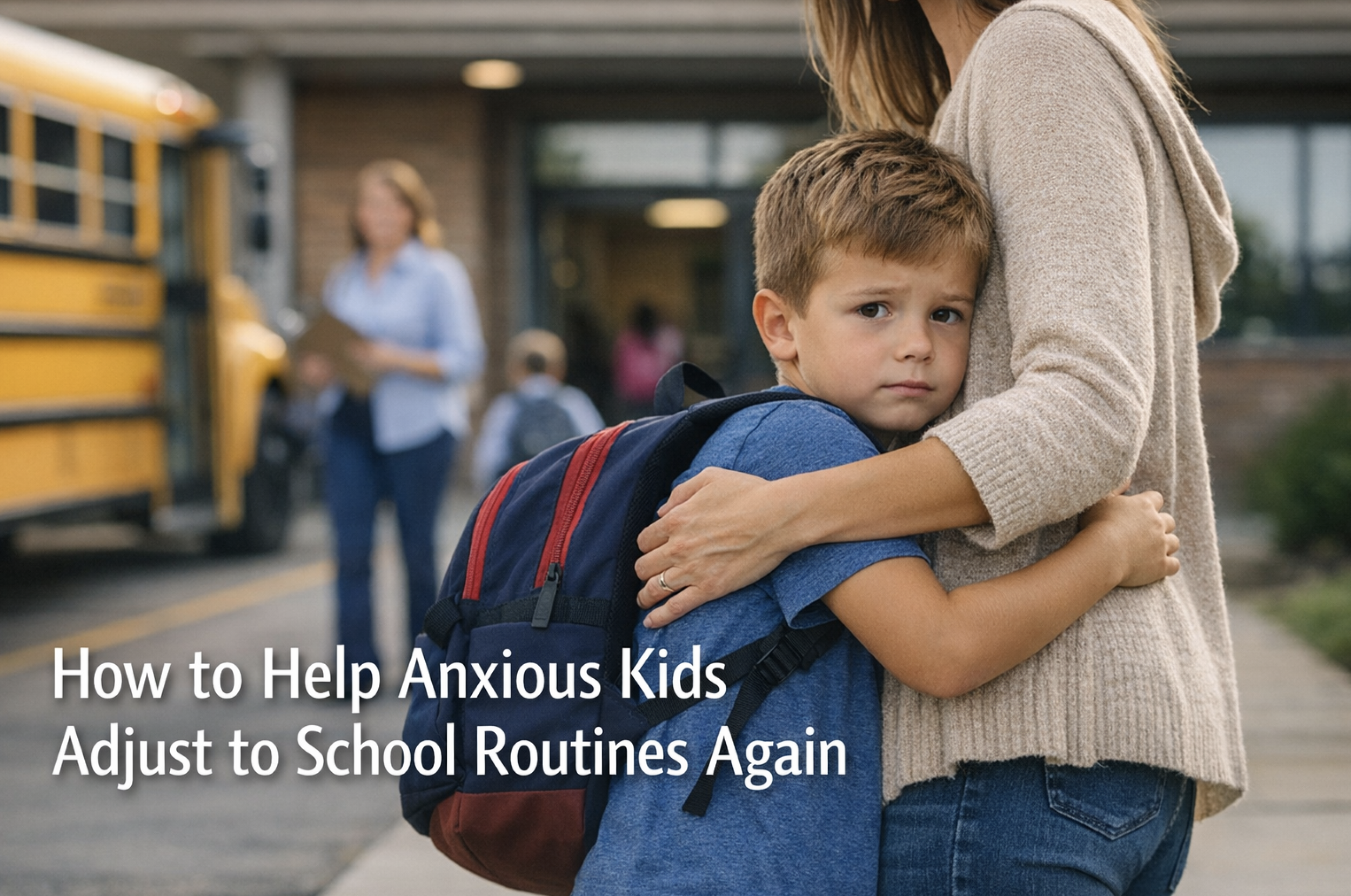
How to Help Anxious Kids Adjust to School Routines Again

For a lot of families around Jackson, TN, the start of a new school routine brings a mix of things at once. A little excitement. A little stress. Sometimes a child who was fine all summer suddenly gets clingy, complains of a stomachache, or melts down at bedtime the week school starts back up.

We see it all the time in our office. Parents come in wondering if something is wrong, or if their child is just having a rough adjustment. Usually, it’s a little of both. New schedules can shake up even pretty easygoing kids. And when you add early mornings, busy classrooms, back-to-school germs, sports season, and a full family calendar, things can get messy fast.

The good news is that anxious kids usually do better with a steady routine, a calm grown-up, and a few simple supports at home. Not perfection. Just consistency. That goes a long way.

Why school routines can feel so big to kids

Adults may see school as familiar. Kids often feel every little change. New teacher. New classroom. Different pickup line. Earlier bedtime. A packed lunch instead of a favorite snack. Even a child who likes school can feel wobbly when the rhythm of the day changes.

Some children show that stress in obvious ways. Others don’t. A child might suddenly cry at drop-off, ask the same questions over and over, or start complaining that their head hurts every morning. We also see kids who get quieter, more tired, or more irritable. A few start waking up overnight and need extra reassurance before they’ll go back to sleep.

That doesn’t always mean there’s a medical problem. But it does mean they’re feeling something real.

Keep the routine boring in the best way

Kids do better when they know what’s coming. The more predictable the day feels, the safer it seems. That can start the night before school, not just in the morning.

Try keeping the basics steady: bedtime, wake-up time, breakfast, backpack by the door, shoes in the same place. Nothing fancy. Just the same steps, in the same order, most days. It helps children who worry about transitions feel a little more settled.

For younger kids, a simple visual routine can help. Something as plain as brushing teeth, putting on clothes, eating breakfast, then heading out the door. Older children may not want a chart, but they still like knowing what’s happening next.

And yes, some mornings will still be chaos. That’s life. But a usual routine gives kids a place to return to when things feel off.

Watch for stress showing up in the body

Kids don’t always say, I’m anxious. They usually say, My stomach hurts. Or I’m tired. Or I can’t eat. In our office, we hear that a lot, especially during back-to-school season and again when winter illness season starts rolling in.

Sometimes those symptoms are from nerves. Sometimes they’re from a virus. Sometimes it’s both. A child may wake up congested from a cold, then worry because school is starting and they don’t feel like themselves. A toddler with a stuffy nose may refuse breakfast or have a rough morning simply because they can’t breathe well enough to eat comfortably.

That’s where parents end up doing the guessing game. Is this anxiety? A stomach bug? Seasonal allergies? A fever? A lingering cough? We get it. Families in Jackson, Madison County, TN and nearby places like Medina, Humboldt, Milan, Lexington, and Brownsville are trying to sort that out every day.

If your child is mostly acting like themselves once they’re up and moving, that can be a good sign. If they’re not drinking well, having repeated vomiting, struggling to breathe, or running a fever that keeps climbing, that’s a different story.

Sleep matters more than people think

Sleep and anxiety go together in a tricky way. Kids who are nervous about school may have trouble falling asleep. Then the next day they’re overtired, cranky, and even more sensitive. It becomes a loop.

Try to start the wind-down earlier than you think you need to. Dim lights. No big last-minute homework battles if you can help it. Keep screens low or off near bedtime if your family can swing that. A tired child often feels everything harder.

We also hear from parents who say their child wakes up with a headache or stomachache on school days but seems okay on weekends. That pattern can point to stress. Not always, but often enough that it’s worth noticing.

If sleep is getting rough for more than a week or two, or your child is having frequent nightmares, nighttime panic, or big bedtime battles, bring it up at a wellness visit. We talk about this kind of thing all the time. It’s part of child development, not some separate category kids are supposed to manage alone.

Don’t ignore the real illnesses either

One thing school routines reliably bring with them: germs. Lots of them.

Back-to-school germs are a real thing. So are stomach bugs spreading through classrooms, fevers that show up on a Friday night, and coughs that seem to hang on for weeks. During sports season, we also see busy kids running hard, not drinking enough water, and then feeling crummy on top of school stress. In the heat of a West Tennessee summer, dehydration can sneak up fast. In winter, coughs and congestion can feel never-ending.

When a child is anxious, it’s easy to wonder if every symptom is stress. But sometimes a symptom is just a symptom. A toddler waking up congested might have allergies, a cold, or both. A baby struggling to feed during illness may simply not have the energy to eat well because their nose is stuffed up. A school-age child with fever and body aches may need to stay home and be seen.

If you’re staring at your child at 11 p.m. and searching online for answers, you’re not alone. Most parents do it at least once. The trick is knowing what to watch for and when to call instead of guessing all night.

What warning signs deserve a call

Some symptoms are pretty common and can be watched at home for a bit. Others need a closer look. Trust your gut, especially if your child just seems off in a way you can’t put into words.

Call us if your child has trouble breathing, won’t drink, has signs of dehydration, has a high fever that isn’t coming down, seems unusually sleepy or hard to wake, has repeated vomiting, severe belly pain, or symptoms that are getting worse instead of better.

For babies, we want a lower threshold. Feeding changes, dehydration, fever, or unusual fussiness can matter more quickly in newborns and young infants. If you’ve got a newborn at home and something feels off, don’t sit on it. That’s what newborn care near me visits are for. Well, that and all the little questions parents have at 2 a.m. when baby won’t settle.

For older kids, a lingering cough, sore throat, or repeated stomachaches can be tricky. If it’s keeping them from school, sleep, eating, or normal play, it’s worth checking in.

What helps anxious kids most at home

Keep your own tone calm, even if you’re stressed inside. Kids read that stuff instantly. If you act like every morning is a disaster, they’ll believe school must be something to fear.

Try shorter reassurance. Not long speeches. A simple, I know this feels hard, but you’ve done hard things before, often works better than trying to talk them out of their feelings.

Let them pack one comforting item if it’s allowed. A note in the lunchbox can help. So can giving them a job in the morning, like carrying their water bottle or checking that their folder is in the backpack.

Also, watch the after-school crash. Some kids hold it together all day, then unravel at home. That doesn’t mean they were pretending. It means they felt safe enough to let go.

A snack, water, and a little quiet time after school can make a big difference. Especially for younger kids, or children who are already dealing with seasonal allergies, a cold, or a packed schedule with sports, homework, and practice.

A real local example from our day-to-day

Not long ago, we saw a little one from Madison County, TN who had just started a new school year. Her mom thought she might be getting sick because she had belly pain every school morning and refused breakfast. By afternoon she was mostly fine. No fever. No vomiting. Sleeping okay on weekends.

After talking it through, it looked more like school anxiety than a stomach virus. Her family tightened up her bedtime, got the morning routine more predictable, and checked in with the teacher about drop-off. A few weeks later, things were much smoother.

We see the same kind of pattern with older kids in Jackson, TN too, especially around sports physical season and the start of fall activities. A child may be excited about basketball, football, cheer, or band, but still feel overwhelmed by the mix of practices, schoolwork, and early mornings. Sometimes that shows up as stomachaches, headaches, or a sudden need to stay close to a parent.

Most of the time, a steady routine and a little support help. Sometimes we need to dig a little deeper. That’s okay too.

Wellness visits are a good time to bring this up

Parents sometimes think a wellness visit is only for shots and height checks. Not at all. Those visits are also a good time to talk about sleep, school stress, behavior changes, nutrition, and anything that’s making family life harder than usual.

If your child seems worried, is avoiding school, or is having more tantrums or shutdowns than usual, mention it. Same goes for kids who are missing meals, losing sleep, or getting frequent headaches or stomachaches without a clear illness.

We also use wellness visits to keep kids on track with vaccines, developmental check-ins, and school readiness. That matters for little ones starting preschool, kids entering kindergarten, and teens juggling more responsibility than they let on.

And if your child needs same-day sick visits because the routine stress turned into a real cold, fever, or stomach bug, that’s part of the picture too. Families don’t have to sort through every issue alone.

Actionable takeaways for this week

Start bedtime a little earlier if mornings are rough.

Keep school nights predictable, even if the rest of the day feels hectic.

Watch for stress showing up as stomachaches, headaches, irritability, or trouble sleeping.

Offer water often, especially during summer heat or sports practices.

Don’t assume every symptom is anxiety. Kids do get sick a lot this time of year.

Call if your child has fever, dehydration, trouble breathing, repeated vomiting, or symptoms that are hanging on.

Bring up school anxiety, sleep trouble, or behavior changes at a wellness visit. That conversation matters.

And if you’re stuck deciding whether something is serious, it’s okay to call. That’s what pediatric care near me should feel like. Helpful. Real. Not judgmental.

Bottom Line

Adjusting to school routines again can be hard on kids, especially the ones who feel things deeply. A little worry is normal. So are some rough mornings. Most children settle in with time, structure, and a lot of patience from the adults around them.

But if your child’s symptoms are getting in the way of sleep, eating, school attendance, or day-to-day life, don’t wait too long to check in. Sometimes it’s anxiety. Sometimes it’s a virus making the rounds. Sometimes it’s allergies, dehydration, or something else that needs a closer look.

In Jackson, TN and across West Tennessee, families are juggling busy schedules, school germs, sports, work, and everything else that comes with real life. We understand that. And we’re here to help you figure out what’s normal, what isn’t, and what your child needs next.

The Children’s Clinic
264 Coatsland Drive
Jackson, TN 38301

731-423-1500

Serving families throughout Jackson, Madison County, and West Tennessee

What to Expect During Your Baby’s First Pediatric Wellness Visit

That first pediatric visit can feel like a big moment. A little nerve-wracking, too. You’ve been home with your baby, learning each cry, each stretch, each sleepy little cue, and now it’s time to walk into the office and talk through everything with someone else. That’s normal.

For a lot of new parents in Jackson, TN and across West Tennessee, the first wellness visit brings up the same questions. Is my baby eating enough? Is this spit-up normal? Why does my newborn sound congested? Should I be worried about that rash? You’re not alone in any of it.

At The Children’s Clinic, we spend a lot of time helping families through those early weeks. Some babies come in sleepy and curled up in a car seat. Some are wide awake and ready to cry the minute the room gets chilly. Parents usually have a stack of questions. Honestly, we expect that.

Why the first visit matters so much

Your baby’s first wellness visit is a chance to check growth, feeding, weight, and general health. But it’s also a chance for us to get to know your family. Every baby is a little different. Every home routine is different. Some babies breastfeed beautifully but nap in tiny spurts. Some take forever to settle after feeds. Some seem stuffy from the first week on, especially in the colder months when winter illness season is rolling through Madison County, TN and nearby towns like Medina, Humboldt, and Milan.

This visit gives us a starting point. It helps us watch patterns early, answer questions before they turn into late-night internet searches, and catch anything that needs a closer look.

For newborns, timing matters. Those early visits help us track weight gain, feeding, hydration, and jaundice. We also talk about sleep, diaper output, umbilical cord care, and what’s normal versus what deserves a phone call. If you’ve been searching for newborn care near me, this is the kind of visit families usually need right away.

What usually happens during the visit

The first wellness visit is pretty straightforward, but there’s a lot happening behind the scenes.

We’ll start by checking your baby’s weight, length, and head circumference. That gives us a picture of how growth is going. We’ll also look at how your baby is feeding, how many wet diapers they’re having, and whether stool patterns seem in line with what we’d expect for their age.

Then comes the exam. We look at the skin, eyes, ears, heart, lungs, belly, hips, and reflexes. Babies don’t always love being undressed and examined, so there may be some squirming. Sometimes crying. Sometimes a big yawn and then immediate sleep. It all counts as a normal pediatric office visit.

We’ll also talk through things like safe sleep, tummy time, soothing, bathing, and what to do if your baby seems fussy in the evening. A lot of families ask about gas, spit-up, congestion, and sleep patterns. Those are fair questions. Babies are noisy. They make odd faces. They grunt. They sneeze. A lot of this is just baby life, though it can sure look alarming at 2 a.m.

Vaccines may also come up, depending on your baby’s age and where they are in the schedule. We’ll go over what’s due, what each vaccine helps protect against, and what to expect afterward. Soreness, a little fussiness, maybe a low fever sometimes. That can be part of the picture. If you’ve got vaccine questions, ask them. We’d rather talk through them than have you leave feeling unsure.

What parents usually ask us

Pretty much every first visit includes a few common themes.

Feeding is near the top. Parents want to know if baby is getting enough, if cluster feeding is normal, and whether formula, breast milk, or a mix is going okay. Sometimes babies seem to feed constantly for a day or two. Sometimes they sleep through feeds and parents panic. Both can happen.

Sleep comes up a lot too. Newborn sleep is messy. That’s the truth. It doesn’t follow a neat schedule, and nobody’s getting much of it. Still, if your baby is too sleepy to feed well, wakes up congested and keeps struggling to eat, or seems harder to rouse than usual, that’s worth mentioning.

Then there’s the big one: What’s normal?

That’s not a silly question. A baby with mild stuffiness, small spit-ups, sneezing, or a little belly gurgling may be perfectly fine. A baby who’s working hard to breathe, won’t eat, has fewer wet diapers, or feels off in a way you can’t quite describe is different. Parents often know when something feels not quite right. We listen to that.

In winter illness season, families around Jackson and Brownsville may start worrying sooner because everyone in the house is already dealing with coughs, colds, or stomach bugs from school and daycare. In spring, allergies can make even older babies and toddlers sound stuffy. In summer, it’s more about heat, dehydration, and babies who just don’t seem to be drinking as well on those sticky West Tennessee days.

When a symptom is probably normal, and when to call

Babies can have a surprising range of normal. A little congestion can happen, especially with dry air or after being around older siblings who’ve brought home a cold from school. Some sneezing is common. Small spit-ups happen. Babies also make strange breathing sounds sometimes, especially when they’re little.

But there are times to call us sooner.

If your baby has a fever, isn’t feeding well, is vomiting repeatedly, has fewer wet diapers, seems unusually sleepy, or is having trouble breathing, we want to hear from you. If a cough is lingering and getting worse instead of better, that matters too. If your baby is struggling to feed because they’re so congested, that’s not something to just watch forever.

For older babies and toddlers, the same idea applies. A cough that drags on for weeks after a cold, a fever that keeps coming back, a stomach bug spreading through the classroom, or a child missing school because they just can’t shake it are all reasons families start calling. That’s part of daily life in pediatrics, especially during back-to-school season when germs make the rounds fast.

And yes, parents do worry late at night. That’s real. We hear from families in Jackson, TN, Madison County, TN, and nearby places like Lexington and Milan who’ve spent an hour searching symptoms online after everyone else in the house is asleep. If you’re stuck in that spiral, it helps to step back and look at the basics: breathing, feeding, wet diapers, alertness, fever, and whether things are improving or getting worse.

What else we talk about at well visits

Wellness visits aren’t just about weight and vaccines. We spend time on development too. That means checking in on milestones, head control, rolling, sitting, crawling, speech, behavior, and how your child is interacting with you. With babies, we’re watching early signs that everything is moving in the right direction. With older infants and toddlers, we start talking more about language, sleep habits, feeding routines, and big feelings.

Nutrition comes up early and often. Some babies transition smoothly. Others are picky from day one, which can feel a little ridiculous when they’re only a few months old, but it happens. We talk about feeding patterns, solids when it’s time, and what to do if your child seems constipated, gassy, or just plain hard to feed.

Sleep health is another big piece. A baby who isn’t sleeping well can make the whole house feel off. Parents are running on fumes. Siblings get cranky. Work gets harder. It all stacks up. Sometimes the issue is small. Sometimes it’s reflux, congestion, or a nap schedule that needs adjusting. Sometimes it’s just time and patience.

We also talk about family health education in a very practical way. How to handle fever. When to use the thermometer. What dehydration looks like. What to do if your toddler gets sick the night before sports physicals near me season starts and you’ve got three other kids to get out the door. Real life stuff.

A real local example

We see this every year around back-to-school season.

A family from Madison County brings in their newborn for a first wellness visit while their older child is already back in school in Jackson. That older sibling has probably brought home a cold or two already, which means the baby sounds stuffy. Mom says the baby feeds fine most of the day but gets fussy at night. Dad asks if the cough from big brother is something the baby could catch. Grandma wants to know if the sneezing means allergies or a virus.

That’s a pretty typical visit.

We check weight. We listen to the lungs. We ask about diapers and feeds. We talk about keeping sick siblings from sneezing directly on the baby, washing hands like crazy, and what signs would mean it’s more than a simple cold. We also remind parents that little babies do tend to sound congested sometimes, especially in dry indoor air or when the weather flips quickly. West Tennessee weather likes to keep everybody guessing.

By the end of that visit, most families feel a little more settled. Not because every question vanished. Just because they’ve got a plan.

How to get ready for the appointment

You do not need to show up with a perfect notebook and color-coded feeding log. If you have one, fine. If not, also fine.

It helps to bring a list of questions, even if it’s messy. Ask about feeding, sleep, diaper counts, reflux, rashes, circumcision care, tummy time, or anything else that’s been bothering you. If your baby has had any fever, coughing, vomiting, or unusual fussiness, write down when it started. That little detail can help a lot.

Bring your insurance card, any paperwork from the hospital, and a diaper bag with the usual backup supplies. If you’re coming with a baby who tends to get hungry right before every appointment, that’s okay too. Most of us have seen plenty of feedings in exam rooms. No one is shocked.

If you’re coming in with a toddler for a child wellness visit near me or sports physicals near me, you can expect a different kind of visit, but the same general idea: growth, development, questions, and whatever’s going on in real life right now. School readiness, sleep struggles, behavior, nutrition, hearing, vision, and vaccines all fit into that conversation.

Actionable takeaways for families

Keep an eye on feeding, wet diapers, and alertness in the early weeks. Those three things tell us a lot.

Don’t wait too long if your baby has a fever, is hard to wake for feeds, or seems to be breathing differently.

Write down questions as they come up. The middle of the night is usually when the thoughts hit hardest, and then they disappear by morning.

Use wellness visits to talk about more than shots. Sleep, development, behavior, nutrition, and family routines all matter.

If school germs are moving through the house, expect colds, coughs, and stomach bugs to pop up now and then. That doesn’t mean every symptom is an emergency, but it does mean it’s smart to watch closely.

If your child seems off and you can’t quite put your finger on why, call. We’d rather talk it through than have you sitting at home worried all evening.

Bottom line

Your baby’s first pediatric wellness visit is really about building a starting point. It’s a chance to check growth, talk through feeding and sleep, ask about vaccines, and get a feel for what’s normal in these early days. It’s also a good time to bring up the little things that keep you up at night, because those small worries can feel huge when you’re caring for a newborn.

Every family comes in with a different story. Some are first-time parents. Some have done this before but it still feels new somehow. Some are juggling school schedules, toddler germs, and a baby who only naps for 20 minutes at a time. That’s life. We get it.

If you’re in Jackson, TN or anywhere in West Tennessee and you’re looking for a pediatrician near me, kids doctor near me, or pediatric care near me, the goal is simple: give your child a good start and give your family a place you can trust when questions come up.

The Children’s Clinic
264 Coatsland Drive
Jackson, TN 38301

731-423-1500

Serving families throughout Jackson, Madison County, and West Tennessee

Why Flu Vaccines Matter for Families in Jackson, TN

Once back-to-school season hits in Jackson, TN, you can almost feel germs moving in. One kid comes home with a cough. Then a toddler wakes up congested. Then somebody at work starts sniffling. Before long, everybody in the house is watching each other a little too closely.

That’s usually when parents start asking the same question. Is this just a cold, or is flu season already making its rounds again?

At The Children’s Clinic, we see this every year. Families across Madison County, TN and West Tennessee are busy. School, daycare, sports, church events, holiday gatherings, work schedules, all of it keeps moving. A flu shot won’t stop every sniffle, but it can make a big difference in how your family gets through the season.

Why flu hits families so hard

Flu is not just a bad cold. It tends to come on fast. One minute your child is fine, and by bedtime they’re running fever, aching, tired, and not interested in eating much at all.

For kids, that can mean missed school, rough sleep, and a few days of feeling miserable. For babies, it can get more complicated because they can’t tell you what’s wrong. They just get fussy, feed poorly, or seem off. And for parents? It usually turns into a lot of worry, especially late at night when the fever won’t break and you’re searching online trying to figure out if this is normal.

We hear that every week during winter illness season. And honestly, it makes sense. When your child has a cough that lingers or a fever that seems to come out of nowhere, it’s hard not to worry.

Flu vaccine, real life, and a busy family schedule

Most families around Jackson don’t have a lot of extra time to lose to illness. Missed work. Missed school. Missed practices. A parent staying home with a sick child while juggling everything else. It adds up fast.

A flu vaccine is one of those simple steps that can lower the odds of a rough stretch later on. It helps the body get ready before the virus starts spreading around classrooms, sports teams, and family gatherings.

And yes, we know parents are looking at a lot of things at once. Child wellness visits, newborn care, sports physicals near me, same-day sick visits when a child wakes up with a fever. Life doesn’t slow down just because flu season shows up.

That’s why getting ahead of it matters. A flu vaccine is often easiest to plan around a wellness visit. It’s one less thing to try to squeeze in later when everybody’s already sick and tired.

What we see in the office every season

There’s a pretty familiar pattern once fall rolls in. Kids go back to school. Toddlers start bringing home every little bug from daycare. Older kids pick things up during sports season. Then stomach bugs start spreading in classrooms, and right after that, flu starts showing up too.

Sometimes parents come in thinking it’s allergies because the child has a runny nose and a little cough. And sometimes it is allergies, especially here in West Tennessee when pollen is doing its thing. But when fever gets involved, or the child is wiped out, or they’re not drinking like usual, that’s a different story.

We also see babies and younger children struggle more with feeding when they’re sick. A stuffed-up nose can make it hard to nurse or take a bottle. Sleep gets choppy. Everybody’s tired. That’s when even a mild illness can turn into a long few nights for the whole house.

Flu vaccines don’t just help the child who gets the shot. They help the baby in the house. The grandparent who visits often. The sibling with asthma. The whole group.

What parents usually want to know

A lot of parents ask if a flu vaccine is really worth it if their child still might get sick anyway. Fair question. The honest answer is yes, it still matters. Even when a vaccinated child gets flu, the illness may be shorter or less severe than it would have been otherwise.

Parents also ask about timing. If school has already started, it’s not too late. If sports are in full swing, still worth doing. If you’ve got a baby at home or holiday travel coming up, that’s a good reason too.

And for families in places like Medina, TN, Humboldt, TN, Milan, TN, Lexington, TN, or Brownsville, TN, the same idea applies. The calendar fills up fast. Germs don’t care if your week is packed. Getting the flu shot done before life gets more chaotic can save a lot of stress later.

When symptoms are probably manageable, and when to call

Most parents get pretty good at handling minor stuff. A little congestion. A mild cough. One bad night of sleep. A low fever that responds to medicine and fluids. Those situations happen.

But there are times when it’s better to call your pediatrician. If your child has trouble breathing, isn’t drinking well, seems unusually sleepy, has signs of dehydration, or has a fever that keeps climbing, that’s not something to just watch and hope for the best.

For babies, we pay even closer attention. Newborns and young infants can go downhill quickly. If a baby is feeding poorly, having fewer wet diapers, or seems harder to wake, call right away. Parents know when something feels off. Trust that feeling.

Kids with lingering coughs after a fever, or symptoms that seem to be getting worse instead of better, should be checked too. Same with children who have asthma, heart conditions, weakened immune systems, or other health issues.

What to expect at a flu vaccine visit

Most flu vaccine visits are quick. For some kids, it’s a shot and done. A little pinch, maybe a few tears, and then they’re back to talking about snacks or asking when they can leave.

Some children do have mild soreness, a low fever, or a little tiredness afterward. That can happen. It usually passes pretty quickly. We tell parents to keep things simple that day. Water, rest, normal routines when possible, and a little patience. Sometimes a child just needs an early bedtime and a quiet evening.

If your child gets nervous at appointments, that’s normal too. We see plenty of kids who are fine one minute and clingy the next. It’s part of pediatric life. We’re used to it.

A real local example

We had a family recently whose kids were in school, one was in sports, and there was a baby at home. The parents kept putting off the flu vaccine because their weeks were packed. Then the older child came home with fever and body aches, and within a couple of days the whole house was trying to recover at once. The baby got congested, wasn’t feeding as well, and mom and dad were running on almost no sleep.

Nothing about that story is unusual. It happens all over Jackson and throughout West Tennessee every year. And it’s usually the timing that gets families. One illness turns into three. School gets missed. Work gets shuffled. Everyone is exhausted.

That’s the part people remember later. Not just that somebody got sick, but how hard it hit the household.

Small steps that help during flu season

Flu shots are one piece of the puzzle. Handwashing still matters. So does getting enough sleep, eating reasonably well, and drinking plenty of fluids. Kids who are run down tend to catch everything that goes around, especially when schedules are packed and bedtime gets pushed later than it should.

We also remind parents to keep an eye on the whole picture. If your child has had a rough week with a cough, poor sleep, and less appetite, don’t just look at the fever. Think about how they’re acting overall. Are they playing at least a little? Drinking? Peeking back into themselves? Those are good signs.

And if you’re not sure, that’s okay. A quick call can save a lot of guessing.

What about wellness visits and school readiness?

Flu vaccines fit naturally into child wellness visits, and that’s one reason we like to talk about them there. Those visits give us a chance to check growth, sleep, nutrition, development, behavior, and school readiness all in one place. We can also talk through concerns parents may have about headaches, stomach bugs, constipation, picky eating, or trouble settling down at night.

For school-age kids, wellness visits also tend to line up with sports physicals near me searches and all the other back-to-school errands parents are trying to juggle. Getting vaccines handled during a routine visit can take some pressure off later.

For babies, those first visits matter just as much. Newborn care near me is often about much more than weight checks. It’s feeding, sleep, jaundice, diaper counts, and helping parents know what’s normal in those shaky early weeks. Flu protection becomes part of the bigger picture of keeping a little one safe and steady.

Bottom line for families in Jackson, TN

Flu season has a way of showing up at the worst possible time. Right when school gets busy. Right before holiday gatherings. Right when the weather turns and everybody is already tired. A flu vaccine won’t make family life perfect, but it can help keep one more illness from knocking your house sideways.

For parents in Jackson, TN and across Madison County, TN and West Tennessee, that matters. Less missed school. Less time worrying at 2 a.m. Less chance of a small bug turning into a big mess.

If you’ve been wondering whether now is the right time, that’s usually a good sign to ask. We’d rather talk through it with you before everyone gets sick than see you later when the fever’s already climbing.

The Children’s Clinic 264 Coatsland Drive Jackson, TN 38301

731-423-1500

Serving families throughout Jackson, Madison County, and West Tennessee

What Parents Should Know About RSV Season Before Colder Weather Arrives

Once the air starts to shift in Jackson, TN, we hear the same questions from families again and again. Is this just a cold? Why is my toddler coughing so much at night? Do I need to bring in my baby now, or can I wait and watch? That’s usually when RSV starts entering the conversation.

RSV is one of those viruses parents hear about every fall and winter, and for good reason. It can look a lot like a regular cold at first. Then it can turn into something that makes breathing, feeding, and sleeping a whole lot harder, especially for babies and younger kids. In West Tennessee, RSV season often shows up right around the same time back-to-school germs, stomach bugs, and the first wave of winter illness start moving through homes, daycare rooms, and classrooms.

Most children will get RSV at some point. Many do just fine. But some kids need a little extra watching, and a few need medical care sooner rather than later. Knowing what to look for can take a lot of the panic out of those late-night decisions.

What RSV actually looks like

RSV stands for respiratory syncytial virus. It spreads easily, especially when kids are close together, sharing toys, sneezing in the same room, or coming home from school and daycare with every germ from the week. We see it a lot in pediatric offices during the colder months, though cases can start earlier than parents expect.

At first, RSV often looks plain and ordinary. Runny nose. Cough. Congestion. Maybe a little fever. Sometimes a baby just seems fussier than usual or sleeps badly for a few nights. Toddlers might act okay one minute and then melt down the next because they can’t breathe well through a stuffy nose.

The tricky part is that RSV can move lower into the lungs. That’s when you may hear wheezing, notice faster breathing, or see your child working harder to get air. Babies can also have a hard time feeding because they can’t breathe and suck at the same time very well when they’re congested. That’s when things get stressful fast.

Which children need the closest watch

Any child can catch RSV, but some are more likely to have a rougher time with it. Babies under 6 months are high on that list. So are premature babies, children with lung or heart conditions, and kids with weaker immune systems. We also pay close attention to newborns, since they’re still so tiny and can go downhill quicker than older children.

That said, even healthy kids can have a miserable few days. A toddler with RSV may not need anything more than fluids, rest, and some home care. A baby, though, especially one who’s struggling to eat or breathe normally, needs a much closer look.

Parents in Madison County, TN often tell us they can handle the cough. What gets scary is the combination of fever, poor sleep, and a baby who suddenly isn’t taking bottles like usual. That’s the part that sends families searching online at 2 a.m. and second-guessing everything. You’re not the only one.

Signs RSV may be more than a simple cold

This is where parents need to trust what they’re seeing at home. A little congestion alone usually isn’t alarming. But there are a few things that should get your attention.

Watch for breathing that seems hard work. That can look like flared nostrils, ribs pulling in with each breath, grunting, or a child breathing much faster than normal. Some babies bob their heads a little when they’re working to breathe. That’s not something to brush off.

Feeding is another big clue. If a baby is drinking much less than usual, taking shorter feeds, or getting tired halfway through, that matters. Older kids may refuse fluids, which can lead to dehydration pretty quickly if they’re also running fever.

Call sooner if your child has lips that look bluish or gray, if they’re hard to wake, if they seem limp, or if you’re seeing pauses in breathing. Those are urgent signs. Don’t wait those out.

Even if it’s not that severe, a fever that lasts, a cough that keeps worsening, or symptoms that start interfering with sleep for several nights in a row are good reasons to check in. Sometimes parents say, He’s still smiling, so it’s probably fine. Maybe. But if the child is waking every hour, can’t rest, and everyone in the house is wiped out, that still deserves attention.

What you can do at home

For many kids, home care is the main treatment. That doesn’t mean doing nothing. It means focusing on the basics that actually help.

Keep your child hydrated. That’s a big one. For babies, smaller and more frequent feeds can help. For older kids, offer water often, and don’t worry if they eat less for a few days. Fluids matter more than food when they’re sick.

Use saline drops and suction for babies with stuffy noses. It’s not glamorous, and babies usually hate it, but it can make a big difference before feeds and sleep. A cool-mist humidifier may help some kids rest a little better at night, especially when the heater starts running and the air gets dry.

Rest helps too. Easier said than done, of course. Sick toddlers do not always cooperate with rest. But quieter days, an earlier bedtime, and fewer activities can help the body recover.

If your child has a fever, talk with your pediatrician about the right fever medicine and dose for their age and weight. That’s one of those details parents often want to guess on, and guessing is not a great plan.

And if the cough lingers? That happens. RSV coughs can hang around longer than families expect. A child might be on the mend and still sound rough for a while. That doesn’t always mean something is wrong, but if the cough is getting worse instead of better, call us.

Why RSV can be tougher during busy school months

RSV doesn’t arrive in a vacuum. It shows up in the middle of packed calendars. Back-to-school season means homework, sports, early mornings, daycare drop-offs, and kids dragging germs home before anyone has even figured out the lunch schedule. Then stomach bugs start spreading through classrooms, allergies make noses run, and everyone is a little run down.

That’s part of why families in Jackson, TN and nearby places like Medina, Humboldt, Milan, Lexington, and Brownsville sometimes miss the early signs. There’s always something going on. A child with RSV may just look like another kid with a cold at first. But once sleep gets off track, the cough starts waking them, and the whole house is exhausted, people realize it’s more than a simple sniffle.

We see this a lot during sports season too. Older siblings still have practices and games, and parents are trying to figure out whether a sick baby or coughing preschooler can tag along. Usually, the answer is no, at least not until you know what you’re dealing with.

A real local example

It’s pretty common for a family to come in after a rough weekend. A baby from Jackson or a toddler from Madison County starts with a runny nose on Friday. By Saturday night, the congestion is worse. By Sunday, the baby won’t finish a bottle, sleeps in short bursts, and sounds noisy when breathing. Mom or dad has already searched pediatrician near me more than once and isn’t sure if it’s just a cold or something that needs a same-day visit.

That’s the kind of situation where an office visit can help a lot. We can listen to the lungs, check oxygen levels if needed, look at hydration, and talk through what to watch next. Sometimes it’s RSV. Sometimes it’s another virus. Either way, having a plan usually settles the whole family down a bit.

Parents are often relieved to hear that not every cough needs a big treatment plan. But they’re also relieved to know what does count as a red flag. That balance matters.

When to call the pediatrician

Call if your child is under 3 months old and has any fever or breathing concerns. Call if a baby is feeding poorly, if there are fewer wet diapers, or if congestion is making feeds impossible. Call if you notice wheezing, fast breathing, or your child just seems more tired than usual in a way that feels off.

You should also reach out if symptoms are dragging on and not improving, if the fever sticks around, or if your child has a cough that’s keeping them from sleeping night after night. Sleep struggles can wear everyone down, and when a child isn’t sleeping, they usually aren’t healing all that well either.

For older kids, a visit can be helpful if they’re having trouble breathing, can’t stay hydrated, or are too sick to get back to school after several days. Parents know their kids best. If something feels off, it’s worth checking.

Our same-day sick visits can be helpful during RSV season, especially when families are trying to sort out whether a child needs to be seen now or can be watched at home a little longer.

Don’t forget the bigger picture: wellness visits, vaccines, and newborn care

RSV season is also a good reminder to stay on top of regular pediatric care. Wellness visits give us a chance to check growth, development, sleep, nutrition, behavior, and school readiness. Those visits matter more than people think, especially when kids are busy, tired, or catching every bug that comes through the classroom.

Vaccines and routine preventive care help protect children from more than one illness at a time. For babies, newborn care visits are a good time to talk through feeding, congestion, safe sleep, and what counts as normal vs. what needs a call. Families looking for newborn care near me or child wellness visits near me often just want a place they can ask real questions without feeling rushed. That’s fair. Parenting is full of questions.

And yes, sometimes a sports physical comes in right in the middle of all this. That’s life in West Tennessee. One day you’re talking about fever and mucus, the next you’re asking about cleats and school forms. We get it.

Practical takeaways for RSV season

Keep an eye on hydration, breathing, and feeding. Those are the big three.

If your child is very young, has trouble breathing, or isn’t taking fluids well, don’t wait it out for days hoping it’ll pass.

Congestion alone is common. Trouble breathing is different.

Fevers happen with RSV, but a fever plus poor feeding or unusual sleepiness should get your attention.

If your child seems to be getting worse instead of better, call.

And if you’re up late worrying and refreshing symptom searches online, that’s usually a sign you’d feel better talking with a pediatrician instead of guessing.

Bottom Line

RSV is common, and for many children, it’s just another rough virus that runs its course. But for babies, young toddlers, and children with certain health needs, it can turn serious quicker than parents expect. The main thing is knowing what to watch for and when to reach out.

If your child has a runny nose and a mild cough, they may just need rest and close watching. If breathing gets harder, feeds drop off, fever keeps hanging on, or your gut says something isn’t right, call us. That’s what we’re here for.

The Children’s Clinic
264 Coatsland Drive
Jackson, TN 38301

731-423-1500

Serving families throughout Jackson, Madison County, and West Tennessee

How Sports Physicals Help Keep Student Athletes Safe in West Tennessee

Getting ready for the season starts before the first practice

In Jackson, TN, sports season has a way of sneaking up on families. One minute it’s summer heat, pool days, and a packed calendar. The next, your child needs cleats, practice dates, forms signed, and a sports physical by tomorrow afternoon because tryouts are already here.

We see that every year at The Children’s Clinic. Parents call asking if a sports physical is really necessary, or if their child can just “wing it” since they played last season and seemed fine. The short answer is no. A sports physical gives us a chance to look at your child’s health before they hit the field, court, track, or gym floor. It’s a simple step, but it can catch problems that matter.

For families in Madison County, TN and nearby places like Medina, Humboldt, Milan, Lexington, and Brownsville, sports physicals are part of the regular rhythm of family life. They’re right up there with school forms, vaccine updates, and trying to keep everyone healthy during back-to-school season.

What a sports physical actually checks

A lot of parents think a sports physical is just height, weight, and a signature. It’s a little more than that. We look at your child’s overall health, growth, blood pressure, heart rate, breathing, past injuries, headaches, medicines, and any symptoms that might come up during activity.

We also ask questions that matter. Has your child ever passed out during exercise? Any chest pain? Wheezing? Concussions? Repeated ankle sprains or knee pain? Sometimes kids don’t volunteer this stuff unless someone asks in plain language. And honestly, a lot of them don’t think of it as important until you connect the dots.

That’s one of the big strengths of a sports physical. It gives us time to look beyond the paperwork and ask about things families may have been dealing with quietly. A child can seem perfectly fine at home and still have a problem that shows up once practices get harder or the weather turns hot.

Why it matters so much around here

West Tennessee weather can be rough on young athletes. One week it’s sticky summer heat, then suddenly we’re in cold and flu season, and a few weeks later spring allergies are making everybody miserable. Kids are out there running, sweating, coughing, trying to breathe through pollen, and sometimes they’re doing it while not fully recovered from a virus they picked up at school.

We hear it all the time. A child had a stomach bug from class, missed a couple days, got better, and then wanted to go right back to practice. Or a teen has a lingering cough after a cold and says it’s “probably nothing.” Sometimes it is nothing. Sometimes it isn’t. A sports physical gives us a chance to sort that out before it turns into something bigger.

And let’s be real. Parents are busy. Between work, school drop-off, homework, younger siblings, and everything else, it’s easy to put off a checkup until the last minute. Then the whole family is trying to squeeze in a visit after dinner, and somebody’s forgetting the form on the kitchen counter. We get it. That’s life.

What we’re watching for during the visit

Not every concern shows up the same way. Some kids are very active and never complain. Others are tired, have trouble sleeping, eat pickier than usual, or seem off in a way that’s hard to describe. During a sports physical, we’re paying attention to those pieces too.

We look for signs of asthma or breathing trouble, heart concerns, growth issues, joint pain, and recovery from past injuries. If a child has had several concussions, frequent headaches, or ongoing dizziness, we want to know that. If a young athlete is losing weight, skipping meals, or getting cramps all the time, that matters too.

Sleep gets overlooked a lot. A child who isn’t sleeping well won’t recover well. They get more irritable. Their focus slips. They may struggle with school, then sports, then mood. It all starts to stack up. Sometimes families think it’s just “teen stuff,” but it can be a real health clue.

We also talk about hydration and nutrition. In the middle of summer heat, that’s a big deal. Kids can get dehydrated fast in West Tennessee. By the time they say they’re thirsty, they may already be behind. A sports physical is a good time to talk through snacks, fluids, and what to watch for during hot practices.

The safety piece families don’t always expect

Sports physicals aren’t only about deciding if a child can play. They help set a baseline. That matters when injuries happen later. If your child starts having symptoms during the season, we already know what was normal for them before things got active. That can make follow-up visits a lot more helpful.

This is also a good time to talk about medications, allergies, asthma inhalers, and what should stay at school or travel with the team. A lot of families forget that sports and regular health care overlap. If a child needs rescue medication, has severe allergies, or deals with migraines, those details should be part of the sports conversation too.

We also ask about mental health and stress. That may surprise some people, but it comes up more than you’d think. Kids are under pressure. School, sports, social stuff, sleep, and screen time all mix together. A child who’s overwhelmed may not say, “I’m anxious.” They might just have stomachaches, headaches, poor sleep, or trouble keeping up. We see that plenty.

What to expect if your child needs follow-up

Most sports physicals go smoothly. Sometimes we do find something that needs a closer look. Maybe a child has a heart murmur that needs reviewing. Maybe there’s asthma that isn’t controlled well. Maybe the child has knee pain from growing and playing hard, or a concussion history that needs a careful return-to-play plan.

That doesn’t automatically mean no sports. Not at all. It usually means we need a little more information or a different plan. Families sometimes worry when they hear “follow-up,” especially if they’re sitting in the office with a form due tomorrow. We try to keep that calm and practical. The goal is to keep kids active and safe, not to shut everything down.

And if your child needs vaccines, a wellness visit, or a same-day sick visit around the same time, we can talk through what makes sense. A lot of families bundle things together during busy seasons, and that’s often the easiest way to do it.

Real life around Jackson, TN

We had one family come in from near Madison County with a middle schooler who had started football practice. The child seemed healthy, played outside all summer, and never missed much school. During the visit, though, we heard a history of near-fainting in hot weather, not always drinking enough, and a stubborn cough that kept showing up after exertion. Nothing dramatic. Just enough to matter.

That visit led to a better hydration plan, a closer look at the cough, and a clear talk about warning signs for the family and coach. A few weeks later, mom said the child was doing much better, and she was glad they didn’t just sign the form and move on.

That’s the kind of thing sports physicals are for. Not just paperwork. Not just the calendar. A real check-in.

When parents should call sooner rather than later

If your child has chest pain with exercise, passes out, has trouble breathing, or gets dizzy during activity, call. If they’ve had a recent concussion, you’ll want guidance before they jump back in. If they’re having repeated vomiting, ongoing fevers, major fatigue, or are missing school because they just can’t shake whatever’s going on, that deserves a look.

For younger children, it may be a little different. A toddler waking up congested, a baby struggling to feed during illness, or a child with a fever that’s not improving can throw the whole household off. Those aren’t sports physical issues, of course, but they’re part of the bigger picture of family health. If a child is not acting like themselves, that’s worth paying attention to.

Sometimes parents spend half the night searching online because they’re worried. That happens a lot. The hard part is knowing what’s normal and what needs care. A lingering cough after a cold may be common. A cough that wakes a child every night or makes them short of breath is different. A little congestion during spring allergies is one thing. Congestion with fever, ear pain, or poor drinking is another.

Sports physicals and wellness visits go hand in hand

We really like when a sports physical happens as part of a regular wellness visit. That way, we’re not just checking the form. We’re also looking at growth, development, sleep, behavior, school readiness, nutrition, and vaccines. Those things matter just as much as athletics, even if they don’t always get the same attention.

For newborns and younger children, that same idea applies. Pediatric care is about keeping an eye on the big picture over time. Newborn care, vaccines, developmental check-ins, sick visits, and sports physicals all fit together. It’s all part of watching kids grow and helping families make smart decisions along the way.

And yes, it helps when parents can find a pediatrician near me or kids doctor near me who knows their family. That relationship makes a difference. You’re not starting from scratch every time a new issue comes up.

Simple takeaways for busy families

Try not to wait until the last minute. Sports physical season gets crowded fast, especially before school starts and again as fall sports pick up.

Bring any forms, medication lists, inhalers, and questions you have. Even the ones you think sound silly. They usually aren’t.

Be honest about symptoms. Kids often downplay things. Parents sometimes do too. If something feels off, say it.

Pay attention to hot weather, hydration, and rest. A child who’s tired, underfed, or coming down with something won’t perform the same way.

Call if your child has chest pain, fainting, breathing trouble, repeated dizziness, or symptoms that keep coming back.

If your child is due for vaccines or a wellness visit, it may be a good time to handle that too. One less thing later.

And if you’ve been searching for sports physicals near me, pediatric care near me, child wellness visits near me, or even newborn care near me because your family’s calendar is packed, you’re not the only one. We talk to parents every day who are trying to keep kids healthy while juggling a hundred other things.

Bottom Line

Sports physicals are a small appointment with a pretty big job. They help spot health concerns, give families peace of mind, and get kids ready for the season ahead. Around Jackson, TN and all across West Tennessee, that matters whether your child is heading into football, basketball, cheer, soccer, track, or just their first year of organized sports.

Most kids do just fine. Some need a little extra attention. Either way, it’s better to know before the season gets rolling.

The Children’s Clinic
264 Coatsland Drive
Jackson, TN 38301

731-423-1500