
Child Fever Guide: When Should You Call a Pediatrician?
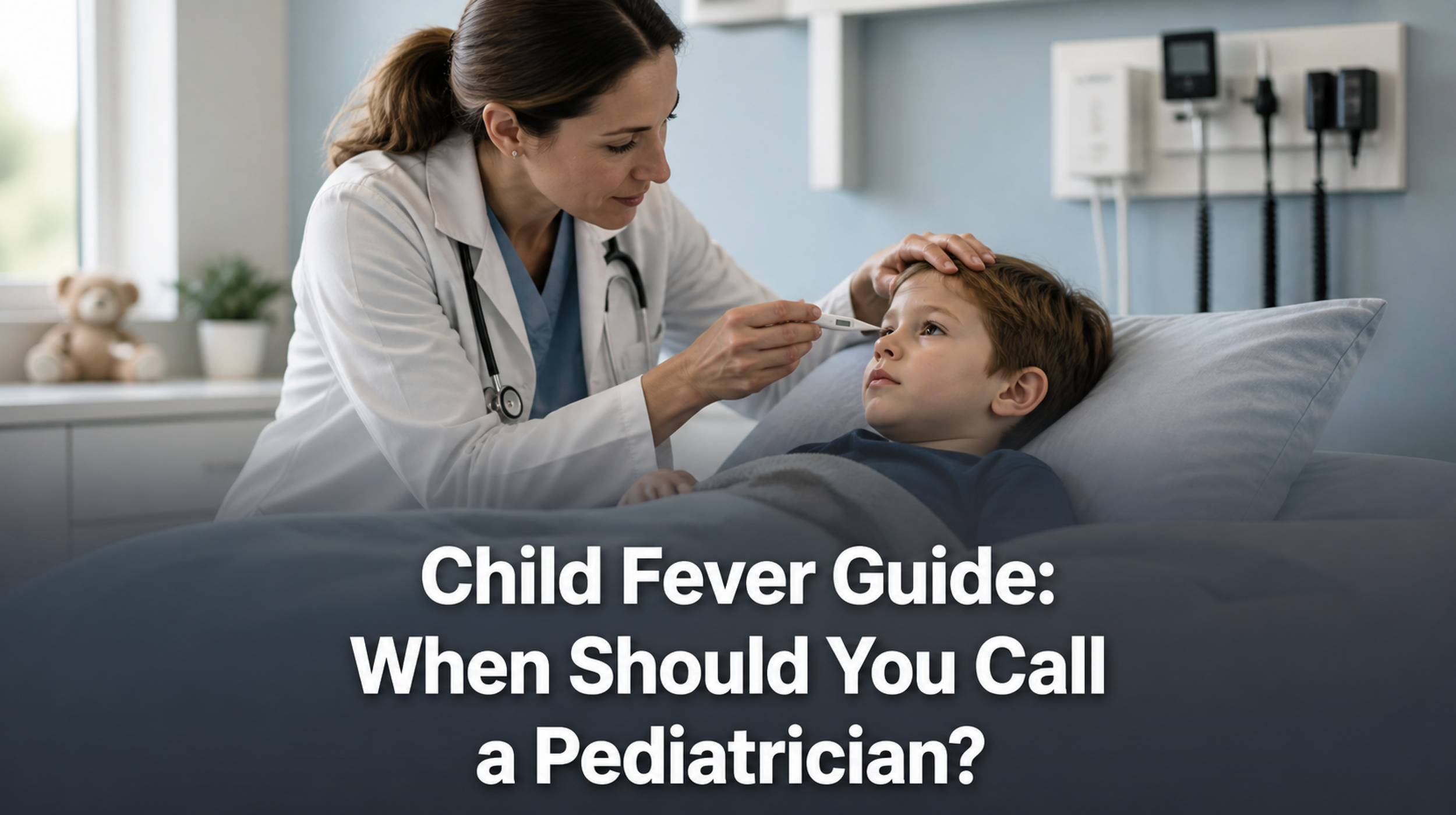
Fever is one of the most common reasons parents start searching for answers. A child wakes up warm, feels tired, doesn’t want breakfast, or suddenly seems “not like themselves,” and it’s hard to know what to do next. In many cases, a fever is the body’s way of fighting off a routine illness and can be watched at home for a while. But sometimes fever is a sign that your child needs to be seen by a pediatrician sooner.
If you’re wondering when to call pediatrician for child fever, you’re not alone. Parents in Jackson, Madison County, and across West Tennessee ask this every day, especially during cold and flu season, back-to-school time, and those weeks when daycare germs seem to go around nonstop.
This guide will help you understand what a fever means, what you can usually watch at home, and when it’s time to call The Children’s Clinic.
What counts as a fever?
A fever usually means your child’s body temperature is higher than normal. For most children, a temperature of 100.4°F or higher is considered a fever.
How you take the temperature matters. A rectal temperature is often used for babies, while older children may have their temperature checked by mouth, ear, forehead, or under the arm. One reading alone doesn’t always tell the whole story. A child’s behavior, breathing, hydration, and overall appearance matter just as much as the number on the thermometer.
What a fever can mean
Fever itself is not an illness. It’s a symptom. It can happen with many common childhood illnesses, including colds, flu, ear infections, strep throat, stomach bugs, and other viral infections. Sometimes a fever shows up early, before other symptoms make it clear what’s going on.
That’s why parents often have a hard time telling whether a fever is “just a virus” or something that needs medical attention. The temperature number is only part of the picture. What matters most is how your child is acting and whether there are any warning signs.
What you can usually watch at home
Many fevers in otherwise healthy children can be monitored at home for a short time, especially when your child is still drinking, breathing comfortably, and waking up reasonably well between naps or sleep.
Home care often includes:
Offering plenty of fluids
Letting your child rest
Keeping clothing light and comfortable
Watching for changes in behavior, breathing, or hydration
A child with a fever does not always need to stay in bed all day. If they feel up to it, quiet activities are fine. The main goal is comfort and hydration. A fever can make a child feel tired, cranky, or less hungry than usual. That alone is not always a reason to panic.
It’s also okay if the fever comes down and then returns later. Many common infections cause fevers that rise and fall over a few days. What you want to watch is whether the fever is paired with worsening symptoms or not improving as expected.
When to call the pediatrician for child fever
This is the question most parents are really asking: when to call pediatrician for child fever instead of waiting it out.
You should call your pediatrician if your child has a fever and:
Is younger than 3 months old
Has a fever that lasts more than a couple of days
Seems much more tired, irritable, or hard to wake than usual
Is not drinking well or has signs of dehydration
Has pain that concerns you, like ear pain, sore throat, or pain with urination
Has a fever that keeps coming back
Has other symptoms that are getting worse instead of better
Has had recent exposure to a contagious illness and now feels sick
You should also call if your child has a fever and you’re simply not sure what’s normal. That’s a good enough reason. Parents know their children well. If something feels off, it’s reasonable to ask.
Fever in babies: call sooner
Fever in babies needs more attention than fever in older children. If a baby under 3 months has a temperature of 100.4°F or higher, call your pediatrician right away. Even if the baby seems okay otherwise, young infants can get sick quickly and need prompt medical guidance.
For babies and young infants, it’s especially important to pay attention to feeding, wet diapers, alertness, and breathing. A baby who is not eating well, seems very sleepy, or is hard to wake should be evaluated promptly.
Signs a fever may need urgent medical attention
Some symptoms mean you should not wait for a routine office visit. Seek urgent medical care right away if your child has a fever along with:
Difficulty breathing
Blue lips or face
Confusion, severe sleepiness, or trouble waking
A seizure
A stiff neck
A rash that does not fade when you press on it
Signs of dehydration, such as very dry mouth, no tears, or much fewer wet diapers
Severe pain
Persistent vomiting
A fever after being in the heat that makes you worry about heat illness
If your child is having trouble breathing, is unresponsive, has a seizure that lasts longer than a few minutes, or seems seriously ill, call 911 or seek emergency care immediately.
What about a fever that keeps coming back?
Parents often worry when a fever goes away and then returns the next day. That can happen with several common illnesses. A fever that keeps coming back may still be caused by something routine, but it’s worth a call if the pattern is unusual for your child, lasts several days, or comes with other symptoms like sore throat, ear pain, cough, rash, vomiting, or pain when urinating.
In West Tennessee, it’s common for families to see a child with a fever during the height of flu season or after school starts back in Jackson or Madison County. A child may seem fine in the morning, then feel warm and tired by afternoon. If the fever is part of a bigger picture of worsening symptoms, your pediatrician can help sort out what’s going on.
When school, daycare, or sports should wait
If your child has a fever, they should usually stay home from school, daycare, and sports. A fever often means the child is contagious or too sick to participate comfortably. Returning too soon can slow recovery and spread illness to others.
A good rule of thumb is to wait until your child has been fever-free for at least 24 hours without fever-reducing medicine and is feeling well enough to take part in normal activities. If you’re unsure, ask your pediatrician. That’s especially helpful when a child needs a return-to-school note or has missed several days.
What parents can do at home
For a child who seems otherwise stable, a few simple steps can help.
Offer fluids often. Water is fine for many older children, but younger kids may do better with small, frequent sips of whatever they’ll tolerate. Popsicles, broth, and oral rehydration drinks can also help, especially if there has been vomiting or diarrhea.
Dress your child in lightweight clothing and keep the room comfortably cool, not cold. You don’t need to bundle a child with fever in heavy blankets.
Keep an eye on behavior. Is your child drinking? Are they waking up? Are they peeing normally? Are they breathing comfortably? These questions matter more than the thermometer alone.
If you use fever-reducing medicine, follow the directions from your pediatrician or the label carefully. Don’t use aspirin in children unless specifically told to do so by a doctor. If you’re unsure what’s appropriate for your child’s age or weight, call before giving medicine.
Frequently asked questions from parents
Does every fever need medicine?
No. Medicine is usually used to help a child feel more comfortable, not to “fix” the fever number. Some children with mild fevers are still playful and drinking well. Others feel miserable with a lower fever. How your child looks and feels matters more than the exact number.
Can teething cause a fever?
Teething can make babies fussy and uncomfortable, but a true fever is not usually caused by teething alone. If your baby has a fever, it’s worth checking in with your pediatrician, especially if the baby is young.
What if my child’s fever is gone in the morning but returns at night?
That can happen with many illnesses. Track how your child is acting through the day, whether they’re drinking, and whether other symptoms are developing. If the fever keeps returning over several days, call your pediatrician.
Should I bring my child in for a fever even if there’s no other symptom?
Sometimes, yes. A fever without a clear cause can still need evaluation, especially in young children, babies, or kids who are not acting like themselves. If you’re unsure, a sick visit can help you get answers.
A realistic West Tennessee example
Picture a school morning in Jackson or Medina. Your child wakes up warm, says their throat hurts, and doesn’t want breakfast. Later that day, the fever is still there and they’re more tired than usual. In a situation like this, it may be reasonable to watch closely for a short time if your child is drinking and breathing well. But if the fever lasts more than a couple of days, keeps climbing, or comes with worsening sore throat, poor intake, or a new rash, that’s a good time to call your pediatrician.
That same approach applies whether your family is in Humboldt, Milan, Brownsville, Lexington, or right here in Jackson. You don’t have to figure it out alone.
Bottom Line
Fever is common in childhood, and many fevers can be watched at home for a little while if your child is drinking, breathing well, and acting mostly like themselves. But you should call your pediatrician sooner if your child is very young, the fever lasts more than a couple of days, keeps coming back, or comes with warning signs like trouble breathing, dehydration, severe sleepiness, or a rash that worries you.
If you’re asking yourself when to call pediatrician for child fever, trust that instinct. Parents do not have to sort it out alone. If something feels off, a pediatrician can help you decide whether your child needs a sick visit, home monitoring, or urgent care.
The Children’s Clinic
264 Coatsland Drive
Jackson, TN 38301
731-423-1500
Serving children and families in Jackson, Madison County, and communities throughout West Tennessee.
