
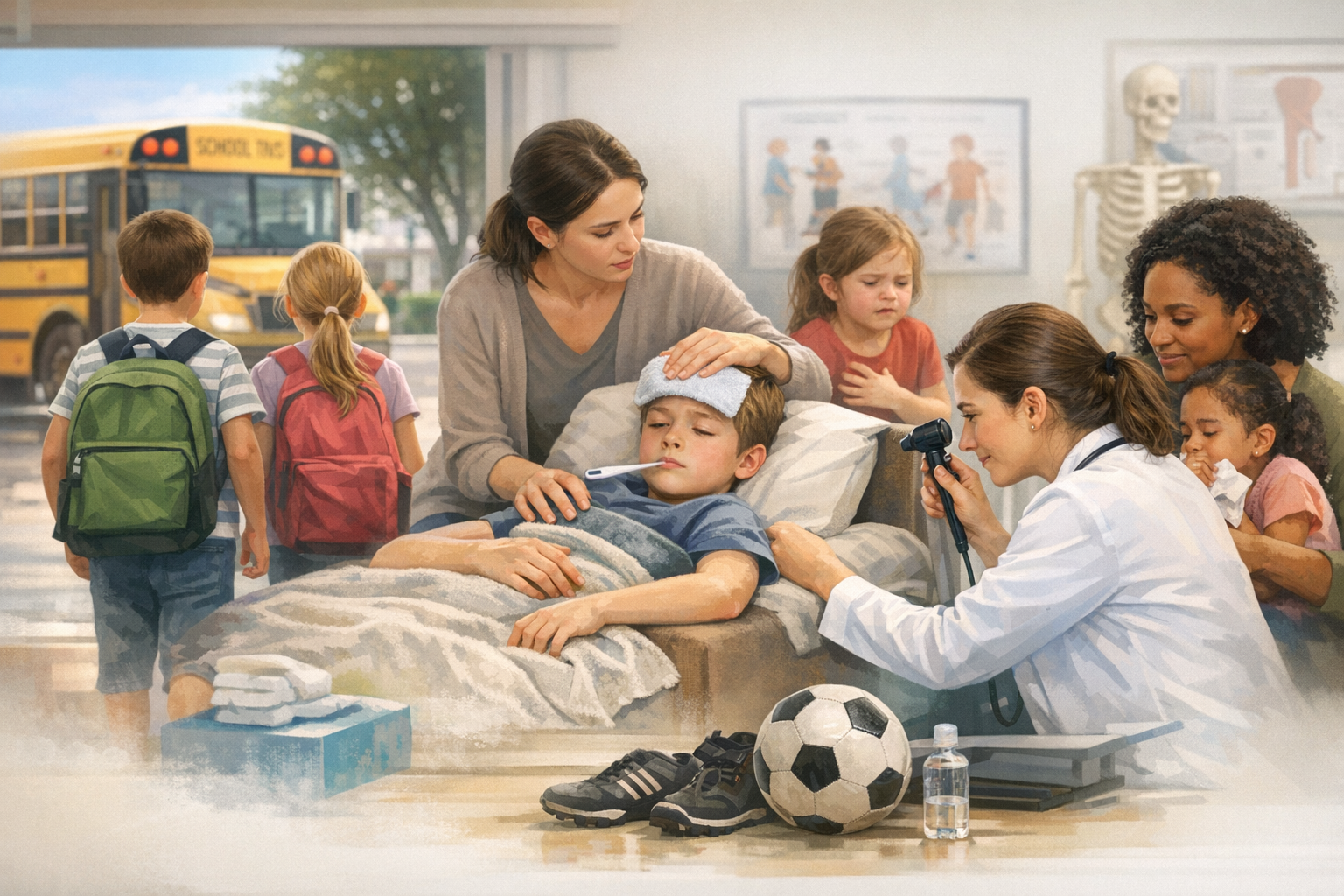
The first few weeks back in school can feel like a reset button for the whole family. New schedules. Early mornings. Packed lunches. Lost water bottles. And then, right on cue, a fever shows up.
A lot of parents around Jackson, TN start wondering the same thing once kids head back into classrooms and germs begin making the rounds again. Is this just a regular school bug? Did they pick up something from the bus? Should I be worried if they were fine yesterday and now they’re burning up at bedtime?
We hear these questions every year, especially during back-to-school season and again when winter illness season rolls around. Sometimes it’s something simple. Sometimes it’s not so simple. Most of the time, though, fevers in school-age kids come from the usual suspects.
Why fevers pop up so often after school starts
School is basically a perfect setup for germs. Kids are close together, sharing air, touching desks, handling water fountains, swapping snacks, coughing into their sleeves, then touching their faces five minutes later. It’s not because anybody did anything wrong. It’s just what happens when a room full of kids spend the day together.
In the first few weeks back, kids also run into germs they haven’t seen in a while. That can make it feel like one sickness after another. Families in Madison County, TN and nearby spots like Medina, Humboldt, and Milan usually notice it fast. One child gets sick, then a sibling starts sniffling, then somebody else has a fever right before a big weekend.
It’s part of the rhythm of school life, unfortunately. New classmates. New teachers. New routines. More exposure.
The most common reasons kids get fevers
Most school-related fevers are caused by viral infections. That includes regular colds, flu, COVID, RSV, and the random virus that seems to circle through a classroom every year with no name parents can remember. These illnesses often show up with sore throat, runny nose, cough, headache, fatigue, belly pain, or just feeling wiped out.
Some kids also get stomach bugs. Those spread fast through classrooms and after-school programs. A child may wake up fine and come home with fever, vomiting, diarrhea, and a very unhappy stomach. That’s a rough one, especially if there’s a long bus ride or soccer practice after school.
Ear infections can follow a cold. So can sinus symptoms, especially in younger children. Toddlers waking up congested with a fever are a pretty common call in our office. Babies can be trickier because they don’t tell us what hurts. They just get fussy, feed poorly, sleep off schedule, and seem off.
Sometimes a fever is tied to a sore throat or strep. That one tends to show up with sudden fever, pain when swallowing, bad breath, belly ache, or a child who just doesn’t want to eat. We also see fevers with urinary tract infections, especially in younger kids, and those can be easy to miss because the symptoms aren’t always obvious.
Not every fever means something serious
This is the part that usually calms parents down a little. Fever itself is not the enemy. It’s a sign the body is fighting something. A child with a fever can look pretty miserable, but that doesn’t automatically mean it’s dangerous.
A school-age child with a fever, some congestion, and a bit of cough may just need rest, fluids, and time. Most families can handle a few rough nights with a cold. What starts to make things stressful fast is when the child isn’t sleeping, isn’t drinking, or seems to be getting worse instead of slowly turning a corner.
We also know how late-night worry can spiral. A parent checks a temperature at 10:30 p.m., then again at midnight, then starts searching online because the fever is still there and the child’s cheeks look flushed. That happens all the time. It doesn’t mean you’re overreacting. It means you’re a parent trying to figure out what’s normal.
When fevers need a closer look
There are times when a fever should be checked by a pediatrician. If a child is having trouble breathing, is very hard to wake, has a stiff neck, severe headache, a new rash, signs of dehydration, or looks much sicker than you’d expect, call right away. Same thing if the fever is lasting several days or keeps coming back.
Babies are a different story. Any fever in a newborn or young infant needs prompt attention. Parents looking for newborn care near me often have this concern, and it’s one we take seriously. Little babies can change quickly, and they don’t always show the same symptoms older children do.
If your child isn’t drinking much, hasn’t peed in a while, has dry lips, or seems unusually sleepy, that needs attention too. Feeding struggles during illness are especially common in infants and toddlers. A baby who won’t take a bottle or breastfeed well because of congestion can become dehydrated faster than older kids.
And if your gut says something’s off, trust that. Families know their children. We’d rather talk through it than have you sit at home worried all night.
Back-to-school germs, sports, and busy schedules
School germs don’t happen in a vacuum. They show up in the middle of sports physical season, after a long day at practice, or when a family is juggling homework, work calls, supper, and a forgotten permission slip.
Kids coming straight from school to sports or aftercare can get run down pretty fast if they’re not sleeping well or drinking enough. Summer heat can also leave kids a little dehydrated, which makes them feel worse when a fever hits. A child who’s been outside in the West Tennessee heat all afternoon may already be worn out before the sickness even starts.
In winter illness season, the pattern changes a bit. We see more flu, more lingering coughs, and more families trying to decide if it’s just a cold or something that needs a visit. Holiday gatherings can stir up another round of germs, too. One sick cousin at Thanksgiving can mean a whole row of fevers by Sunday.
Spring allergies can make things confusing as well. A stuffy nose, scratchy throat, and tired child can look sick without actually having an infection. But allergies don’t usually cause a real fever. That’s one of the clues that helps sort things out.
What parents can watch for at home
Start with the child, not just the number on the thermometer. Are they drinking? Are they peeing normally? Are they alert between naps? Do they perk up a little after medicine and rest, or are they just dragging through the day?
If they have a mild fever but are still sipping fluids, resting, and able to talk a little, that’s often something you can watch for a day or two. Keep an eye on temperature, breathing, appetite, and energy level. No need to chase every slight change.
For older kids, rest matters more than most people think. So does sleep. A child who’s been staying up late, starting school tired, and skipping breakfast is going to have a harder time bouncing back from a virus. We see that a lot in kids trying to get back into the school routine after summer.
For babies and toddlers, watch feeding more closely. Congestion can make it tough to nurse or take a bottle, and a stuffed nose can turn into a whole night of poor sleep. Saline, suction, and smaller, more frequent feeds can help some, but not every child responds the same way.
A real local example
We see this all the time in Jackson and surrounding communities. A child heads back to school in Madison County, seems fine for a week, then wakes up with a fever and a cough. By lunchtime, the nose is running, the body aches start, and they’re begging to go home. By evening, a sibling in Brownsville is sneezing, and a grandparent in Lexington is asking if it might be flu.
One family from near Humboldt told us their kindergartner had a fever on a Thursday, then a stomach bug hit the house by Saturday. The child missed school, a parent missed work, and everybody was tired of laundry by Sunday night. That’s a very normal kind of week during back-to-school season. Not fun. Very normal.
Another common one: a toddler in Milan wakes up congested, won’t eat breakfast, and feels warm to the touch. The parent wonders if it’s teething, allergies, or a virus. Often it’s just the start of a cold, but if the fever climbs or the child starts breathing faster or drinking less, that’s when a same-day sick visit makes sense.
What to expect at a pediatric visit
At The Children’s Clinic, we spend a lot of time sorting through the same questions parents are asking at home. Is this viral? Do we need a test? Is the throat red enough to matter? Is the cough from drainage or something lower in the chest?
Depending on the symptoms, we may check ears, throat, lungs, hydration, and sometimes do a flu, strep, or COVID test. For little ones, we pay close attention to feeding, wet diapers, and how they look overall. We also talk through sleep, fever medicine, and what to watch over the next day or two.
That’s part of good pediatric care near me, really. Not just handing out a diagnosis and sending everybody home. It’s helping families know what’s going on and what to do next without all the guesswork.
We also use sick visits to catch up on prevention when it makes sense. Sometimes a child is due for a wellness visit, vaccines, or school forms. Sometimes families ask about child development, behavior changes, sleep issues, or nutrition while they’re already in the office. That’s real life. One visit often covers a lot.
When to call and when to wait
Call sooner if your child is younger than 3 months and has a fever. Call if breathing looks hard, if they’re not drinking, if they’re having trouble staying awake, or if the fever is hanging on and you’re not seeing any improvement.
It’s also smart to call if your child has a history of febrile seizures, immune problems, or other health concerns that make fevers more complicated. Same if there’s a school outbreak of flu, strep, or another illness and your child is right in the middle of it.
If it’s a mild fever and your child is still drinking, peeing, and acting fairly like themselves between naps, a little time at home may be all they need. But if you’re sitting there at 1 a.m. trying to decide whether it’s serious, that’s a good sign to call in the morning or sooner if things worsen.
Bottom line
Kids get fevers after going back to school for a lot of ordinary reasons. Germs spread fast. Routines change. Sleep gets thrown off. Sometimes it’s just one of those school-year viruses that runs through the classroom and half the neighborhood.
Most fevers are short-lived and manageable at home with rest and fluids. But when symptoms stack up, a child stops drinking, the fever keeps climbing, or your instincts tell you this isn’t just a simple bug, that’s the time to reach out.
We know how hard it is to balance work, school, sports, and sick days. We also know how much better it feels when you’ve got a pediatric office that listens, explains things in plain language, and helps you figure out the next step without making it complicated.
The Children’s Clinic 264 Coatsland Drive Jackson, TN 38301
731-423-1500
Serving families throughout Jackson, Madison County, and West Tennessee