
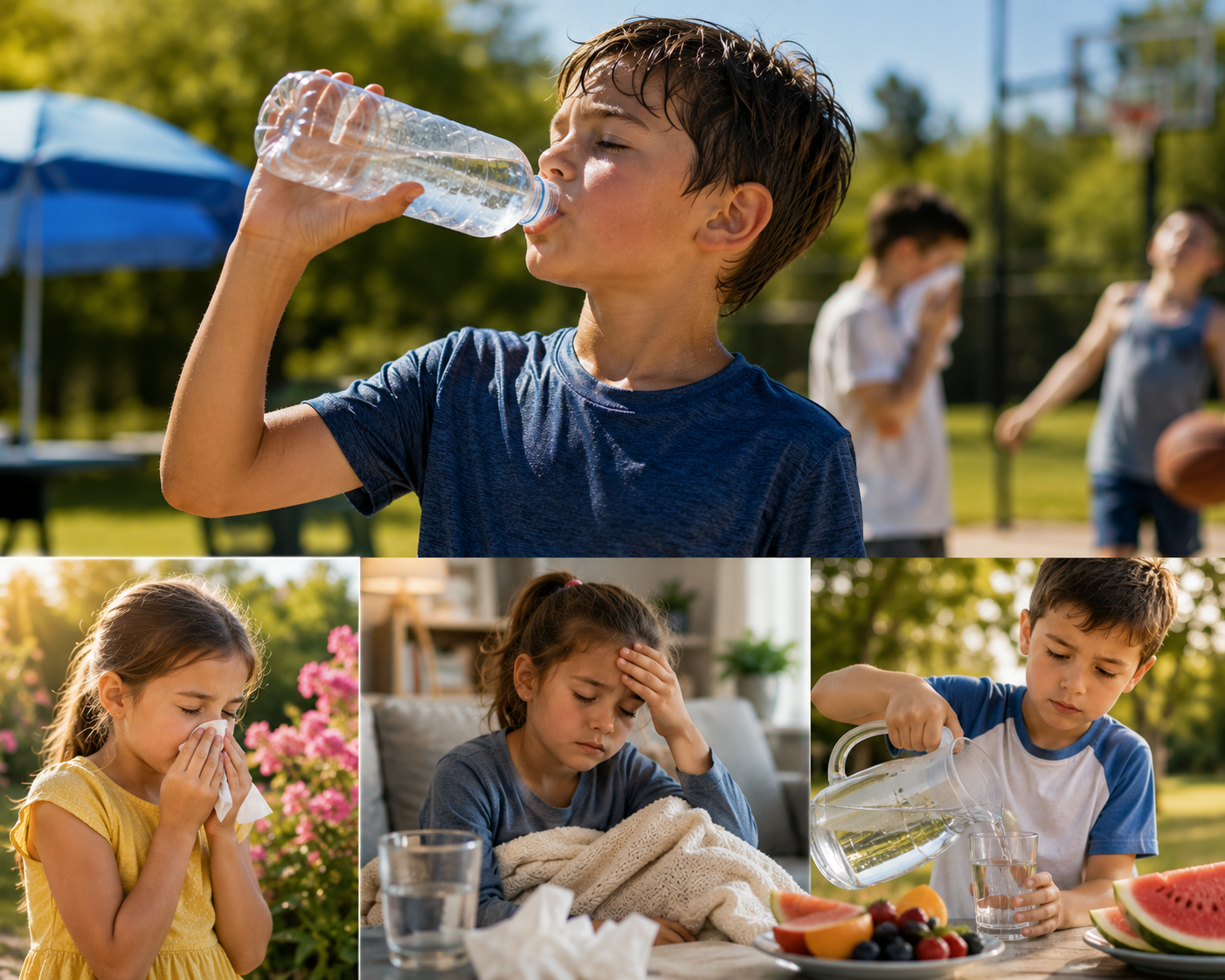
Once summer settles in around Jackson, TN, we start hearing the same concerns in the clinic over and over. A child seems tired. They’re not eating much. They’re cranky, maybe a little headachy, and parents are wondering if it’s just the heat or something more. In a place like West Tennessee, where the heat can hang around for days, hydration turns into a bigger deal than a lot of families expect.
Kids don’t always notice when they’re getting behind on fluids. They’re outside playing, running from one thing to the next, forgetting to drink until they’re already worn down. Babies can’t tell you they’re thirsty. Toddlers get distracted. Older kids push through sports, camps, and summer fun until their bodies start sending louder signals. By then, it can feel like things changed fast.
That’s why we talk about hydration so much this time of year. It’s not just about being thirsty. It affects sleep, energy, bowel movements, headaches, fevers, and how a child handles illness. In the middle of summer, all of that shows up quicker.
Why kids get dehydrated faster than adults
Children lose fluid more quickly than many parents realize. Their bodies are smaller, they sweat in the heat, and they may not stop what they’re doing long enough to drink. Some kids are simply not great at recognizing thirst. Others don’t want to pause play for a water break because, well, they’re kids.
Babies and toddlers are a little different. They can get dehydrated after a day of low intake, a stomach bug, or even just being outside in the heat. If a baby is feeding less or a toddler is refusing drinks, that can change things pretty fast. We see that a lot in summer, and we also see it during winter illness season when kids are sick, congested, and not taking in as much as usual.
Older kids and teens aren’t off the hook either. Sports season, football workouts, soccer camps, cheer practice, and long days at the pool all add up. A child can look fine for a while and still be heading toward dehydration if they’re sweating and not replacing fluids.
Heat in Jackson, TN isn’t just uncomfortable
Jackson and the surrounding area can get really hot, really fast. Madison County, Humboldt, Medina, Milan, Lexington, Brownsville, all of it. The heat doesn’t play around. Some days it’s not just the temperature, it’s the humidity that makes everything feel heavier. Kids are outside, in and out of cars, running around at ball fields, or spending a day at the park. That’s enough to dry them out before lunch.
And then there’s the usual family life piece. Parents are juggling work, daycare, summer camps, errands, and all the normal stuff that doesn’t stop just because it’s hot. It’s easy to miss the little signs at first. A child’s mood changes. They nap more. They skip the water bottle. They complain their head hurts. You start wondering if it’s allergies, a virus, maybe they just stayed up too late. Sometimes it’s dehydration sitting right in the middle of it all.
We hear from parents all the time who are trying to figure out whether a symptom is serious. That late-night guessing game can be exhausting. Hydration is one of those things that can look simple, but when it slips, it can make a child feel pretty miserable.
What dehydration can look like
The signs aren’t always dramatic. Sometimes they’re subtle.
A child might be more tired than usual. They may have a dry mouth, dark urine, fewer wet diapers, or be going to the bathroom less often. A toddler may act fussy for no clear reason. Some kids get a headache. Others get dizzy when they stand up. A baby might feed poorly or seem sleepy and harder to wake for feeds. A child who’s usually full of energy may suddenly want to sit still, and that’s not their norm.
Sometimes dehydration hides behind another issue. A kid with seasonal allergies may be mouth-breathing all day and not drinking enough. A child with a fever can lose fluid more quickly. A stomach bug can hit a classroom and suddenly half the family is dealing with vomiting or diarrhea. In those moments, fluids matter even more.
One thing we always tell parents is to pay attention to the whole picture. A single symptom by itself may not mean much. A child with a mild fever and good drinking is different from a child with a fever who won’t drink, won’t pee much, and seems worn out. That’s when it’s time to call.
Babies, toddlers, and the tricky stuff
Little ones are the hardest to read sometimes. A newborn with feeding trouble doesn’t come with a neat explanation. They just seem off. They may be sleeping through feeds, struggling to latch, or not taking their bottles the way they usually do. That can be stressful fast, especially for new parents who are already tired and trying to figure everything out.
Toddlers are another story. They’re busy. They don’t want to sit still. They might reject water just because it’s offered at the wrong moment. Then they wake up congested, breathe through their mouth all night, and start the next day already behind. Add in a summer bug or a few days of heat, and it can snowball.
In those younger age groups, we like families to call sooner rather than later if intake is dropping. A baby who is feeding less, a toddler with fewer wet diapers, or a child who can’t keep fluids down deserves a closer look. Parents know when something isn’t right. Trust that feeling.
Hydration and illness go hand in hand
Summer isn’t the only time kids run into hydration issues. Back-to-school season brings its own mess of germs. Kids bring home illnesses from school, daycare, and sports. One child gets a cough. Then the sibling gets a fever. Then someone has a stomach bug spreading through classrooms. It’s a familiar pattern in Jackson and across West Tennessee.
When children are sick, they often drink less. Fevers dry them out. Stuffy noses make it harder to eat or drink normally. A sore throat makes swallowing uncomfortable. Vomiting or diarrhea can lead to fluid loss fast. That’s why hydration becomes part of nearly every sick visit we talk through.
Parents sometimes search online late at night trying to decide if the cough is just lingering or if the fever means something more. Sometimes a child is okay to watch at home for a bit. Sometimes they need to be seen. If they’re not drinking, not peeing much, acting unusually tired, or breathing harder than normal, those are not things to shrug off.
We also see dehydration make sleep worse. A child who’s dry, congested, and uncomfortable may wake up all night. Then everybody’s tired the next day, and it’s harder to tell what started the problem. Family life gets messy in a hurry.
What helps at home
Keep water available all day. Sounds obvious, but it matters. A bottle in the car, one in the sports bag, one by the bed. Kids do better when fluids are easy to reach.
Offer drinks before they ask. Especially after time outside, after sports, after a nap, and during meals. Small sips can go a long way for little kids.
For babies, keep following your feeding plan and reach out if feeds start dropping off or they seem too sleepy to eat. For toddlers, don’t panic if they’re picky for one day, but keep an eye on wet diapers and energy. For older kids, watch how they’re doing during activity, not just after.
If a child has vomiting or diarrhea, fluids matter more than food at first. Don’t push big meals if the stomach isn’t ready. Focus on steady drinking and call if they can’t keep anything down.
Kids in sports need breaks, plain and simple. Heat plus practice is a real thing in Jackson, TN. Water helps, and so does backing off when a child looks wiped out. No medal for powering through dizziness.
A real local example
We had a family from just outside Jackson come in during a stretch of heavy heat. Their little boy had started baseball practice, then came home irritable, didn’t want dinner, and went to bed early. The next morning he seemed off again. Mom wasn’t sure if it was allergies, a stomach bug, or something more serious. By the time they got to us, it was clear he’d gotten behind on fluids after two hot days at the field. No big scary diagnosis. Just a child who needed rest, fluids, and a little more attention to the heat.
That kind of visit happens a lot. Sometimes parents feel almost silly bringing it up, but they shouldn’t. Dehydration can sneak up, and kids don’t always show it in the same way. One child gets a headache. Another gets cranky. Another just seems quiet. Real life doesn’t come with neat symptom lists.
When to call the pediatrician
Call if your child isn’t drinking well, has fewer wet diapers or trips to the bathroom, seems unusually tired, or has vomiting or diarrhea that’s not improving. Also call if fever is hanging on, if a cough is lingering and they’re not bouncing back, or if a baby is feeding less than normal.
We also want to hear from you if your child seems confused, very weak, hard to wake, or is breathing fast. Those need prompt attention. If you’re unsure, that’s okay too. That’s what a pediatric office is for. A lot of parents in Jackson, Madison County, and across West Tennessee are trying to sort through the same questions at the same time.
Sometimes the answer is a same-day sick visit. Sometimes it’s a call to talk through home care. Sometimes it’s a wellness visit, vaccines, or a check-in about sleep, nutrition, or school readiness. Kids don’t always separate their health concerns into neat boxes, and families shouldn’t have to either.
Bottom line
Hot Jackson summers can wear kids down faster than adults expect. Hydration helps with energy, mood, sleep, and recovery from everyday childhood stuff like allergies, stomach bugs, and fevers. It matters in sports season. It matters during back-to-school season too, when germs start making the rounds and kids are already busy and tired.
Most of the time, a few smart habits at home go a long way. Keep fluids handy. Watch for the early signs. Don’t ignore a child who just isn’t acting like themselves. And if you’re sitting there late at night wondering whether it’s serious, you’re not alone in that either.
The Children’s Clinic
264 Coatsland Drive
Jackson, TN 38301
731-423-1500
Serving families throughout Jackson, Madison County, and West Tennessee