
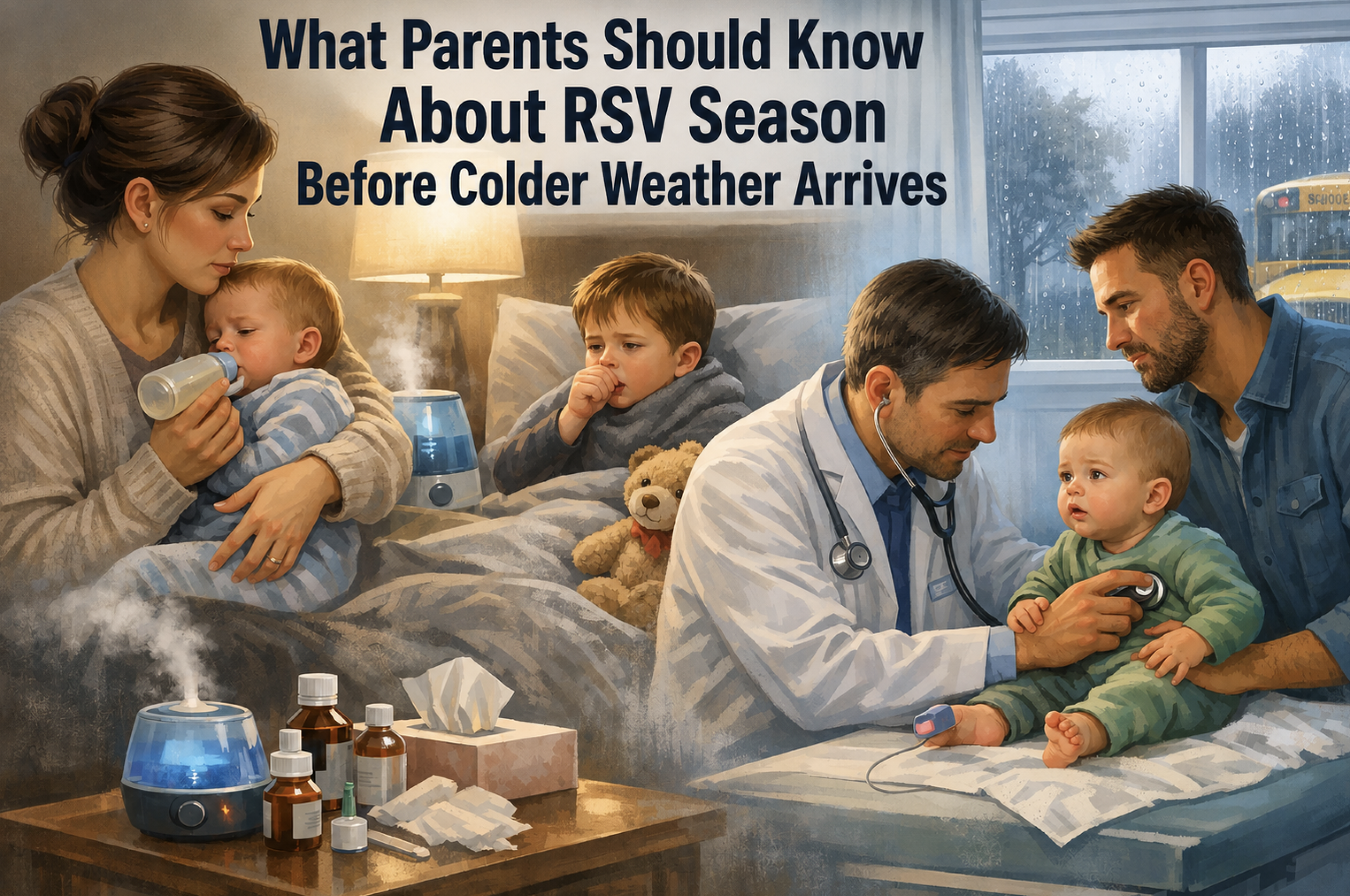
Once the air starts to shift in Jackson, TN, we hear the same questions from families again and again. Is this just a cold? Why is my toddler coughing so much at night? Do I need to bring in my baby now, or can I wait and watch? That’s usually when RSV starts entering the conversation.
RSV is one of those viruses parents hear about every fall and winter, and for good reason. It can look a lot like a regular cold at first. Then it can turn into something that makes breathing, feeding, and sleeping a whole lot harder, especially for babies and younger kids. In West Tennessee, RSV season often shows up right around the same time back-to-school germs, stomach bugs, and the first wave of winter illness start moving through homes, daycare rooms, and classrooms.
Most children will get RSV at some point. Many do just fine. But some kids need a little extra watching, and a few need medical care sooner rather than later. Knowing what to look for can take a lot of the panic out of those late-night decisions.
What RSV actually looks like
RSV stands for respiratory syncytial virus. It spreads easily, especially when kids are close together, sharing toys, sneezing in the same room, or coming home from school and daycare with every germ from the week. We see it a lot in pediatric offices during the colder months, though cases can start earlier than parents expect.
At first, RSV often looks plain and ordinary. Runny nose. Cough. Congestion. Maybe a little fever. Sometimes a baby just seems fussier than usual or sleeps badly for a few nights. Toddlers might act okay one minute and then melt down the next because they can’t breathe well through a stuffy nose.
The tricky part is that RSV can move lower into the lungs. That’s when you may hear wheezing, notice faster breathing, or see your child working harder to get air. Babies can also have a hard time feeding because they can’t breathe and suck at the same time very well when they’re congested. That’s when things get stressful fast.
Which children need the closest watch
Any child can catch RSV, but some are more likely to have a rougher time with it. Babies under 6 months are high on that list. So are premature babies, children with lung or heart conditions, and kids with weaker immune systems. We also pay close attention to newborns, since they’re still so tiny and can go downhill quicker than older children.
That said, even healthy kids can have a miserable few days. A toddler with RSV may not need anything more than fluids, rest, and some home care. A baby, though, especially one who’s struggling to eat or breathe normally, needs a much closer look.
Parents in Madison County, TN often tell us they can handle the cough. What gets scary is the combination of fever, poor sleep, and a baby who suddenly isn’t taking bottles like usual. That’s the part that sends families searching online at 2 a.m. and second-guessing everything. You’re not the only one.
Signs RSV may be more than a simple cold
This is where parents need to trust what they’re seeing at home. A little congestion alone usually isn’t alarming. But there are a few things that should get your attention.
Watch for breathing that seems hard work. That can look like flared nostrils, ribs pulling in with each breath, grunting, or a child breathing much faster than normal. Some babies bob their heads a little when they’re working to breathe. That’s not something to brush off.
Feeding is another big clue. If a baby is drinking much less than usual, taking shorter feeds, or getting tired halfway through, that matters. Older kids may refuse fluids, which can lead to dehydration pretty quickly if they’re also running fever.
Call sooner if your child has lips that look bluish or gray, if they’re hard to wake, if they seem limp, or if you’re seeing pauses in breathing. Those are urgent signs. Don’t wait those out.
Even if it’s not that severe, a fever that lasts, a cough that keeps worsening, or symptoms that start interfering with sleep for several nights in a row are good reasons to check in. Sometimes parents say, He’s still smiling, so it’s probably fine. Maybe. But if the child is waking every hour, can’t rest, and everyone in the house is wiped out, that still deserves attention.
What you can do at home
For many kids, home care is the main treatment. That doesn’t mean doing nothing. It means focusing on the basics that actually help.
Keep your child hydrated. That’s a big one. For babies, smaller and more frequent feeds can help. For older kids, offer water often, and don’t worry if they eat less for a few days. Fluids matter more than food when they’re sick.
Use saline drops and suction for babies with stuffy noses. It’s not glamorous, and babies usually hate it, but it can make a big difference before feeds and sleep. A cool-mist humidifier may help some kids rest a little better at night, especially when the heater starts running and the air gets dry.
Rest helps too. Easier said than done, of course. Sick toddlers do not always cooperate with rest. But quieter days, an earlier bedtime, and fewer activities can help the body recover.
If your child has a fever, talk with your pediatrician about the right fever medicine and dose for their age and weight. That’s one of those details parents often want to guess on, and guessing is not a great plan.
And if the cough lingers? That happens. RSV coughs can hang around longer than families expect. A child might be on the mend and still sound rough for a while. That doesn’t always mean something is wrong, but if the cough is getting worse instead of better, call us.
Why RSV can be tougher during busy school months
RSV doesn’t arrive in a vacuum. It shows up in the middle of packed calendars. Back-to-school season means homework, sports, early mornings, daycare drop-offs, and kids dragging germs home before anyone has even figured out the lunch schedule. Then stomach bugs start spreading through classrooms, allergies make noses run, and everyone is a little run down.
That’s part of why families in Jackson, TN and nearby places like Medina, Humboldt, Milan, Lexington, and Brownsville sometimes miss the early signs. There’s always something going on. A child with RSV may just look like another kid with a cold at first. But once sleep gets off track, the cough starts waking them, and the whole house is exhausted, people realize it’s more than a simple sniffle.
We see this a lot during sports season too. Older siblings still have practices and games, and parents are trying to figure out whether a sick baby or coughing preschooler can tag along. Usually, the answer is no, at least not until you know what you’re dealing with.
A real local example
It’s pretty common for a family to come in after a rough weekend. A baby from Jackson or a toddler from Madison County starts with a runny nose on Friday. By Saturday night, the congestion is worse. By Sunday, the baby won’t finish a bottle, sleeps in short bursts, and sounds noisy when breathing. Mom or dad has already searched pediatrician near me more than once and isn’t sure if it’s just a cold or something that needs a same-day visit.
That’s the kind of situation where an office visit can help a lot. We can listen to the lungs, check oxygen levels if needed, look at hydration, and talk through what to watch next. Sometimes it’s RSV. Sometimes it’s another virus. Either way, having a plan usually settles the whole family down a bit.
Parents are often relieved to hear that not every cough needs a big treatment plan. But they’re also relieved to know what does count as a red flag. That balance matters.
When to call the pediatrician
Call if your child is under 3 months old and has any fever or breathing concerns. Call if a baby is feeding poorly, if there are fewer wet diapers, or if congestion is making feeds impossible. Call if you notice wheezing, fast breathing, or your child just seems more tired than usual in a way that feels off.
You should also reach out if symptoms are dragging on and not improving, if the fever sticks around, or if your child has a cough that’s keeping them from sleeping night after night. Sleep struggles can wear everyone down, and when a child isn’t sleeping, they usually aren’t healing all that well either.
For older kids, a visit can be helpful if they’re having trouble breathing, can’t stay hydrated, or are too sick to get back to school after several days. Parents know their kids best. If something feels off, it’s worth checking.
Our same-day sick visits can be helpful during RSV season, especially when families are trying to sort out whether a child needs to be seen now or can be watched at home a little longer.
Don’t forget the bigger picture: wellness visits, vaccines, and newborn care
RSV season is also a good reminder to stay on top of regular pediatric care. Wellness visits give us a chance to check growth, development, sleep, nutrition, behavior, and school readiness. Those visits matter more than people think, especially when kids are busy, tired, or catching every bug that comes through the classroom.
Vaccines and routine preventive care help protect children from more than one illness at a time. For babies, newborn care visits are a good time to talk through feeding, congestion, safe sleep, and what counts as normal vs. what needs a call. Families looking for newborn care near me or child wellness visits near me often just want a place they can ask real questions without feeling rushed. That’s fair. Parenting is full of questions.
And yes, sometimes a sports physical comes in right in the middle of all this. That’s life in West Tennessee. One day you’re talking about fever and mucus, the next you’re asking about cleats and school forms. We get it.
Practical takeaways for RSV season
Keep an eye on hydration, breathing, and feeding. Those are the big three.
If your child is very young, has trouble breathing, or isn’t taking fluids well, don’t wait it out for days hoping it’ll pass.
Congestion alone is common. Trouble breathing is different.
Fevers happen with RSV, but a fever plus poor feeding or unusual sleepiness should get your attention.
If your child seems to be getting worse instead of better, call.
And if you’re up late worrying and refreshing symptom searches online, that’s usually a sign you’d feel better talking with a pediatrician instead of guessing.
Bottom Line
RSV is common, and for many children, it’s just another rough virus that runs its course. But for babies, young toddlers, and children with certain health needs, it can turn serious quicker than parents expect. The main thing is knowing what to watch for and when to reach out.
If your child has a runny nose and a mild cough, they may just need rest and close watching. If breathing gets harder, feeds drop off, fever keeps hanging on, or your gut says something isn’t right, call us. That’s what we’re here for.
The Children’s Clinic
264 Coatsland Drive
Jackson, TN 38301
731-423-1500
Serving families throughout Jackson, Madison County, and West Tennessee