
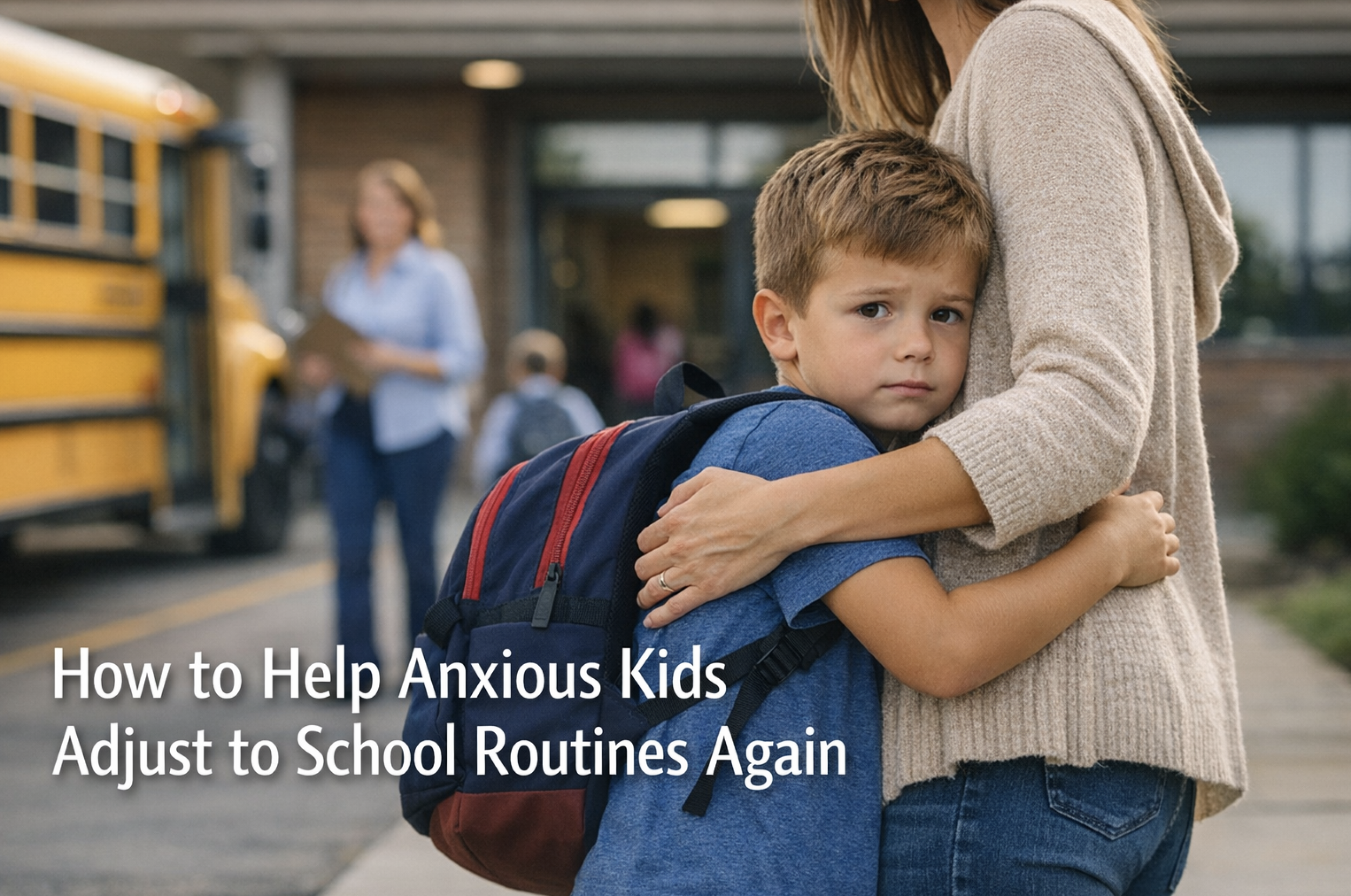
For a lot of families around Jackson, TN, the start of a new school routine brings a mix of things at once. A little excitement. A little stress. Sometimes a child who was fine all summer suddenly gets clingy, complains of a stomachache, or melts down at bedtime the week school starts back up.
We see it all the time in our office. Parents come in wondering if something is wrong, or if their child is just having a rough adjustment. Usually, it’s a little of both. New schedules can shake up even pretty easygoing kids. And when you add early mornings, busy classrooms, back-to-school germs, sports season, and a full family calendar, things can get messy fast.
The good news is that anxious kids usually do better with a steady routine, a calm grown-up, and a few simple supports at home. Not perfection. Just consistency. That goes a long way.
Why school routines can feel so big to kids
Adults may see school as familiar. Kids often feel every little change. New teacher. New classroom. Different pickup line. Earlier bedtime. A packed lunch instead of a favorite snack. Even a child who likes school can feel wobbly when the rhythm of the day changes.
Some children show that stress in obvious ways. Others don’t. A child might suddenly cry at drop-off, ask the same questions over and over, or start complaining that their head hurts every morning. We also see kids who get quieter, more tired, or more irritable. A few start waking up overnight and need extra reassurance before they’ll go back to sleep.
That doesn’t always mean there’s a medical problem. But it does mean they’re feeling something real.
Keep the routine boring in the best way
Kids do better when they know what’s coming. The more predictable the day feels, the safer it seems. That can start the night before school, not just in the morning.
Try keeping the basics steady: bedtime, wake-up time, breakfast, backpack by the door, shoes in the same place. Nothing fancy. Just the same steps, in the same order, most days. It helps children who worry about transitions feel a little more settled.
For younger kids, a simple visual routine can help. Something as plain as brushing teeth, putting on clothes, eating breakfast, then heading out the door. Older children may not want a chart, but they still like knowing what’s happening next.
And yes, some mornings will still be chaos. That’s life. But a usual routine gives kids a place to return to when things feel off.
Watch for stress showing up in the body
Kids don’t always say, I’m anxious. They usually say, My stomach hurts. Or I’m tired. Or I can’t eat. In our office, we hear that a lot, especially during back-to-school season and again when winter illness season starts rolling in.
Sometimes those symptoms are from nerves. Sometimes they’re from a virus. Sometimes it’s both. A child may wake up congested from a cold, then worry because school is starting and they don’t feel like themselves. A toddler with a stuffy nose may refuse breakfast or have a rough morning simply because they can’t breathe well enough to eat comfortably.
That’s where parents end up doing the guessing game. Is this anxiety? A stomach bug? Seasonal allergies? A fever? A lingering cough? We get it. Families in Jackson, Madison County, TN and nearby places like Medina, Humboldt, Milan, Lexington, and Brownsville are trying to sort that out every day.
If your child is mostly acting like themselves once they’re up and moving, that can be a good sign. If they’re not drinking well, having repeated vomiting, struggling to breathe, or running a fever that keeps climbing, that’s a different story.
Sleep matters more than people think
Sleep and anxiety go together in a tricky way. Kids who are nervous about school may have trouble falling asleep. Then the next day they’re overtired, cranky, and even more sensitive. It becomes a loop.
Try to start the wind-down earlier than you think you need to. Dim lights. No big last-minute homework battles if you can help it. Keep screens low or off near bedtime if your family can swing that. A tired child often feels everything harder.
We also hear from parents who say their child wakes up with a headache or stomachache on school days but seems okay on weekends. That pattern can point to stress. Not always, but often enough that it’s worth noticing.
If sleep is getting rough for more than a week or two, or your child is having frequent nightmares, nighttime panic, or big bedtime battles, bring it up at a wellness visit. We talk about this kind of thing all the time. It’s part of child development, not some separate category kids are supposed to manage alone.
Don’t ignore the real illnesses either
One thing school routines reliably bring with them: germs. Lots of them.
Back-to-school germs are a real thing. So are stomach bugs spreading through classrooms, fevers that show up on a Friday night, and coughs that seem to hang on for weeks. During sports season, we also see busy kids running hard, not drinking enough water, and then feeling crummy on top of school stress. In the heat of a West Tennessee summer, dehydration can sneak up fast. In winter, coughs and congestion can feel never-ending.
When a child is anxious, it’s easy to wonder if every symptom is stress. But sometimes a symptom is just a symptom. A toddler waking up congested might have allergies, a cold, or both. A baby struggling to feed during illness may simply not have the energy to eat well because their nose is stuffed up. A school-age child with fever and body aches may need to stay home and be seen.
If you’re staring at your child at 11 p.m. and searching online for answers, you’re not alone. Most parents do it at least once. The trick is knowing what to watch for and when to call instead of guessing all night.
What warning signs deserve a call
Some symptoms are pretty common and can be watched at home for a bit. Others need a closer look. Trust your gut, especially if your child just seems off in a way you can’t put into words.
Call us if your child has trouble breathing, won’t drink, has signs of dehydration, has a high fever that isn’t coming down, seems unusually sleepy or hard to wake, has repeated vomiting, severe belly pain, or symptoms that are getting worse instead of better.
For babies, we want a lower threshold. Feeding changes, dehydration, fever, or unusual fussiness can matter more quickly in newborns and young infants. If you’ve got a newborn at home and something feels off, don’t sit on it. That’s what newborn care near me visits are for. Well, that and all the little questions parents have at 2 a.m. when baby won’t settle.
For older kids, a lingering cough, sore throat, or repeated stomachaches can be tricky. If it’s keeping them from school, sleep, eating, or normal play, it’s worth checking in.
What helps anxious kids most at home
Keep your own tone calm, even if you’re stressed inside. Kids read that stuff instantly. If you act like every morning is a disaster, they’ll believe school must be something to fear.
Try shorter reassurance. Not long speeches. A simple, I know this feels hard, but you’ve done hard things before, often works better than trying to talk them out of their feelings.
Let them pack one comforting item if it’s allowed. A note in the lunchbox can help. So can giving them a job in the morning, like carrying their water bottle or checking that their folder is in the backpack.
Also, watch the after-school crash. Some kids hold it together all day, then unravel at home. That doesn’t mean they were pretending. It means they felt safe enough to let go.
A snack, water, and a little quiet time after school can make a big difference. Especially for younger kids, or children who are already dealing with seasonal allergies, a cold, or a packed schedule with sports, homework, and practice.
A real local example from our day-to-day
Not long ago, we saw a little one from Madison County, TN who had just started a new school year. Her mom thought she might be getting sick because she had belly pain every school morning and refused breakfast. By afternoon she was mostly fine. No fever. No vomiting. Sleeping okay on weekends.
After talking it through, it looked more like school anxiety than a stomach virus. Her family tightened up her bedtime, got the morning routine more predictable, and checked in with the teacher about drop-off. A few weeks later, things were much smoother.
We see the same kind of pattern with older kids in Jackson, TN too, especially around sports physical season and the start of fall activities. A child may be excited about basketball, football, cheer, or band, but still feel overwhelmed by the mix of practices, schoolwork, and early mornings. Sometimes that shows up as stomachaches, headaches, or a sudden need to stay close to a parent.
Most of the time, a steady routine and a little support help. Sometimes we need to dig a little deeper. That’s okay too.
Wellness visits are a good time to bring this up
Parents sometimes think a wellness visit is only for shots and height checks. Not at all. Those visits are also a good time to talk about sleep, school stress, behavior changes, nutrition, and anything that’s making family life harder than usual.
If your child seems worried, is avoiding school, or is having more tantrums or shutdowns than usual, mention it. Same goes for kids who are missing meals, losing sleep, or getting frequent headaches or stomachaches without a clear illness.
We also use wellness visits to keep kids on track with vaccines, developmental check-ins, and school readiness. That matters for little ones starting preschool, kids entering kindergarten, and teens juggling more responsibility than they let on.
And if your child needs same-day sick visits because the routine stress turned into a real cold, fever, or stomach bug, that’s part of the picture too. Families don’t have to sort through every issue alone.
Actionable takeaways for this week
Start bedtime a little earlier if mornings are rough.
Keep school nights predictable, even if the rest of the day feels hectic.
Watch for stress showing up as stomachaches, headaches, irritability, or trouble sleeping.
Offer water often, especially during summer heat or sports practices.
Don’t assume every symptom is anxiety. Kids do get sick a lot this time of year.
Call if your child has fever, dehydration, trouble breathing, repeated vomiting, or symptoms that are hanging on.
Bring up school anxiety, sleep trouble, or behavior changes at a wellness visit. That conversation matters.
And if you’re stuck deciding whether something is serious, it’s okay to call. That’s what pediatric care near me should feel like. Helpful. Real. Not judgmental.
Bottom Line
Adjusting to school routines again can be hard on kids, especially the ones who feel things deeply. A little worry is normal. So are some rough mornings. Most children settle in with time, structure, and a lot of patience from the adults around them.
But if your child’s symptoms are getting in the way of sleep, eating, school attendance, or day-to-day life, don’t wait too long to check in. Sometimes it’s anxiety. Sometimes it’s a virus making the rounds. Sometimes it’s allergies, dehydration, or something else that needs a closer look.
In Jackson, TN and across West Tennessee, families are juggling busy schedules, school germs, sports, work, and everything else that comes with real life. We understand that. And we’re here to help you figure out what’s normal, what isn’t, and what your child needs next.
The Children’s Clinic
264 Coatsland Drive
Jackson, TN 38301
731-423-1500
Serving families throughout Jackson, Madison County, and West Tennessee