
Ear Infections in Children: Symptoms, Treatment, and When to See a Pediatrician
If your child is tugging at an ear, crying more than usual, waking up at night, or running a fever after a cold, it’s easy to wonder whether an ear infection in children might be the cause. That’s a common concern for parents, especially with infants and young children who can’t tell you what hurts.
Ear infections are one of the most common reasons families call for a sick visit. The good news is that many ear symptoms are treatable, and not every earache means a serious problem. Still, some signs do deserve a pediatric exam so your child gets the right care at the right time.
Here’s what parents should know about recognizing ear infection symptoms, what you can do at home, and when it’s time to call your pediatrician in Jackson or anywhere in West Tennessee.
What is an ear infection in children?
An ear infection happens when fluid builds up and gets infected inside part of the ear. In children, this most often means a middle ear infection, which is infection behind the eardrum. These infections often happen after a cold, sinus congestion, or another upper respiratory illness.
Young children are more prone to ear infections because their ear tubes are shorter and don’t drain as well as they do in older kids and adults. That makes it easier for fluid to get trapped, especially during cold and flu season or when allergies and congestion are going around in Madison County and nearby communities.
Common ear infection symptoms parents may notice
Symptoms can look different depending on a child’s age. Some children can point to ear pain. Others just seem “off.”
In infants and toddlers
Pulling or rubbing at one ear
Crying more than usual
Trouble sleeping or waking often at night
Fever
Not feeding as well
Less interest in playing
More fussiness than usual
In older children
Ear pain or pressure
Hearing that seems muffled
Fever
Drainage from the ear
Headache
Not feeling well after a recent cold
Some kids also complain that their ear “hurts when I lie down” or say it feels full. That can happen because pressure changes with fluid behind the eardrum.
Could it be an ear infection, or something else?
Not every earache is an ear infection in children. Ear pain can also come from a cold, sore throat, teething, a blocked ear from wax, swimmer’s ear, or even referred pain from the jaw or throat.
That’s why an exam matters. A pediatrician can look in the ear with the right equipment and check whether there’s fluid, redness, or signs of infection. For parents, the symptoms can overlap a lot, especially when a child has congestion or is teething at the same time.
What causes ear infections?
Most ear infections happen after a virus causes swelling and fluid buildup in the ear. That fluid can sometimes become infected. A child may seem to start with a simple cold, then a few days later become fussier, develop more ear pain, or run a fever.
Kids in daycare, preschool, or school often catch frequent viruses, which is one reason ear infections are so common in childhood. Seasonal changes, allergy symptoms, and the dry indoor air that comes with heating in the winter can also make congestion feel worse.
What can parents do at home?
If your child seems uncomfortable but is otherwise drinking, breathing, and acting reasonably well, there are a few things you can do while you watch symptoms closely.
Offer fluids often.
Keep your child rested.
Use a comfort measure that usually helps your child, such as cuddling or a quiet activity.
If your child has pain or fever, ask your pediatrician what over-the-counter medicine is appropriate for age and weight.
Keep your child home from school or daycare if they have fever, are not acting like themselves, or need extra care.
It’s also helpful to pay attention to how your child is doing overall. Is your child eating a little less but still drinking? Sleeping poorly but waking up playful? These details help you decide whether to watch and wait or schedule a visit.
Do not put drops in the ear unless your pediatrician has told you to do so. And if you see drainage from the ear, don’t try to clean deep inside the ear canal.
When should you call the pediatrician?
It’s a good idea to schedule a sick visit if your child has ear pain that lasts more than a day, fever with ear symptoms, or fussiness that doesn’t improve. You should also call if your child:
Has ear pain after a recent cold
Is waking up crying and seems uncomfortable lying down
Has trouble hearing or seems to be asking for repetition
Has fluid or drainage from the ear
Has symptoms that are getting worse instead of better
Has been pulling at the ear along with poor feeding or unusual irritability
For babies, it can be hard to know what is normal fussiness and what isn’t. If your infant seems especially irritable, feeds poorly, or has a fever, it’s worth calling. Babies can’t explain where it hurts, so changes in behavior matter.
When is it more urgent?
Most ear infections are not emergencies, but some symptoms need prompt medical attention.
Seek urgent care or emergency help if your child has:
Swelling or redness behind the ear
The ear sticking out more than usual
A very high fever or a child who looks very ill
Severe headache, stiff neck, or unusual sleepiness
Trouble breathing
A seizure
Confusion or hard-to-wake behavior
If you’re ever unsure whether symptoms are urgent, it’s better to call right away than to wait and wonder.
How a pediatrician checks for an ear infection in children
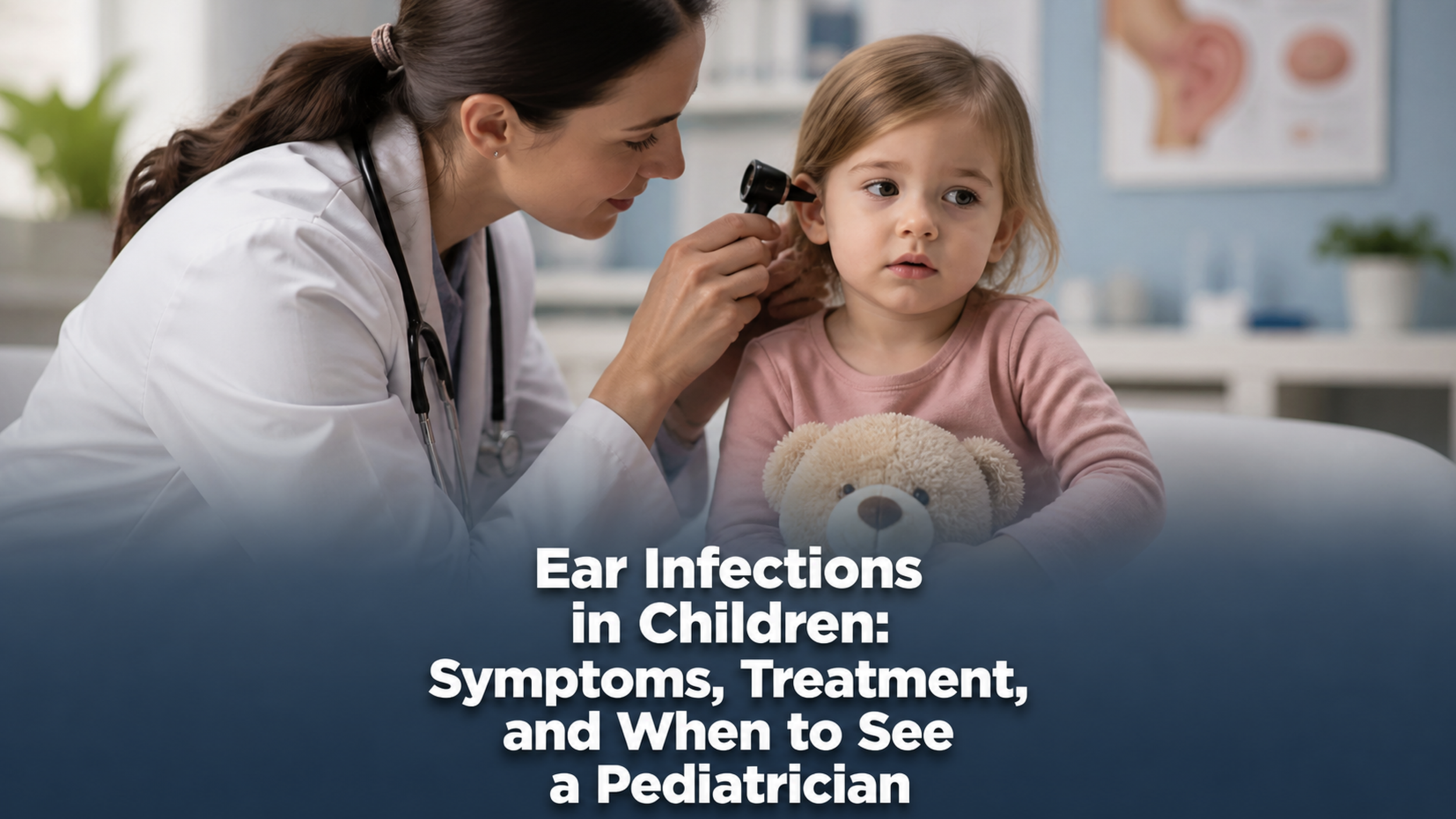
During a sick visit, your child’s pediatrician will ask about symptoms, how long they’ve been going on, recent colds, fever, and whether your child has had ear infections before. Then the doctor will examine the ear with an otoscope, which allows a close look at the eardrum.
That exam helps determine whether there is infection, fluid without infection, or another issue altogether. The treatment plan depends on what is found and on your child’s age, symptoms, and overall health.
What treatment might look like
Treatment for an ear infection in children can vary. Some ear infections may improve with time and symptom care, while others may need prescription medicine. The right approach depends on the child and the exam findings.
Your pediatrician may also recommend follow-up if symptoms don’t improve as expected or if ear infections keep happening. Recurrent ear infections can sometimes affect sleep, hearing, or speech development if they continue over time.
Parents sometimes ask whether they should wait it out. In some cases, a short period of watching symptoms makes sense. In other cases, especially with younger children or more significant symptoms, it’s better to have the ear checked sooner rather than later.
Can ear infections be prevented?
You can’t prevent every ear infection in children, but a few habits can lower the chances:
Wash hands often, especially during cold and flu season
Keep up with recommended vaccines
Avoid cigarette smoke exposure
Try to limit spread of colds in the home when possible
Talk with your pediatrician about how to manage frequent congestion or allergies
In West Tennessee, where families juggle school, daycare, sports, and changing weather, viruses tend to move quickly. That means ear pain after a cold is a common reason for a visit, especially in the fall and winter months.
A realistic West Tennessee example
Picture a toddler in Jackson who had a runny nose over the weekend, then wakes up Monday morning crying, tugging at one ear, and refusing breakfast. By lunchtime, the child is still fussy and has a fever. In a situation like that, it makes sense to call for a sick visit rather than wait several more days. An exam can help sort out whether it’s an ear infection, lingering congestion, or something else.
Frequently asked parent questions
Is ear pulling always a sign of an ear infection?
No. Some babies pull at their ears when they’re tired, teething, or soothing themselves. Ear pulling matters more when it happens along with fever, crying, poor sleep, or feeding changes.
Can my child go to school or daycare?
If your child has fever, seems uncomfortable, or needs medicine to stay comfortable, it’s usually best to keep them home. If your child has been seen and is feeling well enough to take part in the day, your pediatrician can help guide you.
Will an ear infection go away on its own?
Sometimes symptoms improve without major treatment, but not every ear infection should be watched at home. Young children, babies, severe pain, fever, and ear drainage are all reasons to call the pediatrician.
Why does my child seem worse at night?
Ear pressure and pain can feel worse when lying down, which is one reason parents often notice symptoms after bedtime. If your child is waking up crying and can’t settle, that’s a good reason to have the ear checked.
Bottom Line
An ear infection in children can cause ear pain, fever, fussiness, poor sleep, and changes in eating or hearing. Some symptoms can be watched for a short time at home, but babies, young children, and children with worsening symptoms should be seen by a pediatrician.
If your child isn’t acting like themselves, has ear pain after a cold, or you’re simply not sure what’s going on, you don’t have to figure it out alone. A sick visit can help you get answers and make a plan that fits your child.
The Children’s Clinic
264 Coatsland Drive
Jackson, TN 38301
731-423-1500
Serving children and families in Jackson, Madison County, and communities throughout West Tennessee.
