
Eczema in Babies and Children: Triggers, Treatment, and When to Get Help
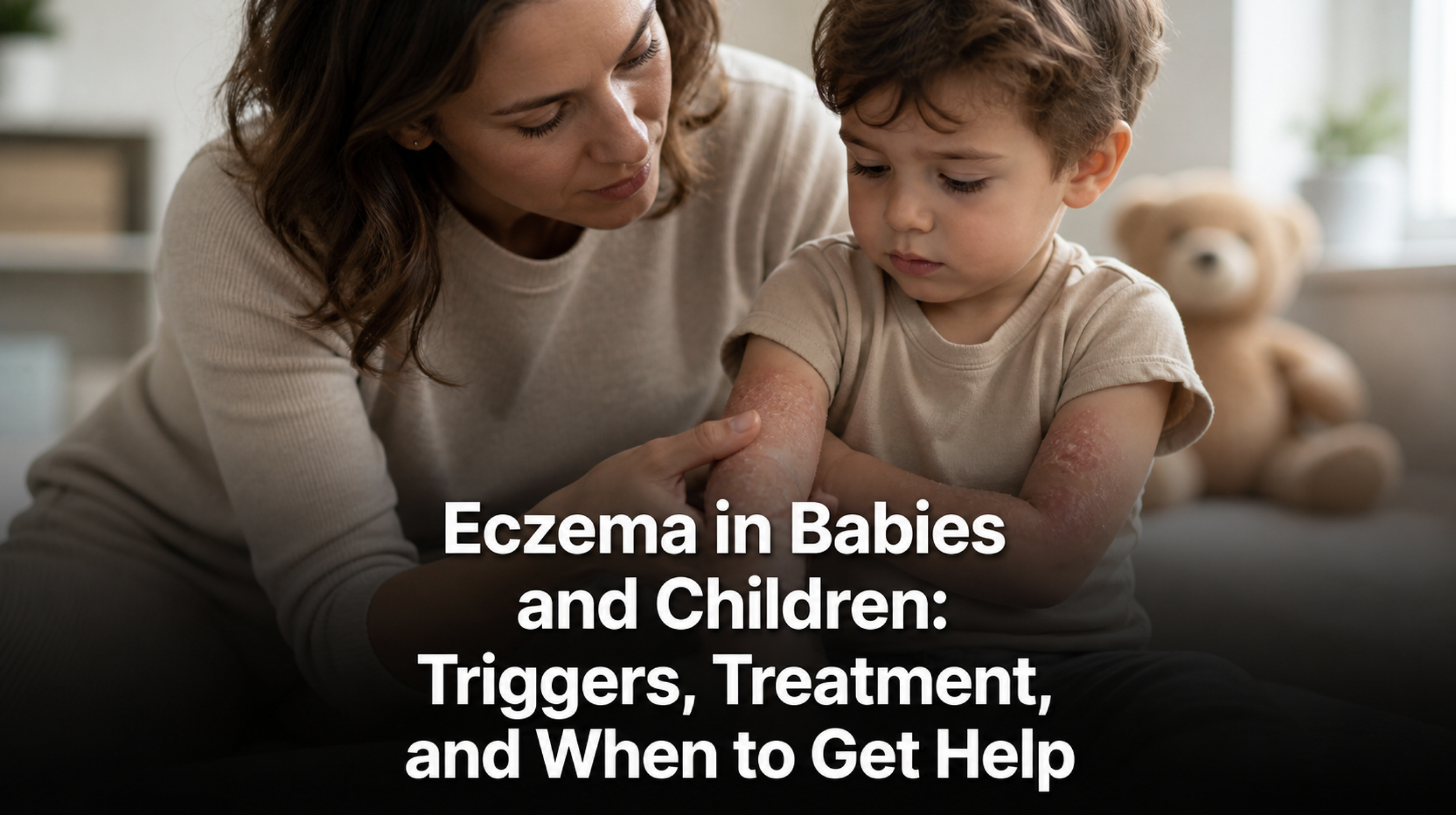
If your baby or child has skin that’s dry, red, rough, itchy, or constantly irritated, eczema may be part of the picture. For many parents, it starts with a few dry patches and turns into a cycle of scratching, fussiness, and sleepless nights. Eczema in children is common, but that doesn’t make it easy to manage when your little one is uncomfortable.
The good news is that a lot of children’s eczema can be helped with consistent skin care and by learning what tends to set it off. Some cases are mild. Others flare often and need a pediatrician’s help. If you’re trying to figure out what’s normal, what you can do at home, and when it’s time to call for help, you’re in the right place.
What eczema looks like in babies and children
Eczema is a skin condition that causes inflammation, dryness, and itching. In babies, it often shows up on the cheeks, scalp, arms, or legs. In older children, it may appear in the creases of the elbows, behind the knees, on the neck, or on the hands.
The skin may look:
Dry or flaky
Red or darker than the surrounding skin
Rough or bumpy
Itchy enough that your child keeps scratching
Cracked, especially in dry weather
Some children have a mild patch here and there. Others have skin that flares often, especially after bathing, sweating, or coming in contact with something that irritates their skin.
Common triggers for eczema in children
Eczema doesn’t have just one cause, and it’s not because a child’s skin is “dirty” or because a parent did something wrong. Many children have skin that is more sensitive and dries out more easily.
Common triggers can include:
Dry air, especially in winter or in air-conditioned homes
Heat and sweating
Rough fabrics like wool
Scented soaps, bubble baths, lotions, or detergents
Frequent bathing or long hot baths
Saliva from pacifiers or teething in babies
Dust, pollen, or pet dander in some children
Skin infections or irritated skin from scratching
In West Tennessee, weather changes can make skin problems more noticeable. A child might do fine for a while, then start itching more when the air turns drier in the cooler months or when hot, humid weather leads to sweating and skin irritation.
What parents can do at home
For many children, the daily skin routine matters as much as anything else. The goal is to protect the skin barrier and keep it from drying out more.
Use a gentle bath routine
Short, lukewarm baths are usually better than long, hot ones. Harsh soaps can make dryness worse, so choose mild, fragrance-free cleansers and use them only where needed. After bathing, pat the skin dry instead of rubbing.
Moisturize right away
One of the most helpful steps for eczema in children is applying a thick, fragrance-free moisturizer soon after bathing and at least once more during the day if needed. Ointments and creams often work better than light lotions because they help seal in moisture.
Dress your child in soft fabrics
Soft cotton clothing is often easier on sensitive skin. If wool or scratchy fabrics seem to make itching worse, it makes sense to avoid them when you can.
Watch for scratching
Scratching can break the skin and lead to more irritation. For babies, keeping nails trimmed can help. For older children, pajamas that cover the skin at night and keeping the room comfortably cool may reduce scratching during sleep.
Be careful with products
Fragrance-free is usually the safer choice for soaps, detergents, lotions, and wipes. If a new product seems to make the rash worse, stop using it and go back to simpler skin care.
What makes eczema flare?
Parents often notice a pattern. A child seems better for a while, then the rash flares again. That can happen even when you’re doing a lot of the right things.
Common flare triggers include:
Dry skin after bathing
Lots of sweating after outdoor play or sports
Illness or general skin irritation
Rough contact from clothing, bedding, or car seats
New skin products
If your child plays outside during a warm Tennessee afternoon, comes in sweaty, and then starts itching more, that may be part of the cycle. A quick rinse, gentle drying, and moisturizing afterward may help limit irritation.
When eczema may need medical treatment
Some eczema can be managed at home, but not all of it should be handled on your own. It’s a good idea to contact your pediatrician if:
The rash keeps coming back or doesn’t improve with regular moisturizing
Your child is scratching so much that sleep is affected
The skin is cracked, bleeding, or painful
You see yellow crusting, oozing, or worsening redness
The rash is spreading
Your baby seems especially fussy because of the itching
You’re not sure whether it’s eczema or something else
Sometimes a rash that looks like eczema can actually be another skin condition, or eczema may be complicated by a skin infection. A pediatrician can help sort out what’s going on and talk with you about the right treatment plan for your child.
When to get prompt or urgent help
Most eczema is not an emergency, but some symptoms need quicker attention.
Call your pediatrician promptly if the rash is becoming painful, your child seems to have a fever with the rash, or the skin looks infected. Signs of infection can include increasing warmth, swelling, pus, or honey-colored crusting.
Seek immediate medical care if your child has trouble breathing, swelling of the lips or face, or a rapidly spreading rash along with severe illness. Those signs may point to something more serious than eczema and should not wait.
Does eczema go away?
For some children, eczema improves a lot as they get older. For others, it comes and goes over time. The skin may be calmer for months and then flare again during a dry spell, after lots of sweating, or when a new product irritates the skin.
That’s one reason parents can feel stuck. It may seem like the rash is gone, then it comes right back. Keeping skin care simple and consistent can make a real difference, even if it doesn’t solve the problem overnight.
Can eczema affect sleep and daily routines?
Yes. Itching often gets worse at night, which can make it hard for a child to fall asleep or stay asleep. And when sleep is off, the next day can be harder for everyone. Younger children may be crankier. Older kids may be distracted at school or less comfortable during sports and play.
If your child is missing sleep because of itching, that’s a good reason to call. Even if the rash itself doesn’t look severe, the discomfort can still be enough to need medical attention.
A realistic West Tennessee example
Think about a child in Jackson or Madison County who starts back-to-school season with a rash that seems to get worse after recess, PE class, or a humid afternoon at the park. Parents may notice the skin is more irritated when the child gets sweaty or after several baths in a week. In a situation like that, gentle bathing, frequent moisturizing, and avoiding scented products may help, but if the rash keeps flaring or the child is scratching constantly, it’s time to check in with the pediatrician.
Frequently asked parent questions
Is eczema contagious?
No. Eczema itself is not contagious. A child can’t “catch” it from another child at daycare, school, or a playdate.
Can food cause eczema?
Food isn’t always the reason for a flare, and many children with eczema don’t have a food allergy. If you notice a clear pattern between a certain food and a reaction, talk with your pediatrician before making big changes to your child’s diet.
Should I stop bathing my child?
No. Bathing can still be part of healthy skin care. The key is to keep baths short, use lukewarm water, and moisturize after.
What if over-the-counter cream isn’t helping?
If you’ve tried gentle skin care and the rash still keeps coming back, your pediatrician can help you figure out the next step. Sometimes eczema needs a more specific treatment plan than home care alone.
Bottom Line
Eczema in children is common, but persistent itching, dry patches, and irritated skin can wear on the whole family. A gentle bath routine, regular moisturizing, and avoiding common triggers can help many children feel better. If the rash keeps coming back, seems infected, is disrupting sleep, or you’re just not sure what you’re seeing, it’s worth calling your pediatrician. You do not have to sort it out alone.
The Children’s Clinic
264 Coatsland Drive
Jackson, TN 38301
731-423-1500
Serving children and families in Jackson, Madison County, and communities throughout West Tennessee.
