⭐ Raising Kids in a Digital World: How Parents in West Tennessee Can Model Healthy Screen Habits

Screens are part of everyday life—there’s no getting around it. Phones help us stay connected, organize our schedules, and sometimes even give us a moment of quiet when the day is overwhelming. But for kids, especially toddlers, school-age children, and teens, the way we use our devices sends a powerful message.

Children don’t just listen to what we say about screen time—
they copy what we do.

At The Children’s Clinic in Jackson, we often talk with parents from all over West Tennessee—Humboldt, Medina, Lexington, Milan—who want practical ways to help their kids build healthier boundaries with technology. And the truth is, the most effective strategies begin with small changes at home.

If you’ve ever caught yourself scrolling without thinking or using your phone as a buffer between tasks, you’re not alone. Parenting is exhausting, and sometimes a few minutes of quiet can feel like the only way to reset. But with a little intention, you can create healthier rhythms for yourself and your children.

Today, we’re breaking down simple, realistic ways to model a balanced relationship with screens—no guilt, no judgment, just guidance you can use.

Why Modeling Matters So Much

Kids absorb your habits long before they understand the reasoning behind them. If you’re on the couch after dinner scrolling while talking, or if your phone is always within arm’s reach, that becomes “normal” to your child.

And children—especially younger ones—don’t distinguish between work-related use and recreational use. To them, screen time is screen time.

When kids see adults:

  • Put phones down during meals

  • Take breaks from devices

  • Choose offline activities

  • Set limits for themselves

…it becomes much easier for them to follow similar expectations.

Healthy device habits are learned over time, and they start with consistent, honest modeling from the adults they trust most.

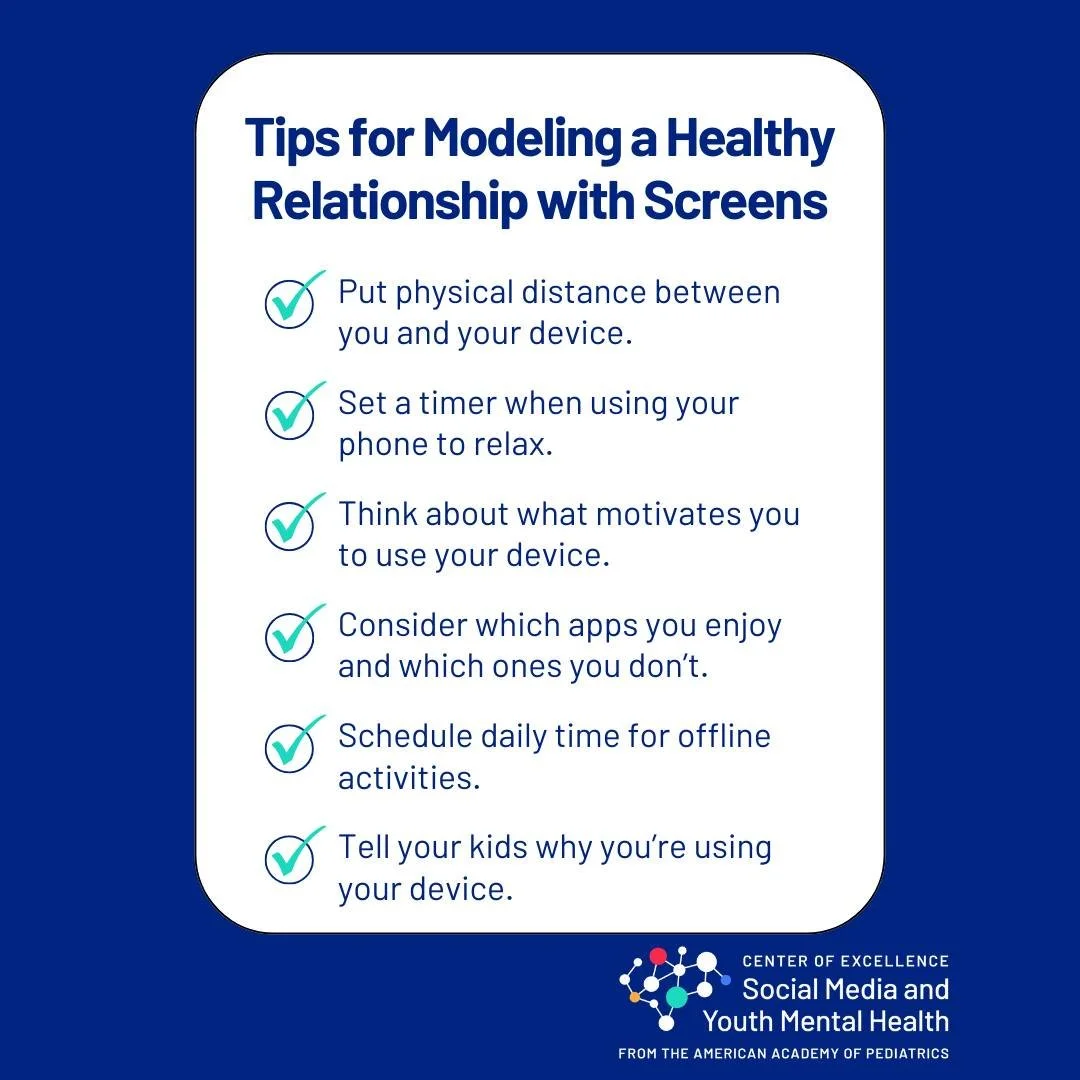
6 Ways to Model a Healthier Relationship With Screens

Using guidance from pediatric mental health experts, here are easy, realistic changes that make a real difference in your home.

1. Put Some Physical Distance Between You and Your Phone

Small changes have a big impact.

Try placing your phone:

  • On a counter during meals

  • Across the room during family time

  • In your bag during sports practices

  • On a charger in a separate space at bedtime

Kids notice when your attention is actually on them—not split between conversation and a device.

2. Set a Timer When You Use Your Phone to Relax

Scrolling can be a way to unwind, and that’s okay. But without limits, a few minutes easily becomes twenty or thirty.

Set a simple goal:

  • Five or ten minutes with a timer

  • Then intentionally put the phone away

Your child sees you regulating your own usage, which helps them feel less alone when they’re asked to do the same.

3. Identify Why You Pick Up Your Device

Are you reaching for your phone because you’re bored? Stressed? Overstimulated? Uncertain what to do next?

Kids benefit tremendously from hearing adults talk through these moments.

Try narrating out loud:

  • “I’m feeling a little overwhelmed, so I’m taking a quick break.”

  • “I’m checking this because I need important information.”

  • “I’m putting my phone away because I want to focus on you.”

This teaches emotional awareness, not just rule-following.

4. Reflect on Which Apps Help You—and Which Drain You

Not all screen time is equal.

Some apps support connection, creativity, or organization. Others cause stress, comparison, or mindless scrolling.

Let your child hear you say:

  • “This app helps me learn new ideas.”

  • “This one makes me feel tired or distracted, so I’m deleting it.”

Kids learn media literacy from watching you evaluate your own digital habits.

5. Schedule Daily Offline Time—for You and Your Kids

Even 15–20 minutes of unplugged time makes a huge difference.

Examples that resonate with families in West Tennessee include:

  • Cooking dinner together

  • Walking around the neighborhood

  • Playing board games

  • Reading aloud

  • Doing small chores as a team

  • Shooting basketball outside

When kids see you choose offline activities, they learn to value them too.

6. Tell Your Kids Why You’re Using Your Device

Transparency builds trust.

Explain:

  • “I’m texting Grandma back.”

  • “I’m looking up the directions.”

  • “I’m responding to a work email, then I’m done.”

Kids are far more understanding when they see purpose, not constant distraction.

Why This Matters for Kids’ Mental Health

A recent study found that twelve-year-olds with smartphones had higher rates of:

  • Depression

  • Anxiety

  • Sleep disruption

  • Social comparison

  • Sedentary behavior

But here’s the good news—

Kids do better when families set healthy boundaries together.

When parents model balanced habits:

  • Children sleep better

  • Family communication improves

  • Kids feel more grounded

  • Screen time causes fewer arguments

  • Technology becomes a tool—not a takeover

And your presence—your real, in-the-room attention—is something no app can replace.

Practical Ways to Start Today

Here are a few simple shifts parents in Jackson and the West TN area have found helpful:

✔ Create a charging station outside the bedroom
✔ Make the car a phone-free zone
✔ Have one or two screen-free meals each day
✔ Use “Do Not Disturb” during family time
✔ Replace end-of-day scrolling with a short walk
✔ Encourage kids to help decide the family rules

These moments build connection and resilience, setting a foundation your child carries into adolescence and adulthood.

If You’re Struggling, You’re Not Alone

Parenting in the digital age is complicated—even for pediatricians. No one gets it perfect. What matters is awareness, intention, and connection.

If you ever feel unsure, or if you’re worried about your child’s screen habits, sleep, mood, or behavior, our team at The Children’s Clinic is here to help. We support families through every stage of development and can help you create a plan that works for your household.

You don’t have to figure this out alone.

The Children’s Clinic — Proudly Serving Families Across West Tennessee

📍 264 Coatsland Drive, Jackson, TN 38301
📞 731-423-1500

Caring for children and teens throughout Jackson, Medina, Humboldt, Milan, Lexington, Pinson, and the greater West TN region.

Learn more: https://bit.ly/493RE4x

⭐ Understanding the Hepatitis B Vaccine: What West Tennessee Parents Need to Know Right Now

For many new parents, the first few days after birth are filled with excitement, exhaustion, and a whirlwind of decisions. Between learning how to swaddle, adjusting to feeding schedules, and getting to know your baby’s personality, it can feel like a lot hits you at once. And when something confusing or concerning pops up in the news—especially about infant health—it’s completely normal to pause and wonder what’s true and what’s simply noise.

Lately, you may have seen conflicting information or worrying headlines about the hepatitis B vaccine. For parents in Jackson, Medina, Humboldt, and throughout West Tennessee, these stories often spark understandable anxiety. After all, you’re doing your best to protect your baby, and you want clear, trusted answers—not rumors, not misinformation.

At The Children’s Clinic, our pediatricians have walked with thousands of families through this exact moment. Our goal today is to give you the calm, fact-based clarity you deserve, so you can make decisions confidently and know your baby is receiving safe, well-studied, and effective care.

What Is Hepatitis B and Why Does It Matter?

Hepatitis B is a virus that affects the liver. While adults can sometimes clear the virus, babies and young children usually cannot. If a baby becomes infected, the virus can stay in their body for life. This can lead to serious long-term health issues including:

  • Chronic liver disease

  • Liver failure

  • Liver cancer

Newborns are especially vulnerable because their immune systems are still developing. Even a brief exposure—sometimes from someone who doesn’t know they’re infected—can result in lifelong consequences.

This is why prevention is so important.

The Vaccine That Changed Everything for Infants

The hepatitis B vaccine is one of the longest-studied and most carefully monitored vaccines in pediatrics. It’s been recommended for newborns in the United States since 1991, and its impact has been extraordinary.

Since pediatricians began giving the birth dose, hepatitis B infections in infants have dropped by 99%.

That means generations of children—right here in Jackson, in West Tennessee, and across the country—have been protected from a virus that once caused severe illness and heartbreaking long-term complications.

These results aren’t based on small studies or short-term testing. They come from:

  • Decades of research

  • Millions of newborns safely vaccinated

  • Ongoing monitoring by pediatric experts worldwide

Parents can feel confident knowing this vaccine is one of the strongest, safest tools we have for protecting babies from a preventable disease.

Why Newborns Need the Hepatitis B Vaccine Right Away

A common question we hear at The Children’s Clinic is:
“If I tested negative for hepatitis B during pregnancy, why does my baby still need the vaccine?”

It’s a great question—and the answer is reassuring.

Even when mothers test negative, newborns can still be exposed in other ways:

  • Through someone in the household who doesn’t know they’re infected

  • Through caregivers or extended family

  • Through microscopic blood droplets during delivery

  • Through contact after coming home

Because people can carry hepatitis B without symptoms, they may not realize they are contagious. The vaccine’s purpose is simple: shield your baby from any potential exposure, even the unexpected ones.

The birth dose is designed to offer maximum protection at the exact moment babies are most vulnerable.

Is There Any Reason to Delay the Birth Dose?

Parents sometimes ask whether waiting a few weeks is safer or more natural. The evidence is clear:

No medical benefit exists in delaying the hepatitis B birth dose.

The vaccine has undergone decades of rigorous evaluation, and administering it immediately after birth is the most effective way to prevent infection. Delaying only increases the risk.

This is why pediatric groups nationwide—including the American Academy of Pediatrics—continue to recommend the birth dose for every newborn, regardless of the mother’s test results.

How the Vaccine Works in Your Baby’s Body

The science behind the hepatitis B vaccine is both fascinating and reassuring.

Once given, the vaccine teaches your baby’s immune system how to:

  • Recognize the virus

  • Defend against it

  • Build long-term immunity

This “training session” helps protect your child for life. It’s one of the few vaccines that builds such a strong, lasting defense starting from day one.

Knowing this helps many parents breathe easier. There is nothing in the vaccine that “overloads” or overwhelms your newborn’s immune system—just an opportunity for protection that lasts well into adulthood.

Addressing Misinformation and Recent News Stories

Social media can make even the most confident parent question things. When conflicting headlines pop up, fear spreads quickly. But here’s the truth:

  • The hepatitis B vaccine is not new

  • It has been proven safe for over 30 years

  • Its effectiveness is supported by overwhelming evidence

  • Leading pediatric and public health experts unanimously support it

While dramatic headlines may grab attention, they often lack context or accuracy. If anything ever concerns you, please reach out. You deserve answers rooted in science, not speculation.

Your Pediatric Team in Jackson, TN Is Here to Support You

At The Children’s Clinic, we understand how much trust you place in us. It’s our responsibility to help you sort through misinformation, ask questions openly, and make decisions that feel right for your family.

Whether you're a first-time parent navigating newborn care or you're on your second or third child and just want updated guidance, we’re always here to listen and explain things in a way that feels personal—not overwhelming.

If you ever feel uncertain, confused, or just want reassurance, we encourage you to call or schedule a visit. Building understanding together is part of the care we’re proud to offer West Tennessee families.

A Safe, Proven Step Toward a Healthy Start

Parenthood comes with enough surprises—some joyful, some stressful, many completely unexpected. But protecting your baby from hepatitis B doesn’t have to be one of them. The vaccine has an incredibly strong safety record, a history of measurable impact, and the support of every major pediatric health organization.

You’re doing an amazing job navigating all of this. And you never have to do it alone.

If you have questions, we’re here—ready to support you through every step, every milestone, and every decision.

The Children’s Clinic — Local Pediatric Care You Can Trust

The Children’s Clinic
📍 264 Coatsland Drive, Jackson, TN 38301
📞 731-423-1500

Proudly caring for families throughout Jackson, Medina, Humboldt, Milan, Lexington, and the greater West Tennessee region.

Learn more: https://bit.ly/46nzS9z

Helping Kids Build Healthy Smartphone Habits: A Practical Guide for West Tennessee Families

Smartphones connect us, entertain us, and help keep our families organized—but for children and teens, they can also bring challenges. In West Tennessee, it’s common for kids to get their first phone around middle school, especially as they begin staying after school, participating in sports, or needing a way to check in with parents. But new research shows there’s more to consider than just convenience.

A recent study found that twelve-year-olds who owned smartphones were more likely to experience depression, obesity, and sleep disruption compared to peers without a phone. That doesn’t mean phones are dangerous by default. It simply means children need guidance—just as they do when learning any new skill.

If your child or teen already has a smartphone, don’t panic. The goal isn’t to take the phone away, but to help them use it in a healthy and balanced way. At The Children’s Clinic, we regularly talk with families across Jackson, Medina, Humboldt, Henderson, Lexington, and the greater West Tennessee region about screen time, social media, mental health, and setting boundaries at home. The good news: small, consistent habits make a tremendous difference.

Below, you’ll find practical, realistic strategies to help your child build a healthier relationship with their phone—without conflict, shame, or constant battles.

Why Smartphones Affect Mood, Behavior, and Sleep

To understand how to help kids use smartphones wisely, it’s helpful to know why they can be overwhelming.

Here are the key factors pediatricians see in daily practice:

1. Smartphones compete with sleep.

Teens naturally fall asleep later due to biological shifts in the brain. Add late-night scrolling, group chats that ping at midnight, or gaming with friends—and suddenly your child’s sleep routine unravels.

Sleep loss affects:

  • Concentration

  • Emotional regulation

  • School performance

  • Appetite and metabolism

  • Overall mental health

This is one reason the study linked early phone ownership with higher obesity rates and increased signs of depression.

2. Social media fuels comparison.

Even confident teens struggle when they constantly compare themselves to filtered images, online friend groups, or unrealistic lifestyles.

3. Notifications create stress.

Kids may feel pressure to respond immediately—even when they don’t want to.

4. Physical activity decreases.

If the choice is between going outside or staying on a device, the device often wins.

Understanding these patterns helps parents create boundaries that support—not restrict—their children.

How Parents Can Help Kids Use Smartphones in a Healthy Way

These strategies are realistic for busy families and work across a wide age range:

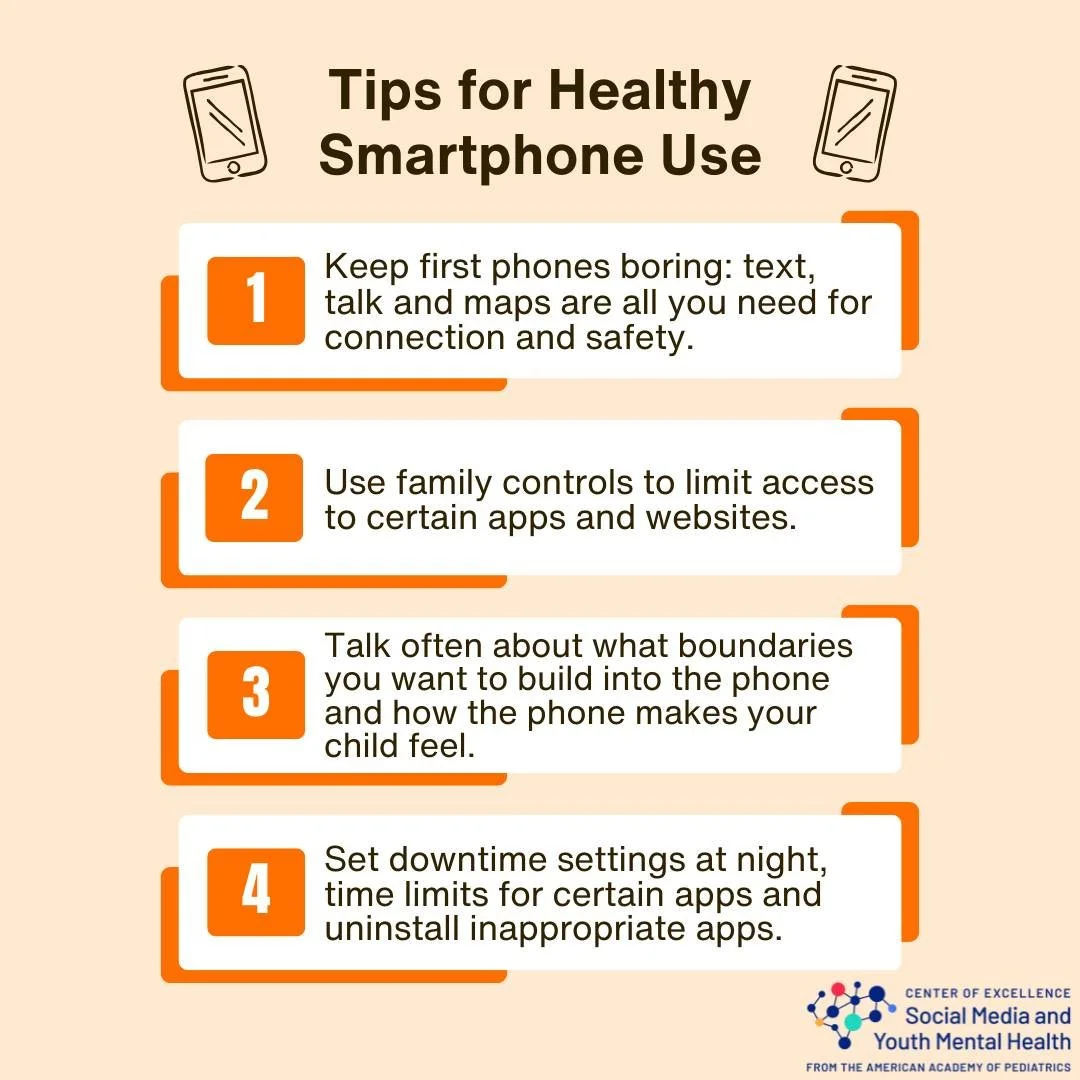
1. Keep First Phones Simple

When a child gets their first phone, consider keeping it “boring.” The goal is safety and communication—not unlimited access.

A basic first phone might include:

  • Texting

  • Calling

  • Maps

  • Weather

  • Camera

That’s plenty for a beginner. Waiting to introduce social media or app stores can prevent many early problems.

If your child already has a full smartphone, you can still simplify it later. Kids adapt quickly when expectations are consistent and explained calmly.

2. Use Family Controls & App Limits

Every major phone brand offers built-in parental tools:

  • App time limits

  • Content filters

  • Website blocking

  • Location settings

  • Downtime schedules

These tools are most effective when paired with open communication, not secrecy. Tell your child what settings you’re enabling and why.

A helpful script might be:

“I’m not setting these limits to punish you. I’m setting them so your brain gets downtime, your body gets sleep, and you get space to enjoy other things.”

Most kids accept boundaries more easily when they understand the purpose.

3. Talk Regularly—Not Just When There’s a Problem

Conversations about smartphone use aren’t one-and-done. Kids’ needs change as they grow, and their relationship with technology changes too.

Here are conversation prompts that help build trust:

  • “How does having a phone make your day better?”

  • “What parts of your phone make you feel stressed or overwhelmed?”

  • “Which apps do you think are helpful? Which ones feel distracting?”

  • “Do you feel pressure to respond quickly when friends message you?”

  • “What boundaries would help your phone feel less stressful?”

Open-ended questions give kids room to share their experiences honestly.

4. Establish Downtime—Especially at Night

Phones should “go to bed” long before your child does.

Try creating a household rule such as:

  • All phones charge in the kitchen or living room overnight

  • No phones at the dinner table

  • No phones after a set time on school nights

  • No devices in bedrooms for kids under 16

This protects sleep and helps kids transition from stimulation to rest.

Many parents tell us that removing nighttime screens improves:

  • Mood

  • School performance

  • Mornings

  • Sleep quality

  • Family connection

These changes can appear within days—not months.

5. Encourage Offline Activities

Phones should complement a child’s life, not replace it. Help your child rediscover activities that bring joy:

  • Sports

  • Art

  • Music

  • Reading

  • Spending time with cousins and friends

  • Outdoor play

  • Volunteering

  • Hobbies like baking, drawing, or building

Children who feel fulfilled offline naturally rely less on their screens.

6. Model the Habits You Want Them to Build

Kids watch our behaviors more closely than we realize.

If you want your child to:

  • Put their phone down at dinner

  • Take breaks from scrolling

  • Avoid using social media when emotional

  • Respect boundaries

—then it helps to model those habits yourself.

Even small changes like plugging your phone in at a designated spot each night or announcing when you’re taking a screen break show children that balance is possible.

What If My Child Is Already Struggling?

Parents often worry that it’s “too late” to help their child build healthier habits—especially when a teen is experiencing mood changes, social pressure, or conflict around screens.

But it’s never too late.

Signs your child may need extra support include:

  • Trouble falling asleep

  • Falling grades

  • Withdrawal from activities they once enjoyed

  • Irritability

  • Increase in anxiety or sadness

  • Secretive or compulsive phone use

If you notice these patterns, start with gentle conversation and gradual boundaries. And remember—your pediatrician is an excellent resource for concerns related to sleep, behavior, social media stress, and mental health.

Local SEO Section: Supporting Healthy Development for Children Across West Tennessee

Families throughout Jackson, TN, and surrounding West Tennessee communities trust The Children’s Clinic for guidance on all aspects of child and teen wellbeing—including screen time, sleep issues, technology boundaries, and mental health.

Whether your child is getting their first phone or navigating the challenges of high-school social media, our pediatric team is here to help you build healthy routines tailored to your family.

THE CHILDREN’S CLINIC — CONTACT INFORMATION

The Children’s Clinic
264 Coatsland Drive
Jackson, TN 38301
📞 731-423-1500

We’re proud to care for families across West Tennessee and to support your child’s growth—online and offline.

Learn more: https://bit.ly/4phVDzU

Making Holiday Decorating Safe & Joyful: A Parent’s Guide for West Tennessee Families

For many families across West Tennessee, holiday decorating is more than a seasonal chore—it’s a tradition. Kids race to unpack ornament boxes, parents plug in familiar strands of lights, and homes across Jackson, Medina, Humboldt, Henderson, and surrounding communities begin to glow with that unmistakable warmth of the holidays.

Whether your family prefers a fresh-cut tree from a local farm, or you’re loyal to a favorite artificial tree you’ve used for years, holiday décor creates memories children carry with them for a lifetime. But while holiday decorating brings joy, it also brings safety risks—especially for curious toddlers, young children, and even teens eager to help.

At The Children’s Clinic, we want your family to enjoy every moment of the season while keeping everyone safe. A few small precautions can prevent fires, injuries, choking risks, and other hazards that tend to increase during the holiday months.

Below is a parent-friendly guide to making holiday decorating safe, festive, and stress-free.

Why Holiday Decorations Matter for Children

Children don’t just see decorations as objects—they see magic. A tree glowing in the corner becomes a symbol of excitement, belonging, and family connection. Stringing lights together becomes a shared activity. Even placing ornaments on branches tells the story of who your family is, what you value, and what you celebrate.

But children also see holiday décor differently than adults:

  • A sparkling ornament looks like something they might want to taste.

  • A string of lights looks like a tug toy.

  • A real tree becomes an inviting place to explore.

  • Loose hooks and fallen needles can become slip or swallowing hazards.

So while decorating is a chance to bond and create tradition, it's also a time to be extra mindful of your child’s age, developmental stage, and natural curiosity.

Tip #1: Choose Safe, Family-Friendly Ornaments

Many families collect ornaments over decades—glass, ceramic, handmade, heirloom pieces, painted keepsakes from school projects. While beautiful, some of these ornaments aren’t designed with young children in mind.

To keep your décor safe:

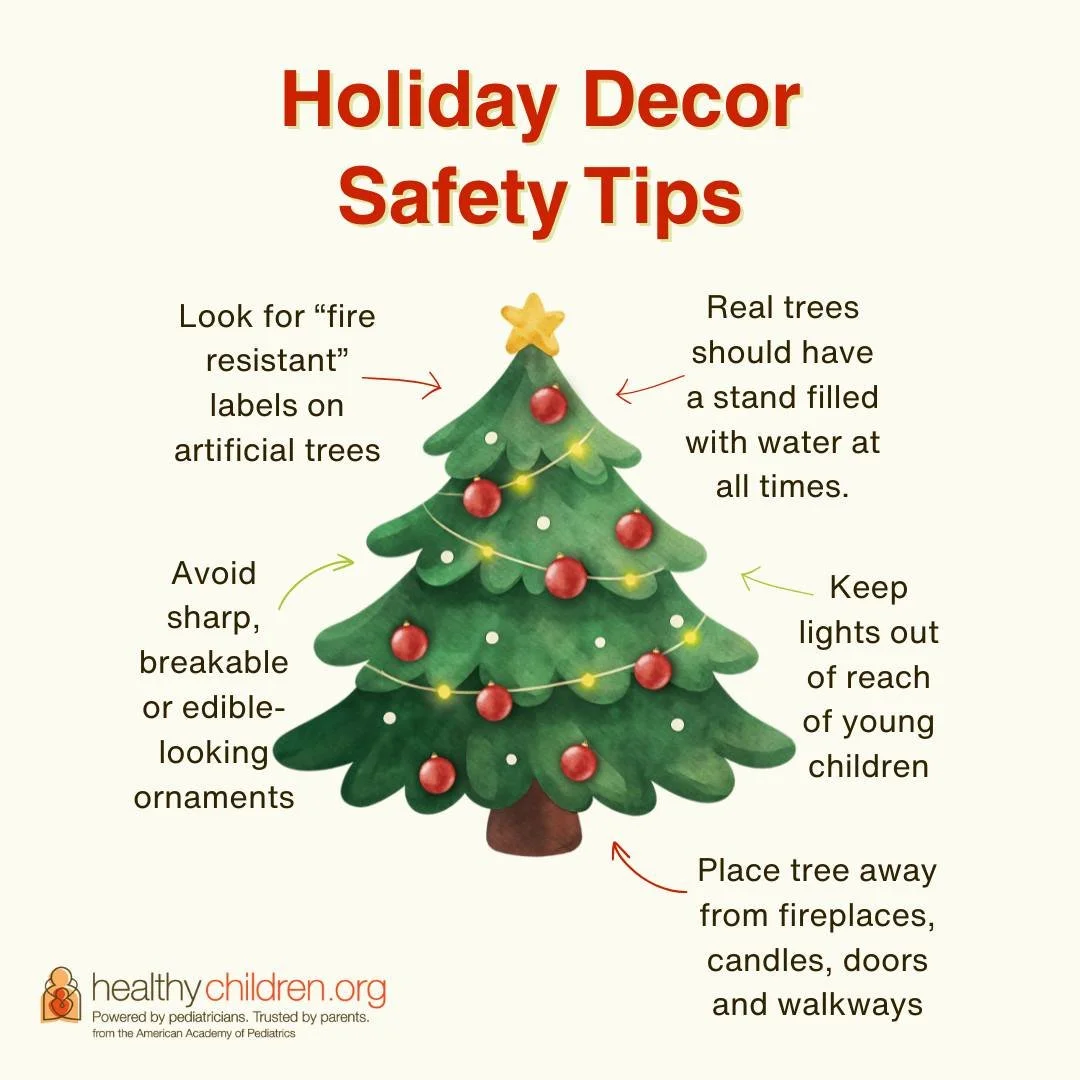
  • Avoid sharp, breakable ornaments when small children are helping decorate or will be playing nearby.

  • Skip edible-looking ornaments, including candy canes, donut-shaped glass ornaments, or fake sweets. Toddlers often put things in their mouth, and these items can be confusing.

  • Place delicate or sentimental ornaments higher on the tree, out of reach of little hands.

  • Use soft, plush, fabric, felt, or wooden ornaments on lower branches so children can explore without risk.

If your child is especially eager to decorate, consider giving them their own small tree with soft ornaments and no hooks. This lets them participate safely.

Tip #2: Keep Lights Out of Reach

Holiday lights are magical—especially for young children. But light strands pose several hazards:

  • Risk of electrical burns if bitten or chewed

  • Risk of strangulation

  • Risk of overheating if old or damaged

  • Small bulbs that can pose a choking danger if dislodged

To keep your family safe:

  • Hang lights higher on the tree, away from toddlers’ reach.

  • Inspect every strand before plugging them in. If you spot frayed wires, loose bulbs, or missing insulation, throw it out.

  • Use LED lights, which run cooler and reduce fire risk.

  • Don’t overload power strips or run cords under rugs.

One more reminder: It’s tempting to leave the tree lights on all night because they look cozy, but always turn them off before bed or when leaving the house.

Tip #3: Choose Safe Artificial Trees

Artificial trees are a popular choice for many families in Jackson and surrounding West Tennessee communities, especially those who want convenience or fewer allergens.

If you use an artificial tree:

  • Look for “fire-resistant” labels when purchasing.

  • Avoid older artificial trees that may be made from outdated plastics or wiring.

  • Set the tree up on a stable, flat surface so it won’t tip if a child bumps into it.

  • Frame the tree away from heaters, fireplaces, and candles.

Fire-resistant doesn’t mean fireproof—but it does reduce the chance that a spark will turn into a dangerous flame.

Tip #4: Caring for Real Trees Safely

There’s something special about the smell of a fresh pine or fir tree filling the home. But real trees come with their own safety considerations.

To keep a real tree safe:

  • Use a sturdy stand designed for the tree’s size.

  • Make sure the stand is filled with water at all times. A dry tree becomes a major fire hazard.

  • Trim 1–2 inches off the tree trunk before placing it in the stand. This helps the tree absorb water better.

  • Place the tree away from fireplaces, radiators, space heaters, and candles.

  • Clean up fallen needles regularly. They can be sharp and slippery.

Teach young children not to drink from the tree stand—some may try!

Tip #5: Secure Your Tree to Prevent Tipping

Toddlers love to grab branches, tug on ornaments, and crawl underneath trees. Even older kids and pets may bump into the tree accidentally.

To prevent tipping:

  • Use fishing line or clear twine to anchor the tree to the wall behind it.

  • Avoid decorating the tree too heavily at the top.

  • Choose a wide, stable tree stand.

  • Do not place toys, gifts, or exciting objects behind the tree, which encourage children to reach between branches.

A secure tree not only prevents injuries—it also protects your ornaments and decorations.

Tip #6: Store Décor Safely Between Seasons

After the holiday season ends, children often help pack up decorations. This is another opportunity to practice safety.

When storing items:

  • Wrap sharp hooks and fragile ornaments carefully.

  • Keep all lights and electrical cords in a separate box.

  • Store everything high on shelves, not at child level.

  • Dispose of worn-out decorations rather than storing them.

Better organization in January leads to safer decorating next December.

Tip #7: Keep Walkways Clear and Well-Lit

Holiday clutter happens quickly—tree skirts, presents, stockings, décor boxes, extension cords, and more.

To reduce tripping hazards:

  • Keep pathways clear, especially near doors and stairs.

  • Avoid placing the tree or décor near walkways.

  • Tape down loose cords or use cord covers.

  • Keep candles away from pathways and never within a child’s reach.

Your home should feel festive—but also safe to move around in, especially for visiting grandparents or toddlers who are learning to walk.

Building Traditions While Keeping Children Safe

Safety doesn’t take away from the fun of decorating. In fact, it gives children the freedom to enjoy the season without unnecessary risk.

Try incorporating these child-friendly decorating traditions:

  • Let kids decorate their own soft-ornament mini tree

  • Make paper snowflakes together

  • Create a “kids-only” ornament box with non-breakable items

  • String popcorn or paper garlands (with supervision)

  • Replace glass balls with felt or wooden ornaments

  • Save delicate heirloom ornaments for the top half of the tree

Children love feeling included—and including them safely strengthens every holiday memory.

Local SEO Section: Serving Families Across West Tennessee

Families throughout Jackson, TN, and the surrounding West Tennessee communities—Medina, Humboldt, Henderson, Lexington, Milan, Brownsville, and across Madison County—turn to The Children’s Clinic for trusted pediatric care year-round, including safety guidance during the holiday season.

If you ever have questions about child safety, injury prevention, allergies, choking hazards, or anything related to your child’s health, our team is here to help.

THE CHILDREN’S CLINIC — CONTACT INFORMATION

The Children’s Clinic
264 Coatsland Drive
Jackson, TN 38301
📞 731-423-1500

Your child’s health and safety matter to us—during the holidays and every day of the year.

Learn more: https://bit.ly/2ATCltB

Talking With Your Teen About Drugs & Alcohol: A Guide for West Tennessee Families

If you’re raising a teenager in West Tennessee, you already know how quickly the world around them is changing. Social pressures, social media, parties, sports, new friends, shifting routines—teenagers today are growing up at a pace that can feel overwhelming for both parents and kids. And when conversations about drugs or alcohol enter the picture, many parents freeze, worry they’ll say the wrong thing, or fear the topic will create distance between them and their teen.

But the truth is this: your voice still matters more than you think. Teens may roll their eyes, get quiet, or insist they “already know,” but research consistently shows that parents remain the single strongest influence on a teen’s choices, especially when it comes to substance use.

At The Children’s Clinic here in Jackson, Tennessee, we talk with families every week who feel unsure about how to approach these conversations. Some parents think talking about drugs might “give their teen ideas,” while others fear their teen will shut down or become defensive. But open, calm, ongoing conversations build trust—and that trust is what helps teens make safer decisions.

Below is a guide created specifically with local families in Jackson, Medina, Humboldt, Henderson, and the greater West Tennessee area in mind. These steps aren’t about lecturing or scaring your teen. They’re about strengthening connection so your teen always knows they can come to you—especially when it matters most.

Start With Connection, Not Control

When parents feel frightened or uncertain, it’s natural to want to tighten rules or jump straight into warnings. But teens respond far better to connection than to control.

Instead of beginning the conversation with “Don’t ever do this,” try easing in with curiosity:

  • “What kinds of things do you hear at school about vaping?”

  • “Do kids talk about drinking at football games or parties?”

  • “Is anyone you know struggling with substance use?”

Open-ended questions give your teen room to talk—without feeling cornered. When a teen believes their parent is actually listening rather than interrogating, they’re much more likely to be honest.

And remember: your goal isn’t to get every answer right. Your goal is to stay connected.

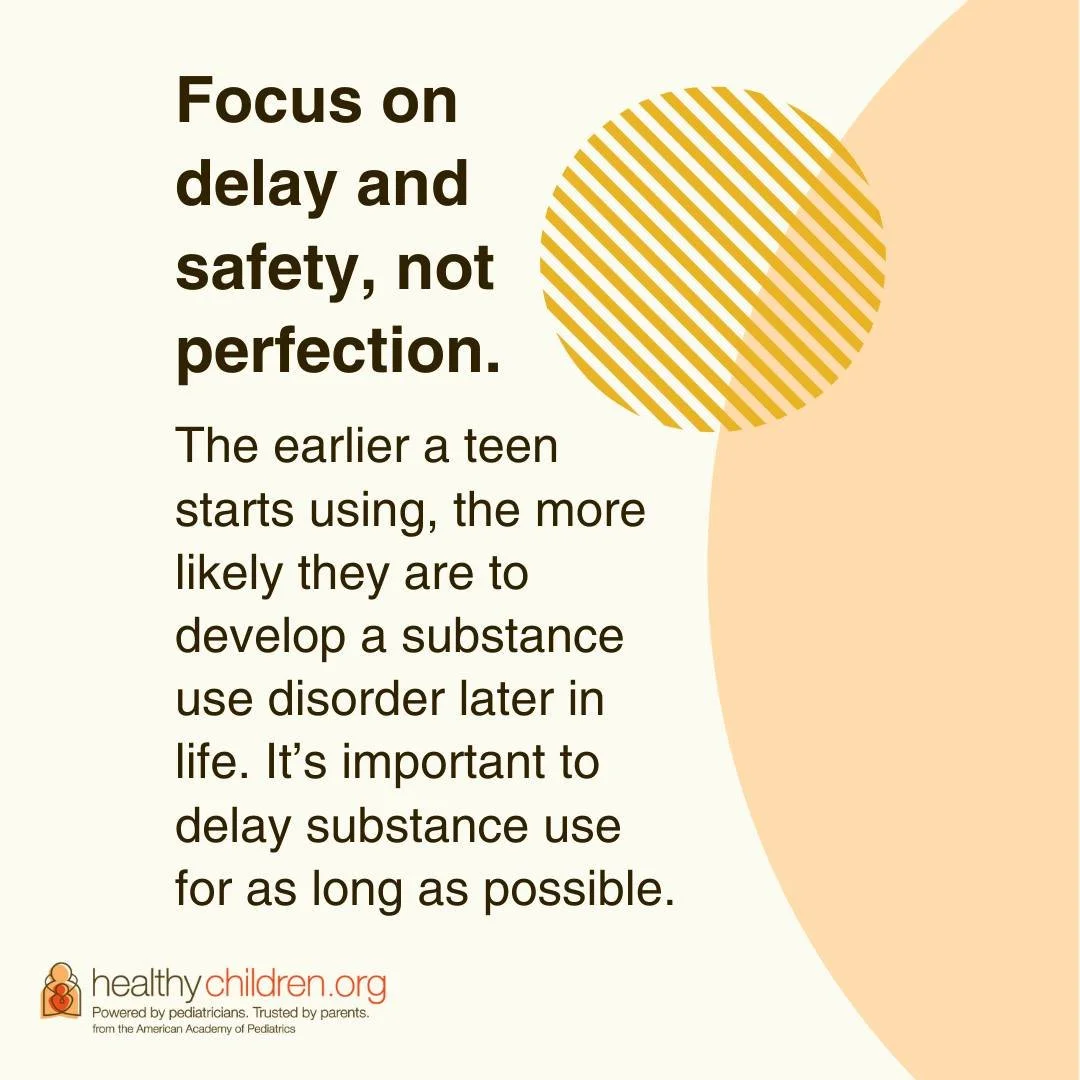
Focus on Delay and Safety, Not Perfection

Parents often worry that if their teen experiments—even once—it means they’ve completely failed. But the earlier a teenager begins using alcohol, drugs, or vaping products, the higher their risk for addiction later in life.

Your aim is not perfection. Your aim is delay.

The longer your teen can go without substance use, the better their long-term outcomes will be. That’s because the teen brain is still wiring itself together. Substances interfere with that development, making it harder for kids to regulate emotions, make judgment calls, and resist risk-taking.

Help your teen understand:

  • Early use increases long-term risks.

  • Their brain is still growing and deserves protection.

  • They don’t need to be perfect—they just need to make safe, informed choices.

This approach removes shame and increases understanding, which helps both you and your teen work as a team.

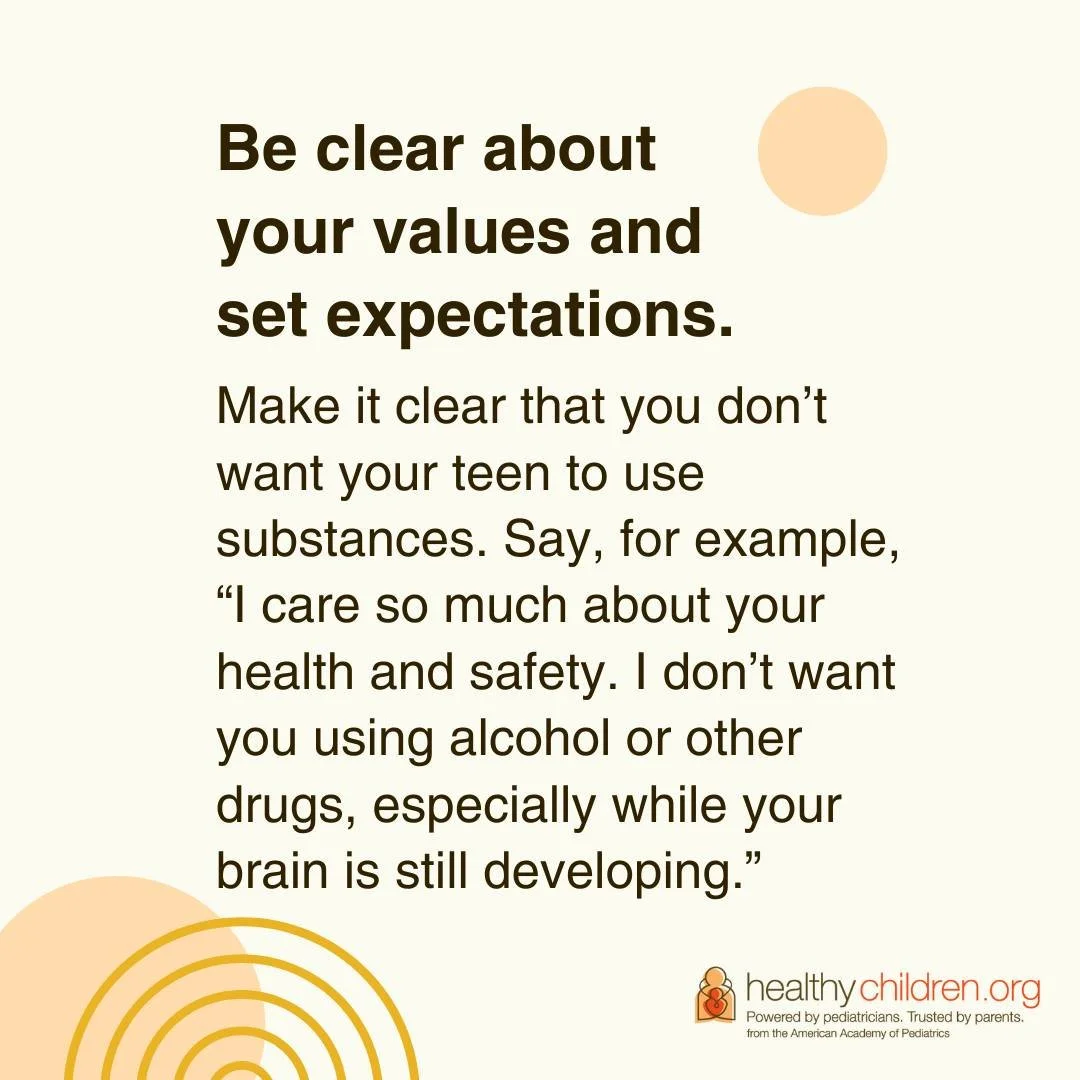
Be Clear About Your Values and Expectations

Even when teens act like they’re ignoring you, they’re absorbing far more than you realize. Set clear expectations, and repeat them consistently:

  • “I care deeply about your safety.”

  • “I don’t want you drinking or using drugs because your brain and body are still growing.”

  • “I expect honesty and communication from you.”

Teens need boundaries—not as punishment, but as protection. When expectations are communicated calmly and consistently, teens understand the “why” behind house rules, which makes them far more likely to follow them.

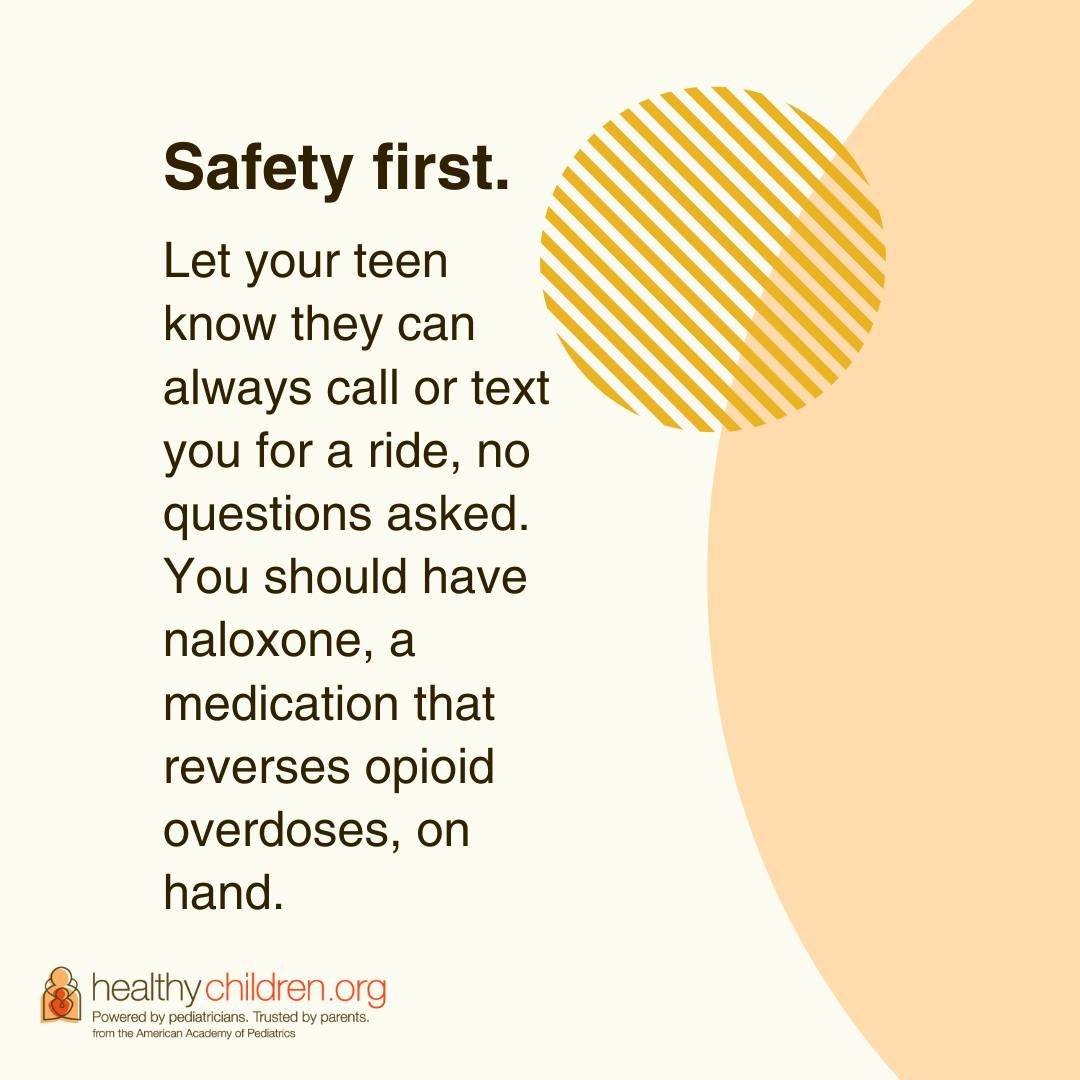
Safety First: Keep Communication Channels Open

One of the most important things a parent can say to a teenager is:

“If you’re ever unsafe, call me. No questions asked.”

This doesn’t mean you approve of risky behavior. It means your teen knows their safety matters more than any mistake.

Other safety-focused tips include:

  • If your teen ever needs a ride, pick them up without lecturing in the moment.

  • If opioids are present in your home for any reason (after a surgery, dental procedure, or injury), have naloxone available.

  • Store medications—prescribed or otherwise—securely and out of reach.

  • Talk openly about peer pressure, group dynamics, and online influence.

West Tennessee teens face unique challenges, whether they’re navigating Jackson’s social scene, football games across Madison County, school activities, or rural communities where supervision varies. Preparing your teen for real-life scenarios gives them confidence to make safe decisions.

Don’t Avoid the Conversation About Vaping

Many parents assume vaping is “less harmful” or “just flavored air.” Unfortunately, nicotine addiction is escalating faster than ever among teens—and vapes are a major reason why.

Teens in Jackson, Lexington, Milan, and surrounding areas are exposed to vaping at school, on social media, at sporting events, and even in friend groups where it feels “normal.”

Talk with your teen about:

  • How vaping affects lung development

  • What nicotine addiction feels like

  • How marketing targets young people

  • How hard quitting actually is

You don’t need scare tactics. Just honesty. Teens appreciate straight facts far more than dramatics.

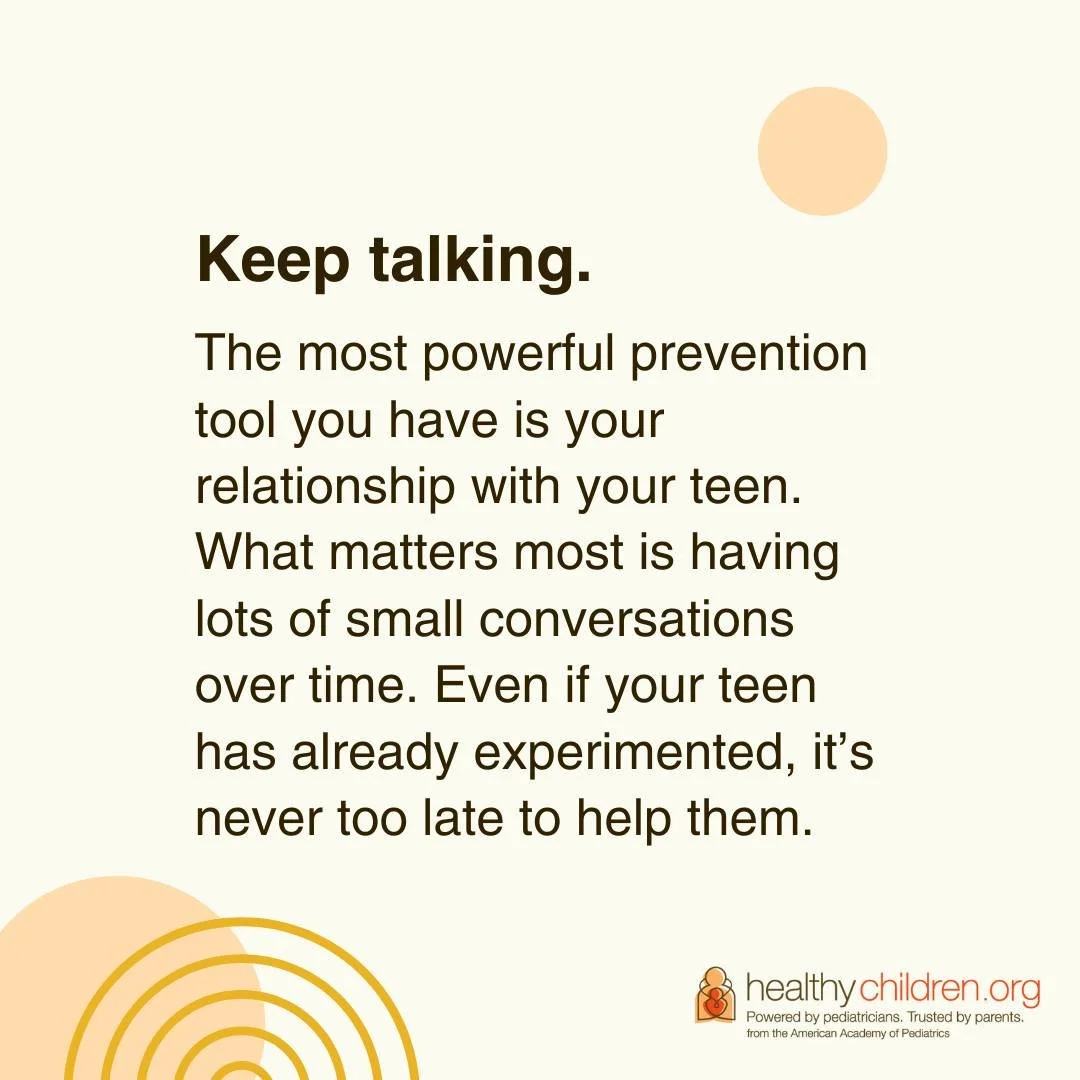
Keep Talking — Small Conversations Matter Most

Many parents wait for “the right moment” to talk about drugs or alcohol. But the most effective conversations happen in little bits over time:

  • In the car

  • At dinner

  • After school events

  • Before bedtime

  • While running errands around Jackson

These small conversations communicate that substance use isn’t a taboo topic—it’s something you can openly discuss together.

Even if your teen has experimented, or even if you feel late to the conversation, it’s never too late to reconnect.

What to Do If You Suspect Your Teen Is Experimenting

This is the part parents fear most. But acting from panic or anger almost always pushes teens away. If you have concerns:

  1. Stay calm.

  2. Ask questions without judgment.

  3. Listen more than you speak.

  4. Remind your teen you love them and want to help.

If you’re unsure where to start—or if you want professional guidance—The Children’s Clinic is here for you.

Our pediatricians talk with families every day about these exact concerns. We understand local pressures, local schools, and the realities facing teens in West Tennessee.

You’re not alone in this.

Why Teens Need You More Than Ever

Your teen may not show it, but they rely on you for stability, support, and protection. Your relationship with them—your guidance, your presence, your listening ear—is one of the most powerful tools for preventing substance misuse.

No parent gets everything right. What matters most is staying connected.

If you ever feel uncertain about how to approach these conversations or want help understanding your teen’s behavior, mood, or risk factors, reach out to us anytime.

Parents across Jackson, TN, and the surrounding West Tennessee communities—including Medina, Humboldt, Lexington, Henderson, Milan, Brownsville, and all of Madison County—turn to The Children’s Clinic for trusted pediatric guidance. Talking with teens about drugs and alcohol isn’t always easy, but having a local pediatric team who understands the challenges specific to our region makes a world of difference.

If you need support, resources, or a place to turn with questions, we’re here for you—right here in your community.

THE CHILDREN’S CLINIC

The Children’s Clinic
264 Coatsland Drive
Jackson, TN 38301
📞 731-423-1500

Where West Tennessee families trust their children’s care.

Learn more: https://bit.ly/3Xd96wz