
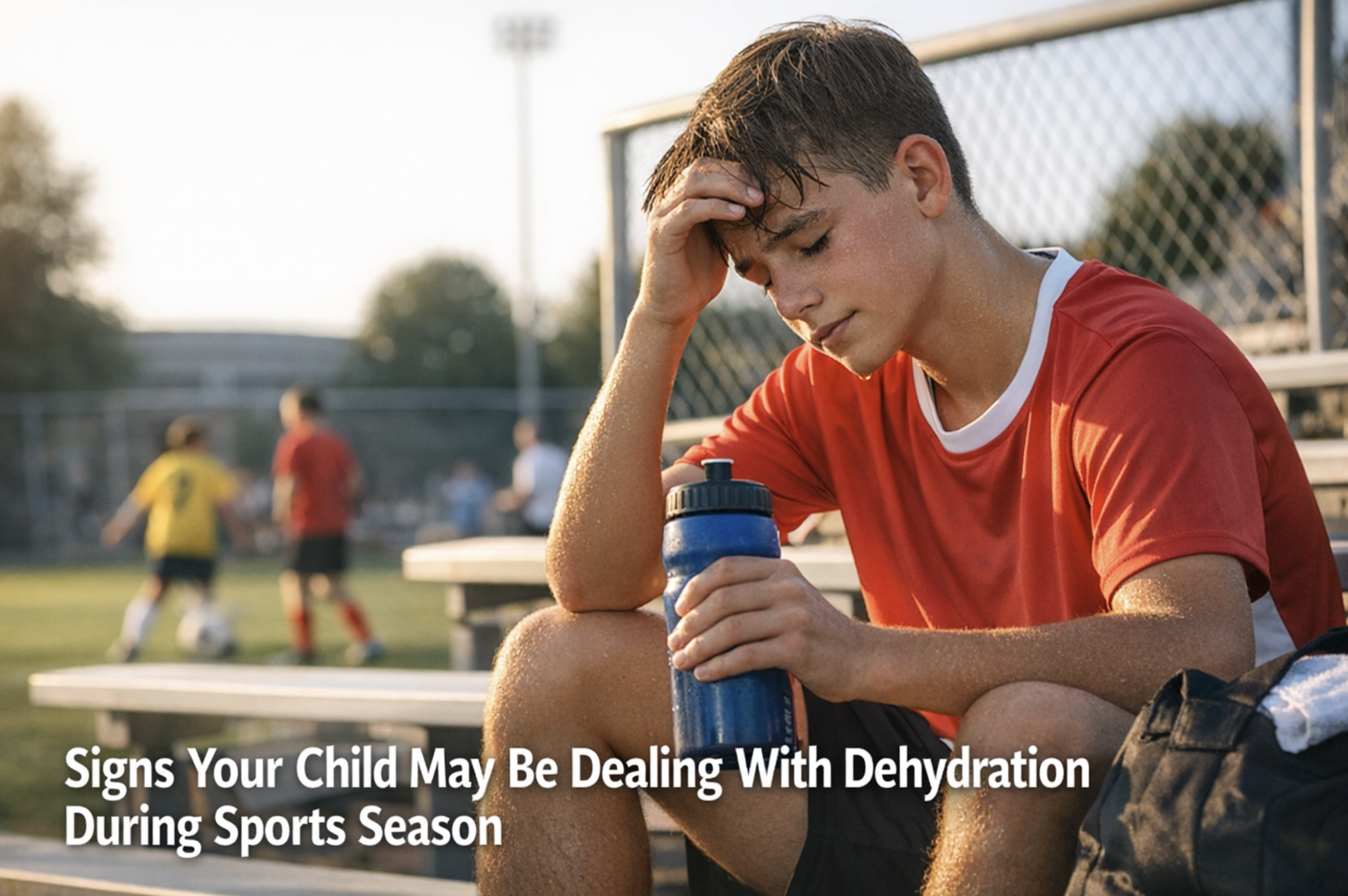
Sports season has a way of sneaking up on families. One week you’re enjoying the last stretch of summer in Jackson, TN, and the next you’re at practices, games, tournaments, and school events all over Madison County and West Tennessee. Between the heat, the busy schedules, and kids who’d rather keep playing than take a break, dehydration can show up faster than a lot of parents expect.
Most kids bounce back just fine with water, rest, and a little attention. But sometimes the signs are easy to miss. A child may not say, “I’m dehydrated.” They might just seem off. Tired. Headachy. Cranky. Not hungry. Not themselves. And if you’ve ever sat up late wondering whether your child’s symptoms are just from a long practice or something more, you’re not alone.
At The Children’s Clinic, we talk with families every day who are trying to figure out what’s normal and what needs a closer look. Dehydration can happen during sports season, sure, but it can also show up when a child has a fever, a stomach bug, a lingering cough, or even a rough night with congestion and poor sleep. Kids in Medina, Humboldt, Milan, Lexington, and Brownsville deal with the same thing. Busy kids. Busy parents. Real life.
What dehydration can look like in kids
Dehydration doesn’t always look dramatic at first. A child doesn’t have to be collapsed on the sideline for it to matter. Early signs can be pretty subtle.
Watch for dry lips or a dry mouth. Fewer bathroom trips than usual. Dark yellow urine. Headaches. Dizziness when standing up fast. Trouble focusing. Irritability that seems to come out of nowhere. A child might also be unusually tired, even if they slept okay the night before.
For younger kids, the signs can be a little different. Toddlers may be fussy, clingy, or not want to drink. Babies can be trickier because they can’t tell you what’s wrong. You may notice fewer wet diapers, a dry tongue, or that feeding just isn’t going well. If a baby is sick and struggling with feeds, that’s something we want parents to take seriously.
Sometimes parents tell us their child just seems “flat.” Not sick enough to be obvious, but not normal either. That can happen with dehydration too. Kids don’t always have the words for it. They just slow down.
During sports season, the heat matters more than people think
West Tennessee heat is no joke. Anyone who’s sat through a July or August practice in Jackson knows that. Even in the early part of the school year, afternoons can still feel heavy and sticky. Add pads, uniforms, long practices, and kids who’d rather play through everything, and dehydration risk goes up fast.
We see this a lot in football, soccer, cheer, cross country, and marching season. A child may start out fine, then by the end of practice they’re wiped out. Some parents assume it’s just being out of shape or a hard workout. Sometimes that’s true. Sometimes it’s not.
Kids who are sick, even mildly, are more likely to get behind on fluids. A child with a fever loses more water. A stomach bug can dry them out quickly. Seasonal allergies can also make kids feel crummy enough that they forget to drink. And during back-to-school season, when germs are moving through classrooms, it’s pretty common for a child to have a cold, feel tired, and not drink enough all day. That combination can sneak up on you.
Signs to watch for after practice, games, or a long hot day
If your child comes home from sports season looking worn out, don’t just ask how the game went. Look at the details. Did they drink during the day? Did they eat lunch? Are they acting like themselves? Are they peeing like usual?
Some warning signs are more concerning than others. A child who is dizzy, confused, unusually sleepy, or having trouble walking straight needs attention. So does a child who is vomiting, can’t keep fluids down, or hasn’t peed much at all.
Muscle cramps, a pounding headache, and feeling nauseated can happen with dehydration too. So can chills. That one surprises people. A child can be overheated and still complain of feeling cold or shaky. Kids don’t always describe it clearly, which is part of why parents end up googling symptoms at 10:30 at night after a practice game. We get that.
If your child has a fever, they need to drink more than usual. If they’re also having a cough that lingers or a cold that’s making them breathe through their mouth, they may dry out faster. Mouth breathing and congestion can make kids feel parched, especially overnight. Then they wake up tired, thirsty, and not fully recovered for the next day.
Babies, toddlers, and dehydration during illness
Even though this post is about sports season, dehydration isn’t just a bigger-kid problem. Babies and toddlers can run into trouble fast, especially when they’re sick. A newborn with congestion may have a hard time feeding. A toddler with a stomach bug may refuse fluids. A baby with a fever can get behind quickly.
That’s when parents start asking the hard question: Is this something we can watch at home, or does my child need to be seen?
If a baby isn’t feeding well, seems sleepy in a hard-to-wake-up way, or has fewer wet diapers, call us. If a toddler has vomiting or diarrhea and can’t keep down small amounts of fluid, that also deserves a closer look. Kids can go downhill faster than adults when they’re losing fluids and not replacing them.
We also see dehydration pop up during winter illness season, when kids are fighting off viruses and sleeping with stuffy noses. If a toddler wakes up congested every night, drinks less, and isn’t eating much, they can get run down before parents realize what’s happening. Same thing during spring allergies, when kids are tired from poor sleep and mouth breathing. It all stacks up.
What normal might look like, and what doesn’t
Not every tired kid is dehydrated. Not every headache means something serious. Kids can be sweaty after practice and just plain worn out. That part is normal.
What you want to watch for is a pattern that doesn’t improve with water, rest, and food. If your child drinks, but still seems weak, dizzy, or increasingly sleepy, that’s different. If they keep saying they feel sick, or they won’t eat or drink at all, that needs attention too.
A child should start acting a little better after resting and drinking fluids. They don’t have to bounce back perfectly, but there should be some improvement. If things are getting worse instead of better, call.
Parents of older kids and teens sometimes get stuck in the middle. The child looks okay enough to go to school, but not quite right. They want to push through. They’ve got tests, practices, and maybe a game Friday night. But if they’re dehydrated, pushing through can make things worse, not better.
Practical ways to help kids stay hydrated
You don’t need a complicated plan. Most kids just need reminders and routines.
Start the day with water. Send a bottle to school. Offer fluids after practice, not just during. If the weather is hot or the workout is long, they may need more than plain water. Kids who are sweating a lot can need electrolytes too, especially if they’re playing hard for a long stretch.
Food helps more than people think. Fruit, soups, popsicles, yogurt, and even a salty snack can support hydration. If a child is not feeling well, small sips can be better than big gulps. That goes for stomach bugs too. A big drink all at once may come right back up.
And yes, sometimes you have to stay on top of it. Kids forget. They get distracted. They’d rather keep playing. A lot of families in Jackson, TN have learned to make water part of the routine the same way they pack cleats or check homework. It’s just one of those things that has to be built into the day.
A real local example
We see this kind of thing all the time in West Tennessee. A middle school athlete from Jackson comes in after a weekend tournament. The parent thought it was just fatigue, maybe not enough sleep. The child had a headache, wasn’t eating much, and seemed a little slow. By the time Monday rolled around, they still weren’t back to normal.
After talking through the weekend, it turned out the child had played two games in the heat, skipped part of lunch, and hadn’t been drinking much between matches. They were also getting over a mild cold, which made things worse. Nothing dramatic. Just enough to tip them into dehydration.
That’s a pretty common story. Sometimes it’s a high school player in Madison County. Sometimes it’s a younger child in Medina who’s been running around at practice. Sometimes it’s a toddler with a stomach virus during the same week their older sibling has a soccer tournament in Humboldt. Family life doesn’t always line up neatly with illness or weather or sports schedules.
When to call the pediatrician
Call your child’s doctor if they’re not drinking well, if they have very little urine, if they’re dizzy, unusually tired, or if vomiting and diarrhea are keeping them from staying hydrated. Fever plus poor intake is another reason to check in. So is a child who seems confused, hard to wake, or just not acting right.
If you’re not sure, that’s okay. A lot of parents worry about bothering the office for “something small.” Please don’t let that stop you. We’d rather hear from you early than have a child get sicker overnight.
Same-day sick visits can be helpful when a child may be dehydrated because of illness, especially if they’re missing school, not sleeping well, or struggling to bounce back. That’s also true when a parent is trying to figure out whether symptoms are from dehydration, a virus, allergies, or something else entirely.
If your child is due for a wellness visit, vaccines, or a sports physical, those are good times to ask about hydration too. We talk with families about nutrition, sleep, school readiness, behavior, and all the little daily habits that affect how kids feel. It all connects. A child who isn’t sleeping well or eating poorly is more likely to struggle when sports season ramps up.
Actionable takeaways for busy families
Keep water easy to reach. Put it in the car, the sports bag, the diaper bag, wherever it’ll actually get used.
Pay attention to urine color and bathroom trips. That gives you a quick clue.
Watch for kids who are tired, cranky, dizzy, or headachy after activity, especially in the heat.
Take illness seriously when it affects drinking. A fever, stomach bug, or bad congestion can push a child toward dehydration faster than you’d think.
If a baby isn’t feeding well, if a toddler has fewer wet diapers, or if an older child won’t drink and doesn’t perk up, call.
And if you’re standing in the kitchen at night wondering whether this is just sports season exhaustion or something more, trust that instinct. Parents know when something feels off. You don’t have to sort it out alone.
Bottom Line
Dehydration can show up quietly. A little headache here. A cranky mood there. A child who just doesn’t seem to have the same energy after practice or school. In Jackson, TN and across West Tennessee, we see it all the time during sports season, back-to-school season, summer heat, and the busier months when germs are making the rounds.
Most of the time, kids recover well with fluids, rest, and a little extra watchfulness. But if your child is dizzy, not peeing much, vomiting, running a fever, or just not acting like themselves, don’t wait and hope it passes. Give us a call.
The Children’s Clinic
264 Coatsland Drive
Jackson, TN 38301
731-423-1500
Serving families throughout Jackson, Madison County, and West Tennessee