
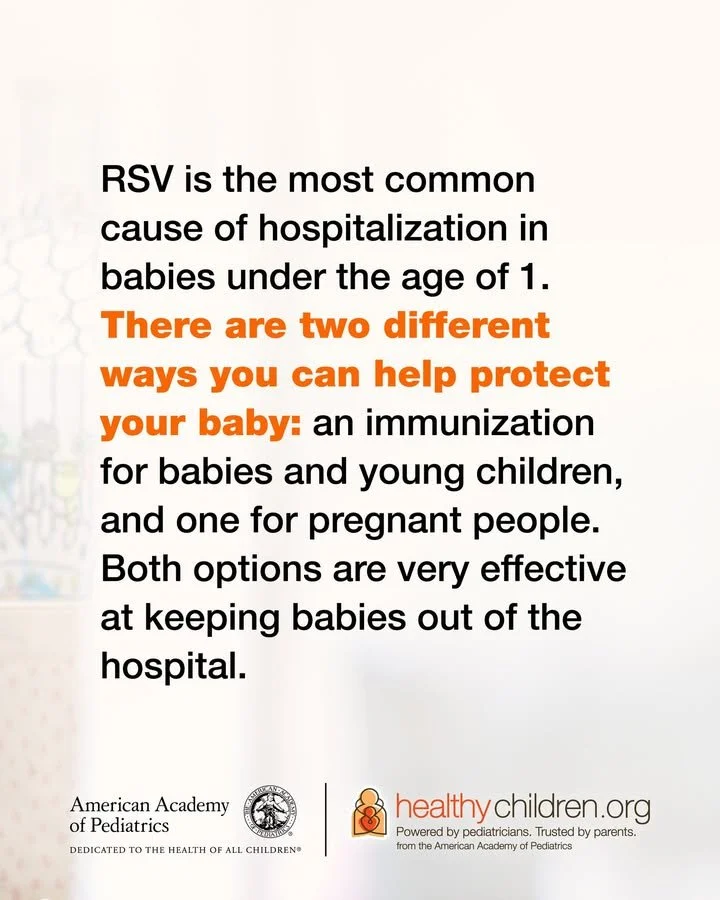
Respiratory Syncytial Virus (RSV) season is still here, and unfortunately it isn’t showing signs of slowing down anytime soon. Each year, RSV becomes one of the most common respiratory illnesses affecting babies and young children. In fact, RSV is the most common cause of hospitalization in babies under one year old.
The good news is that today there are safe and effective immunization options available that can help protect babies from severe RSV illness. These immunizations can significantly reduce the risk of hospitalization and serious complications.
If you are expecting a baby or caring for an infant, understanding these options can help you make the best decision for your family.
Why RSV Is a Concern for Infants
RSV is a common respiratory virus that infects most children before their second birthday. For older children and adults, RSV may cause symptoms similar to a cold. However, for babies—especially those younger than 6 months—it can lead to much more serious illness.
RSV can cause:
• Severe coughing
• Wheezing
• Difficulty breathing
• Bronchiolitis (inflammation of the small airways)
• Pneumonia
Because babies’ lungs and immune systems are still developing, RSV infections can sometimes require hospitalization for oxygen support or other treatments.
That’s why prevention is so important during RSV season, which typically runs from October through March.
Two Ways to Help Protect Your Baby
Parents now have two effective immunization options that can help prevent severe RSV illness. Both approaches work in slightly different ways, but each offers meaningful protection during the months when babies are most vulnerable.
Your pediatrician can help determine which option is best for your situation.
RSV Immunization for Babies and Young Children
One option is an RSV immunization designed specifically for infants and young children.
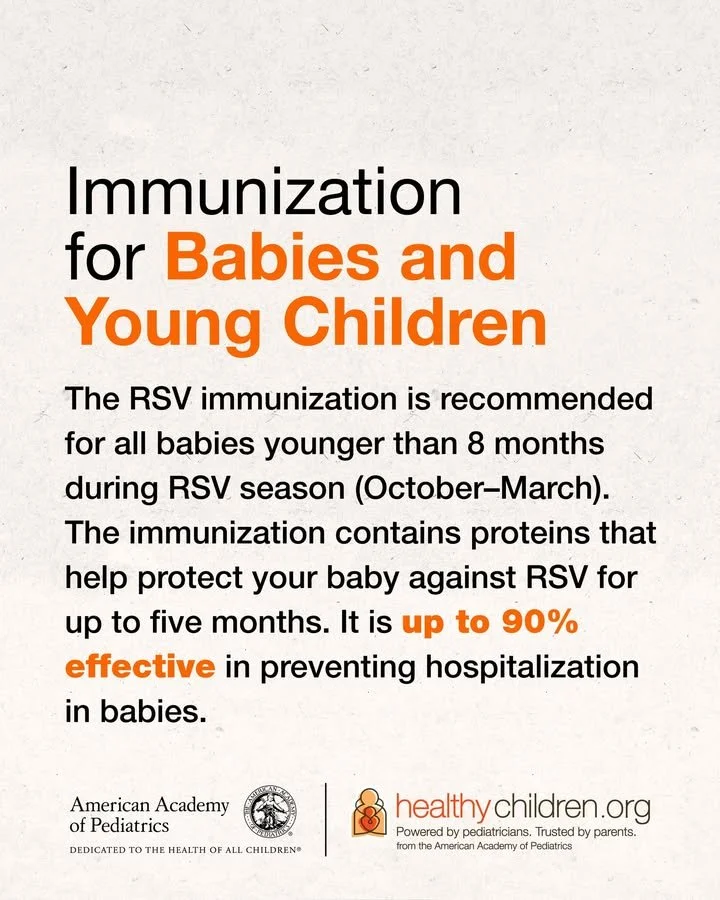
This immunization is recommended for babies younger than 8 months during RSV season.
Instead of stimulating the baby’s immune system to create antibodies, this immunization provides protective proteins (antibodies) that help the baby’s body fight RSV if they are exposed to the virus.
Key benefits include:
• Protection for up to five months, covering the typical RSV season
• Up to 90% effectiveness in preventing hospitalization in infants
• Immediate protection after administration
This option is especially helpful for babies who are born just before or during RSV season.
RSV Vaccine for Pregnant Individuals
Another important option focuses on protecting babies before they are even born.
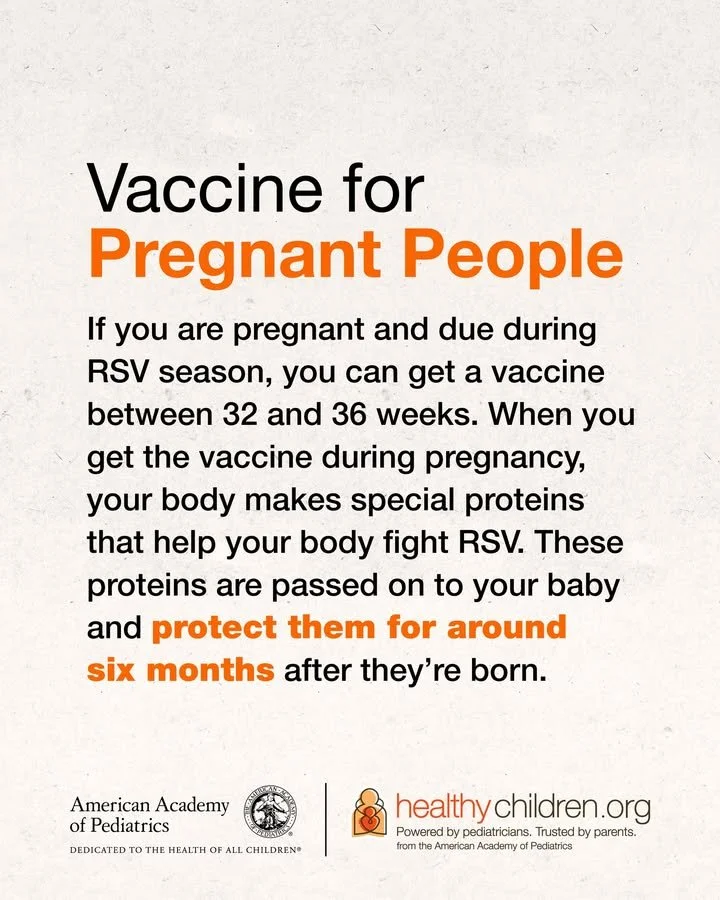
If you are pregnant and due during RSV season, you may be eligible for an RSV vaccine between 32 and 36 weeks of pregnancy.
When a pregnant person receives the RSV vaccine, their body produces antibodies against the virus. These protective antibodies are then passed to the baby during pregnancy.
This helps protect the newborn during their earliest months of life—when they are most vulnerable to severe RSV infections.
Benefits of maternal vaccination include:
• Antibodies passed directly to the baby before birth
• Protection during the baby’s first six months of life
• Reduced risk of severe RSV illness and hospitalization
For many families, this option provides early protection before the baby even leaves the hospital.
Which Option Is Best?
Both immunization approaches are highly effective, and your pediatrician can help determine which option is appropriate based on factors such as:
• Whether the baby has already been born
• The baby’s age
• Whether RSV season is underway
• Whether the mother received the RSV vaccine during pregnancy
The goal of both options is the same: keeping babies healthy and out of the hospital during RSV season.
Additional Ways to Reduce RSV Risk
In addition to immunization, there are several simple steps families can take to reduce the risk of RSV spreading:
• Wash hands frequently
• Avoid close contact with people who are sick
• Limit exposure to large crowds during RSV season
• Keep infants away from individuals with cold symptoms
• Clean frequently touched surfaces regularly
These precautions, combined with immunization, can significantly reduce the chances of severe illness.
Talk With Your Pediatrician
Every baby and family situation is different, and your pediatrician is the best resource for personalized guidance.
If you have questions about RSV prevention or want to learn more about immunization options, don’t hesitate to ask during your child’s next appointment.
Your pediatric care team is here to help you make the right decision for you and your baby.
Schedule an Appointment Today
If you have questions about RSV or would like to discuss immunization options for your baby, our team is here to help. The providers at The Children’s Clinic are dedicated to keeping your child healthy and protected during RSV season.
Call our office today to schedule an appointment or speak with a member of our care team.
📞 (731) 664-0002