
Schools Are Reopening: How to Keep Kids Healthy During Coronavirus
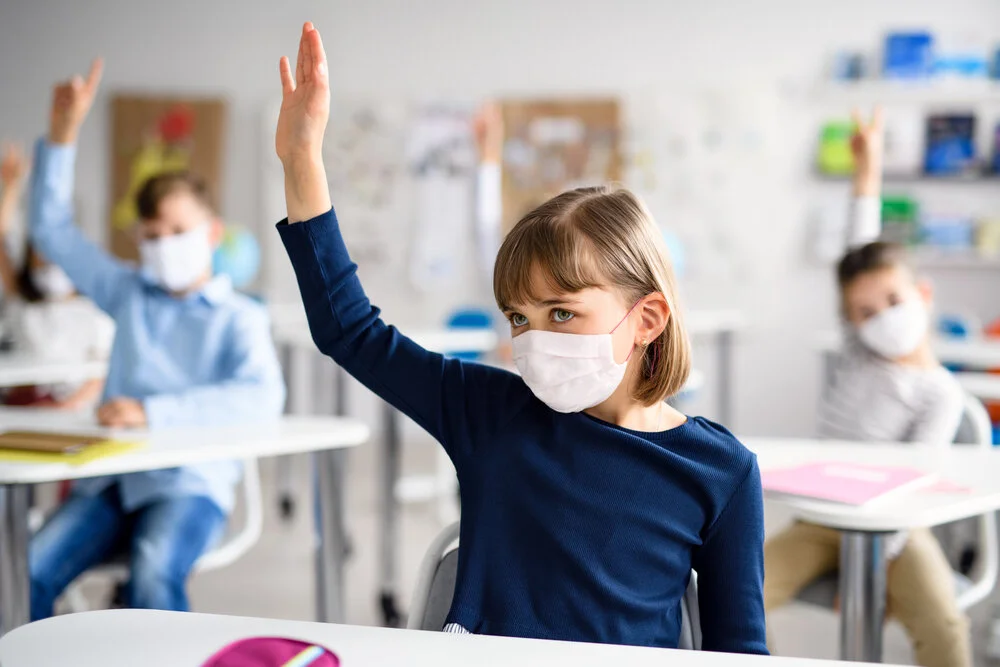
source credit: Deposit Photos
Schools might never be the same
Your children have had to adapt in the age of coronavirus by learning how to social distance and remotely celebrating events like birthdays and graduations. Now, they’ll have to adjust to something new: how to go back to school. Across the nation, schools are reopening this fall, despite most Americans not wanting them to. Much like gyms, offices and restaurants, schools will have to reimagine how they look and function to best protect students, teachers and other staff from spreading or contracting coronavirus.
If you plan to send your child back to the classroom, you might be wondering what steps you can take to help keep your kids safe from COVID-19. We spoke with Dr. Bridget Boyd, an associate professor at Loyola University Medical Center who specializes in general pediatrics, to determine the best practices to keep your kids healthy as schools reopen.
As states ease social distancing restrictions, many businesses and services — including schools — are slowly reopening. According to Boyd, it’s up to each family to decide whether sending their children back to the classroom is the best and safest decision. “Kids who are in school get social-emotional skills, might get healthier meals and learn more math, reading and science. But if [families] have someone living at home who has immune system concerns or chronic health conditions, it might be up to the family to decide if it’s worth sending them [to school] and increasing the risk of infection.”
Teach them how to properly wash their hands
Washing your hands is a healthy habit that will prevent you from getting sick. For the sake of their health and others’, it’s essential to show your children how to effectively clean their hands. “The most important thing is to teach children to properly wash their hands,” Boyd said. “Make sure they’re using soap and water for at least 20 seconds.”
Explain the importance of wearing a mask
Saying “please” and “thank you” are common manners parents teach their children. The importance of wearing a mask is a new etiquette rule children will have to learn amid the pandemic. “Before kids head back to class, parents should speak to them about the importance of keeping their face covered, and how it protects other people — not just themselves,” Boyd said. “Parents should mention to their kids how important education is for everyone, but that we all have to make sure that we’re safe while performing education.”
Practice how to wear the mask
Wearing a face mask properly during the coronavirus pandemic is essential for everyone. According to the Centers for Disease Control and Prevention, children over the age of 2 should wear face masks in public. Boyd recommends getting your child in the habit of wearing a face mask for long stretches of time before they enter the classroom. “Practice wearing the face mask at home with your kids just so they can get used to what it feels like. Practice keeping it over their nose and mouth when they’re talking.”
Explain mask ‘don’ts’
To stop the spread of germs, it’s important to know the dos and don'ts of wearing a face mask. Before reentering the classroom, Boyd suggests teaching your children how to wear a mask the right way to avoid detrimental errors down the line. “The biggest thing I’m seeing is people not wearing their masks properly,” she explained. “They’re having it only over their mouths and having their nose exposed, wearing it down on their chin, or, even worse, removing it to talk.”
Explain the mask is essential when talking
Everyone’s had to grapple with learning how to stay in touch with friends and family during the coronavirus pandemic. It makes sense that upon seeing their friends after a long time, students might lower their masks to clearly communicate. Boyd said it’s critical to tell your children to keep the mask on, even when catching up with friends or answering their teacher’s questions. “Lowering the mask to talk is essentially removing the point of the mask,” she noted. “These saliva droplets that COVID-19 is being spread by are primarily spread by things like talking, singing, laughing, sneezing and coughing. Anything that you’re doing with your mouth — even something as little as talking — can potentially spread these respiratory droplets, which could be infectious.”
Explain how to handle sneezing and coughing
Covering your coughs and sneezes is simple coronavirus etiquette, but lowering your mask to do so defeats the purpose of the mask. Boyd suggests teaching your child new coughing and sneezing etiquette before they reenter the classroom. “If they do need to sneeze or cough, [teach them to] leave the face mask on and sneeze and cough into it,” she said.
Make sure their vaccines are up to date
Vaccination requirements are a health and safety rule enforced by most schools. But Boyd suggests taking extra precautions by verifying that your child has received all vaccines they need before they go back this fall.
Get the flu shot
When flu season rolls around, Boyd suggests making sure your children get the flu shot as “another precaution that will keep everyone as safe as possible.” According to the CDC, children should get annual flu shots beginning when they are 6 months old.
Pack an extra mask in your child’s backpack
By now, you hopefully have a collection of face masks at home for the entire family. Boyd suggests packing an extra mask or two in your child’s backpack in case they soil one during the school day.
Consider what you pack for lunch
Delicious sandwich recipes and nostalgic desserts are probably essentials when you’re packing your child’s lunch for school. But Boyd suggests considering the items you put in your child’s lunchbox — and the safety concerns related to them — before sending your child to school. “Parents should consider the silly things kids might do, like taking their straw and blowing juice at their friend,” she said. “Potentially minimizing juice boxes with straws and using more water bottles would be good.”
Develop safe practices for children once they’re back home
According to Boyd, developing safe practices once your children arrive home from school can help keep everyone in your household safe. “Get in the habit of having your kids wash their hands adequately as soon as they get home from school,” she suggested. “Ideally, they should also change their clothes and take their shoes off outside of the home or in the garage to try not to track anything in. It’s debatable if taking a shower or bath immediately after coming home is absolutely necessary, but it certainly couldn’t hurt; especially depending on the family’s health situation.” Use CDC-approved cleaning products to keep your house sanitized from carpet to countertop and learn how to disinfect your laundry.
Wash their cloth mask after every use
Washing your child’s face mask after each use is crucial to keeping your family safe. If your family is using disposable masks, toss each one when they are soiled or damaged — these items aren’t recyclable.
Confirm what supplies your child can bring to school
If you’re hoping to include hand sanitizer in your child’s backpack to keep them safe, you’re probably not alone. But before stocking your child’s bag with cleaning supplies, call your school to see what is and isn’t permitted into the classroom. “I’m not exactly sure what the rules for school will be when it comes to things like hand sanitizer,” Boyd said. “But hand sanitizer is alcohol-based, and I would not want kids to think it was funny to try and ingest it.”
Pack disinfectant wipes too
If they’re permitted, Boyd suggests adding disinfectant wipes to your child’s back-to-school gear. Just be sure to avoid wipes that contain strong bleach as they could hurt someone.
Lead by example
The life lessons you teach your kids will stick with them. Lead by example and show your children how to be safe and caring individuals by wearing your own face mask in public and following health guidelines. “The most important thing a parent can do is try to be responsible themselves by wearing masks in public,” Boyd said. “If we keep our community spread low and try to do our part, we can potentially safely open schools. But if numbers start going up again, it’s not going to be safe and everything is going to go back to online learning.”
source credit: https://bit.ly/2EdpuYx