
SMART CHOICES FOR FEEDING TODDLERS
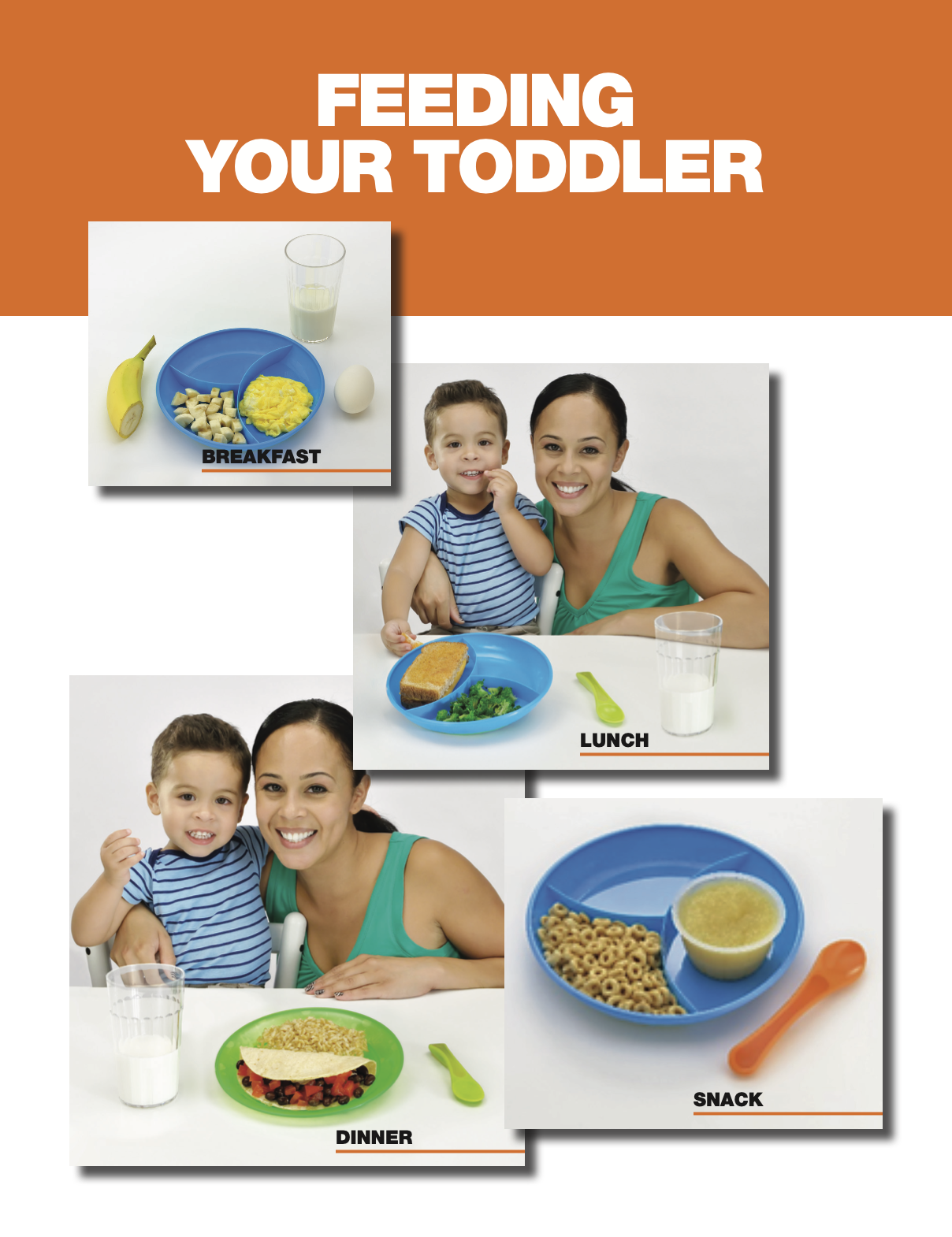
Why Is This Important?
• Many parents worry they are not feeding their toddler enough. But serving sizes for toddlers are
smaller than serving sizes for adults and each child is different. Your role is to provide healthy
choices for your toddler and let them decide how much they want to eat.
• Establishing healthy meal routines is an important step in healthy toddler development. Ideally,
mealtimes should take place at regular times, at a table with limited distraction, and children should
be encouraged to feed themselves with adult support as needed.
Nutritional Information
• Serving sizes for toddlers are much smaller than serving sizes for adults. A serving of veggies is about
¼ cup.
• A typical serving size for a toddler drink is 4-6 ounces.
• Your toddler (and you too!) needs food from all five of the food groups—grains, protein, vegetables, fruit,
and dairy. Try offering a variety of foods from these groups at meal and snacks.
Mealtimes
• Your toddler may eat more some days and less on others. Don’t worry, this is normal! Keep offering
regularly scheduled meals and snacks.
• Allow your toddler to tell you when she is full. This teaches them to listen to their body for signs of
hunger or fullness.
• Try using child-size plates, bowls, and utensils for “right-size” portions for your toddler. Using child-size
utensils also makes it easier for your toddler to eat.
• Limit distractions during meal and snack times to allow your toddler to enjoy the food. Turn off the TV
and sit at a table.
Snacking
• Toddlers get hungry between meals. Snack time is a great chance to feed your toddler healthy foods
(like fruits and veggies).
• Remember to have a start and end time for snack time. Toddlers should not be snacking (or grazing) all day.
• Remember snack time does not have to mean junk food time. Snacks can be healthy and easy to prepare.
Beverage Choices
• What your toddler drinks is very important too! Water and milk are the best choices for toddlers.
Children 1-2 years old should drink whole milk unless otherwise directed by their doctor and children
over two should drink low-fat milk (Skim, 1% or 2%).
• Limit 100% juice to 1 time a day if at all and try to avoid other sugar sweetened beverages.
• Encourage toddlers to drink from cups and avoid use of bottles or sippy cups.
