
Healthy Eating
What should my child eat and drink?
Just like adults, children need to consume foods and beverages that are packed with nutrients. Also, like adults, children should consume just enough calories to fuel their daily living and activities. The Dietary Guidelines for Americans, 2020–2025 External link suggest balancing calories you consume with physical activity. The guidelines also recommend improving eating habits to promote health, reduce the risk of disease, and reduce overweight and obesity. Americans ages 2 years and older are encouraged to consume a variety of healthy foods and beverages. Suggested items include
fruits, vegetables, unsalted nuts and seeds (please make sure your child can tolerate these foods and isn’t allergic to them), and whole grains
fat-free or low-fat dairy products, including milk, yogurt, cheese, and/or fortified nondairy beverages
a variety of protein foods, including seafood, lean meats and poultry, eggs, legumes (beans and peas), nuts, seeds, and soy products
What foods and beverages should be limited?
Youth and adults are also encouraged to get less
saturated fats, such as lard, butter, and margarine, which are often solid at room temperature
Added sugars, solid fats, and salt often occur in pizzas, chips, crackers, sodas, sugar-sweetened drinks, desserts like cookies or cake, and fast foods. If children and teens consume these foods and beverages, these items should be limited on a healthy eating plan.
Another step is to make sure your children have breakfast to spark the energy they need to focus in school. Some studies suggest that eating breakfast regularly may decrease children’s chances of developing obesity.1

How can I help my child eat better?
Use less fat, salt, and sugar. Here are some ideas to help you and your child follow a healthy eating plan
Cook with fewer solid fats. Use olive or canola oil instead of butter or margarine. Bake or roast foods instead of frying. You can get a crunchy texture with "oven-frying" recipes that involve little or no oil.
Choose and prepare foods with less salt. Keep the salt shaker off the table. Have cut-up fruits and vegetables on hand for snacks instead of salty snacks like chips or crackers.
Limit the amount of sugar your child eats. Choose hot or cold cereals with no added sugar or low sugar.
Fill half of your child's plate with fruits and vegetables.
Learn about age-appropriate portion sizes and how to avoid oversized portions.
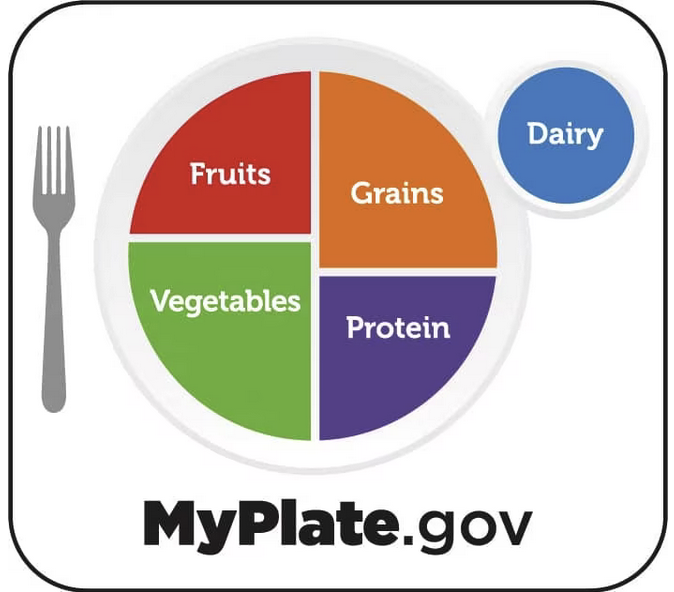
Serve nutrient-rich foods and beverages. Many foods and beverages are particularly rich in key nutrients and vitamins—such as potassium, calcium, vitamin D, and dietary fiber—that are important to your children’s health and development. Here are some ideas for boosting your children's intake of these nutrients
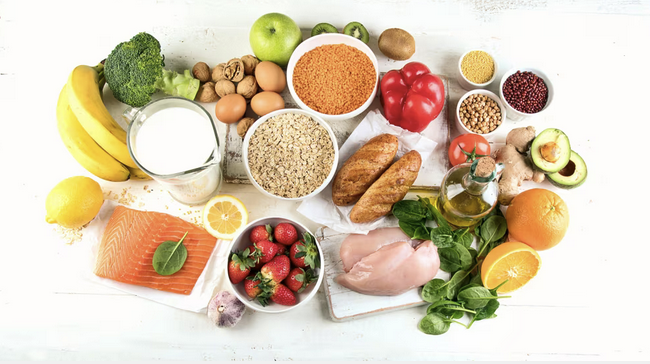
Offer more fruit for breakfast, snacks, and desserts. Add dark green, red, and orange vegetables to stews and soups. Add beans (black, kidney, pinto), peas, and lentils to casseroles and salads. For meal planning ideas and healthy recipes, see Nutrition.gov External link.
Serve more low-fat milk and milk products. If your child cannot digest much lactose, called lactose intolerance, serve lactose-free milk, cheese, or yogurt. (Lactose is the sugar in milk that may cause some people stomach pain and bloating when they drink milk or eat milk products.) Your child can also try nondairy drinks, such as soy, almond, or rice drinks enriched with calcium or vitamin D.
Serve fresh, frozen, or canned salmon, shrimp, and light tuna (not albacore). For young children, you may serve safe types of seafood External link (PDF, 378.44 KB) 1–2 times a week in child-sized portions, starting with 1-ounce portions at age 2.2
Replace the refined grains (breads, pasta, rice) your child eats with whole grains. Eat more bran. Check Nutrition Facts labels to find products high in dietary fiber. Look at the ingredients list to be sure that whole grains are one of the first items.
Think about the drink.
Serve more water.
Offer low-fat or fat-free milk instead of whole milk.
Avoid serving sugar-sweetened beverages and fruit-flavored drinks.
Offer fresh fruit, which has more fiber than juice. If serving juice, offer small portions of 100% fruit juice.
Offer healthy snacks. Along with their meals, snacks can help children get enough nutrients to help them stay healthy. Buy or prepare single-serving snacks for younger children to help them get just enough to satisfy their hunger. Visit the children's section of ChooseMyPlate External link to help you and your kids select a satisfying snack External link.
Try to keep healthy food in the house for snacks and meals for the whole family. Offer such snacks as
sliced apples, oranges, pears, and carrots
whole-grain bread served with low-fat cheese, favorite spread, or roasted veggies
fresh, frozen, or canned vegetables
Keep two more things in mind when choosing healthy snacks.
Read Nutrition Facts labels to choose the appropriate serving size. Remember that the serving size on nutrition labels applies to adults’ dietary needs and is based on a 2,000-calorie diet. So, the right serving size for most children will probably be smaller than what is on the package, depending on the child’s age, size, and activity level. Visit the parents’ section of Nutrition Facts Label: Read the Label Youth Outreach Materials External link to find tools for helping your children make healthful food choices and understand how to read the Nutrition Facts label on food packages.
Children of preschool age and younger can easily choke on foods. Be careful with foods that may be hard to chew, small and round, or sticky. Examples are hard vegetables, whole grapes, hard chunks of cheese, raisins, nuts and seeds, and popcorn. Select snacks with care for children in this age group.
Share food time together. The key word is “together.”
Plan to have sit-down meals with your children; and serve everyone the same thing.
Involve your children in planning and preparing meals. Children may be more willing to eat the dishes they help prepare.
Try to limit how much food or beverages your child consumes on the go and away from home. That will help you control the calories, sugar, and fat your children consume. To serve more homemade meals, cook large batches of soup, stew, or casseroles and freeze them as a time saver. For handy tips on quick and easy homemade meals, visit ChooseMyPlate.gov External link.
Limit eating at home to specific areas such as the kitchen or dining room—not in front of a TV or while using another electronic screen.
