
Helping Kids Build Healthy Smartphone Habits: A Practical Guide for West Tennessee Families
Smartphones connect us, entertain us, and help keep our families organized—but for children and teens, they can also bring challenges. In West Tennessee, it’s common for kids to get their first phone around middle school, especially as they begin staying after school, participating in sports, or needing a way to check in with parents. But new research shows there’s more to consider than just convenience.
A recent study found that twelve-year-olds who owned smartphones were more likely to experience depression, obesity, and sleep disruption compared to peers without a phone. That doesn’t mean phones are dangerous by default. It simply means children need guidance—just as they do when learning any new skill.
If your child or teen already has a smartphone, don’t panic. The goal isn’t to take the phone away, but to help them use it in a healthy and balanced way. At The Children’s Clinic, we regularly talk with families across Jackson, Medina, Humboldt, Henderson, Lexington, and the greater West Tennessee region about screen time, social media, mental health, and setting boundaries at home. The good news: small, consistent habits make a tremendous difference.
Below, you’ll find practical, realistic strategies to help your child build a healthier relationship with their phone—without conflict, shame, or constant battles.
Why Smartphones Affect Mood, Behavior, and Sleep
To understand how to help kids use smartphones wisely, it’s helpful to know why they can be overwhelming.
Here are the key factors pediatricians see in daily practice:
1. Smartphones compete with sleep.
Teens naturally fall asleep later due to biological shifts in the brain. Add late-night scrolling, group chats that ping at midnight, or gaming with friends—and suddenly your child’s sleep routine unravels.
Sleep loss affects:
Concentration
Emotional regulation
School performance
Appetite and metabolism
Overall mental health
This is one reason the study linked early phone ownership with higher obesity rates and increased signs of depression.
2. Social media fuels comparison.
Even confident teens struggle when they constantly compare themselves to filtered images, online friend groups, or unrealistic lifestyles.
3. Notifications create stress.
Kids may feel pressure to respond immediately—even when they don’t want to.
4. Physical activity decreases.
If the choice is between going outside or staying on a device, the device often wins.
Understanding these patterns helps parents create boundaries that support—not restrict—their children.
How Parents Can Help Kids Use Smartphones in a Healthy Way
These strategies are realistic for busy families and work across a wide age range:
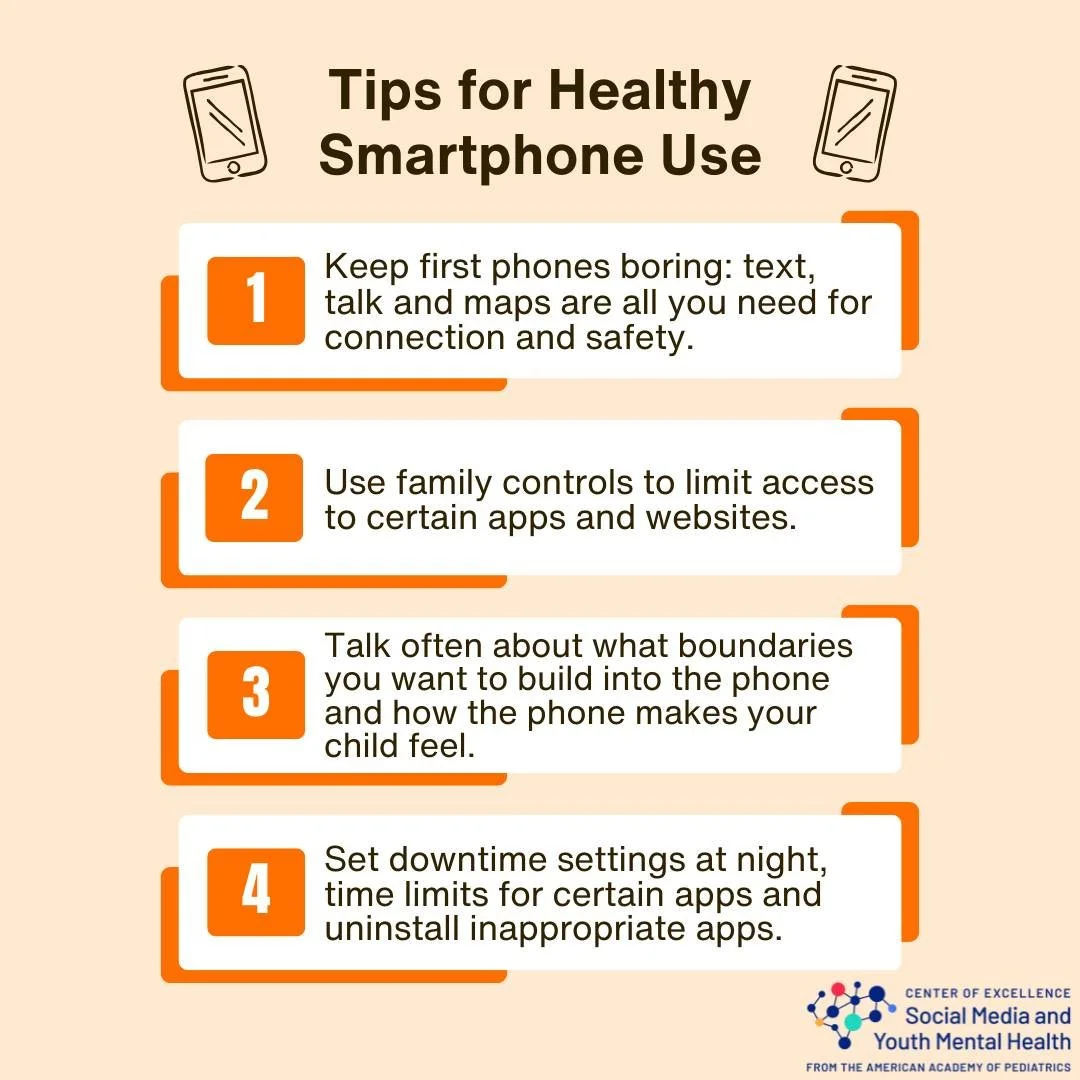
1. Keep First Phones Simple
When a child gets their first phone, consider keeping it “boring.” The goal is safety and communication—not unlimited access.
A basic first phone might include:
Texting
Calling
Maps
Weather
Camera
That’s plenty for a beginner. Waiting to introduce social media or app stores can prevent many early problems.
If your child already has a full smartphone, you can still simplify it later. Kids adapt quickly when expectations are consistent and explained calmly.
2. Use Family Controls & App Limits
Every major phone brand offers built-in parental tools:
App time limits
Content filters
Website blocking
Location settings
Downtime schedules
These tools are most effective when paired with open communication, not secrecy. Tell your child what settings you’re enabling and why.
A helpful script might be:
“I’m not setting these limits to punish you. I’m setting them so your brain gets downtime, your body gets sleep, and you get space to enjoy other things.”
Most kids accept boundaries more easily when they understand the purpose.
3. Talk Regularly—Not Just When There’s a Problem
Conversations about smartphone use aren’t one-and-done. Kids’ needs change as they grow, and their relationship with technology changes too.
Here are conversation prompts that help build trust:
“How does having a phone make your day better?”
“What parts of your phone make you feel stressed or overwhelmed?”
“Which apps do you think are helpful? Which ones feel distracting?”
“Do you feel pressure to respond quickly when friends message you?”
“What boundaries would help your phone feel less stressful?”
Open-ended questions give kids room to share their experiences honestly.
4. Establish Downtime—Especially at Night
Phones should “go to bed” long before your child does.
Try creating a household rule such as:
All phones charge in the kitchen or living room overnight
No phones at the dinner table
No phones after a set time on school nights
No devices in bedrooms for kids under 16
This protects sleep and helps kids transition from stimulation to rest.
Many parents tell us that removing nighttime screens improves:
Mood
School performance
Mornings
Sleep quality
Family connection
These changes can appear within days—not months.
5. Encourage Offline Activities
Phones should complement a child’s life, not replace it. Help your child rediscover activities that bring joy:
Sports
Art
Music
Reading
Spending time with cousins and friends
Outdoor play
Volunteering
Hobbies like baking, drawing, or building
Children who feel fulfilled offline naturally rely less on their screens.
6. Model the Habits You Want Them to Build
Kids watch our behaviors more closely than we realize.
If you want your child to:
Put their phone down at dinner
Take breaks from scrolling
Avoid using social media when emotional
Respect boundaries
—then it helps to model those habits yourself.
Even small changes like plugging your phone in at a designated spot each night or announcing when you’re taking a screen break show children that balance is possible.
What If My Child Is Already Struggling?
Parents often worry that it’s “too late” to help their child build healthier habits—especially when a teen is experiencing mood changes, social pressure, or conflict around screens.
But it’s never too late.
Signs your child may need extra support include:
Trouble falling asleep
Falling grades
Withdrawal from activities they once enjoyed
Irritability
Increase in anxiety or sadness
Secretive or compulsive phone use
If you notice these patterns, start with gentle conversation and gradual boundaries. And remember—your pediatrician is an excellent resource for concerns related to sleep, behavior, social media stress, and mental health.
Local SEO Section: Supporting Healthy Development for Children Across West Tennessee
Families throughout Jackson, TN, and surrounding West Tennessee communities trust The Children’s Clinic for guidance on all aspects of child and teen wellbeing—including screen time, sleep issues, technology boundaries, and mental health.
Whether your child is getting their first phone or navigating the challenges of high-school social media, our pediatric team is here to help you build healthy routines tailored to your family.
THE CHILDREN’S CLINIC — CONTACT INFORMATION
The Children’s Clinic
264 Coatsland Drive
Jackson, TN 38301
📞 731-423-1500
We’re proud to care for families across West Tennessee and to support your child’s growth—online and offline.
Learn more: https://bit.ly/4phVDzU
