
Breast Milk Storage Made Simple: The “Rule of 4s” Every Parent Should Know
For many parents, breastfeeding is a deeply personal journey—one that can bring joy, connection, and sometimes a little bit of stress. While feeding your baby directly at the breast can feel straightforward, the moment you start pumping and storing milk, a new set of questions often pops up:
“How long can it stay out?”
“Do I need to freeze it right away?”
“Is it still good if it sat in the fridge for a few days?”
If you’ve ever stood in your kitchen, holding a bottle of pumped milk and second-guessing whether it’s still safe, you’re not alone. Storing breast milk can feel like navigating a maze of rules—especially when advice seems to vary depending on who you ask.
Thankfully, pediatrician Dr. Dina DiMaggio has a simple, easy-to-remember guideline called the “Rule of 4s.” This straightforward approach can take the guesswork out of breast milk storage and help keep your baby’s milk safe and nutritious.
What is the “Rule of 4s”?
The “Rule of 4s” is designed to be simple enough to remember in the middle of a busy day—or in the middle of the night when you’re running on very little sleep. Here’s how it works:
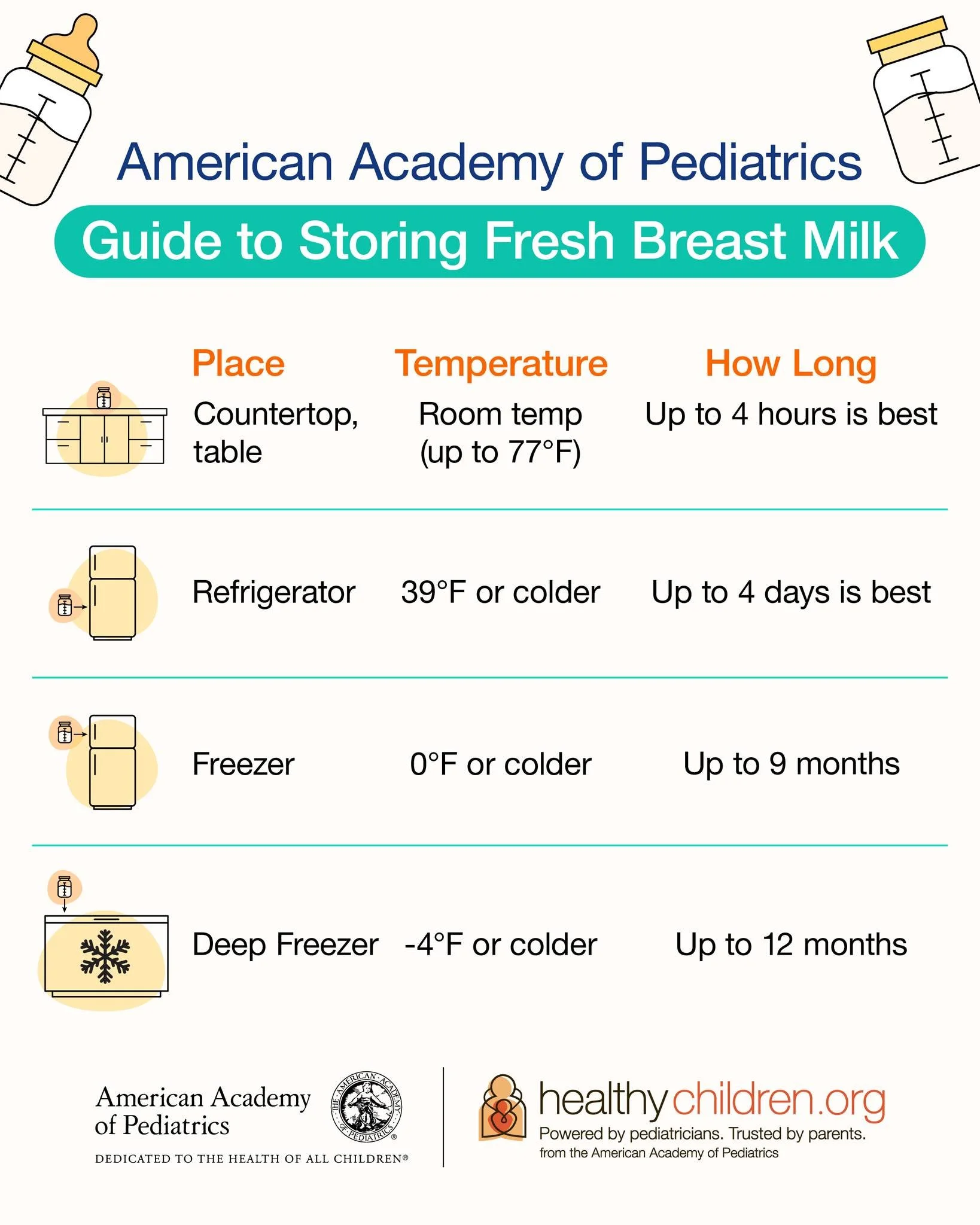
4 hours at room temperature – Freshly expressed breast milk can safely stay out at normal room temperature (up to 77°F or 25°C) for about four hours. This gives you time to pump, feed, or store without feeling rushed.
4 days in the refrigerator – If you place your milk in the fridge right after pumping, it can safely stay there for up to four days. Keep it in the back of the refrigerator where the temperature is most consistent.
Freeze if you won’t use it in 48–72 hours – If you know you won’t use the milk within two to three days, go ahead and freeze it. In a standard freezer (0°F or −18°C), breast milk can last up to nine months. In a deep freezer, it can last up to a full year.
That’s it—four hours, four days, freeze it if you’re waiting longer. The goal is to make storing breast milk less intimidating while giving you clear, safe timeframes to work with.
Why Proper Storage Matters
Breast milk isn’t just food—it’s a living, nutrient-rich substance full of antibodies, enzymes, and healthy fats that support your baby’s growth and immune system. When stored correctly, those powerful benefits are preserved.
On the flip side, if breast milk is stored for too long or at the wrong temperature, its quality can decline. This can mean fewer protective properties and a higher chance of bacteria growth, which could make your baby sick. Proper storage ensures that every drop you worked so hard to pump is safe, fresh, and full of nutrition.
Practical Tips for Storing Breast Milk
The “Rule of 4s” gives you the framework, but there are a few extra tips that can make the process smoother and even more efficient:
Chill it quickly.
After pumping, refrigerate or freeze your milk as soon as you can. While you have up to four hours at room temperature, cooling it promptly keeps nutrients at their best.
Use small storage portions.
Freeze milk in two- to four-ounce portions. Smaller amounts thaw faster and help you waste less if your baby doesn’t finish a bottle.
Label every container.
Write the date and time you pumped on each bottle or bag. This helps you rotate your supply and use the oldest milk first.
Leave space for expansion when freezing.
Liquid expands as it freezes. Leave about an inch of space at the top of the container to prevent it from bursting.
Store in the back, not the door.
In both the refrigerator and freezer, place milk in the back where the temperature stays more consistent. The door is the warmest part and is subject to temperature changes when opened.
Thaw gently.
Defrost frozen breast milk overnight in the refrigerator or by placing it in a bowl of warm water. Never microwave breast milk—it can create hot spots that could burn your baby’s mouth and may destroy valuable nutrients.
Once thawed, use it quickly.
Thawed milk should be used within 24 hours for maximum safety. And if your baby starts drinking from a bottle, discard any leftover milk after the feeding to prevent bacterial growth.
Common Storage Questions Parents Ask
Can I combine milk from different pumping sessions?
Yes, you can, but only if both are at the same temperature. For example, if you pump milk and it’s fresh, chill it in the refrigerator first before combining it with milk that’s already been refrigerated.
What if the milk smells soapy after storage?
Some breast milk develops a soapy smell after refrigeration or freezing because of naturally occurring lipase, an enzyme that breaks down fats. It’s not harmful, but if your baby refuses it, you can scald fresh milk (heat until tiny bubbles form around the edges, not boiling) before cooling and storing.
What’s the best container to use?
BPA-free bottles or breast milk storage bags work well. Bags take up less space in the freezer, but bottles are reusable and sturdy.
Making Breast Milk Storage Work for Your Life
Every family’s routine looks different. Some parents pump at work, others pump and store at home, and some mix breastfeeding with formula. No matter your setup, the “Rule of 4s” is flexible enough to adapt to your needs.
If you work outside the home, a good cooler bag with ice packs can keep milk safe until you get home. If you pump frequently and have a large supply, investing in a deep freezer can extend storage time and give you peace of mind.
The key is finding a system that works for you—one that fits into your daily life without making feeding your baby feel like a complicated science experiment.
Support and Guidance Are Just a Call Away
If you ever feel unsure about whether milk is still safe or need help troubleshooting breastfeeding challenges, you don’t have to figure it out on your own.
At The Children’s Clinic in Jackson, TN, our pediatricians are here to answer your questions and provide personalized guidance for feeding your baby—whether you’re breastfeeding, pumping, using formula, or doing a combination.
We can help with:
Understanding breast milk storage and handling
Developing a feeding plan that works for your schedule
Troubleshooting latching or pumping issues
Supporting your baby’s growth and nutrition at every stage
The Children’s Clinic
264 Coatsland Drive
Jackson, TN 38301
📞 731-423-1500
The Bottom Line
Breastfeeding already comes with enough emotional and physical demands—the last thing you need is to feel overwhelmed by storage rules. The “Rule of 4s” is a quick, reliable guide you can trust:
Up to 4 hours at room temperature
Up to 4 days in the refrigerator
Freeze it if you won’t use it within 48–72 hours
With a little planning and these easy-to-follow guidelines, you can store your milk with confidence, knowing your baby is getting safe, nutritious feedings every time.
If you’re ever unsure—or if you’d just like extra support—remember, you’re not in this alone. The team at The Children’s Clinic is here to help you every step of the way.
