
RSV: Simple Ways to Help Protect Your Baby This Winter
Respiratory Syncytial Virus (RSV) is one of the most common respiratory illnesses in infants — and it’s also the top reason babies under one year old are hospitalized. While RSV often causes cold-like symptoms in older children and adults, it can be much more serious for babies, especially during the fall and winter months.
At The Children’s Clinic in Jackson, Tennessee, we see RSV cases increase every year. The good news is that small, practical steps at home can help reduce the risk of RSV spreading and protect your baby during the winter season.
Why RSV Is More Dangerous for Babies
Babies are more vulnerable to RSV because their lungs and airways are still developing. Their immune systems are also less mature, which makes it harder for them to fight off respiratory infections.
In infants, RSV can lead to:
Difficulty breathing or rapid breathing
Wheezing
Poor feeding
Dehydration
Hospitalization for oxygen or breathing support
Premature babies and infants with underlying health conditions may be at even higher risk.
How RSV Spreads
RSV spreads easily through respiratory droplets and by touching contaminated surfaces. It can live on hands for hours and on hard surfaces for even longer, which makes household transmission common — especially during cold and flu season.
Because many adults and older children may only have mild symptoms, RSV can be unknowingly passed to babies.
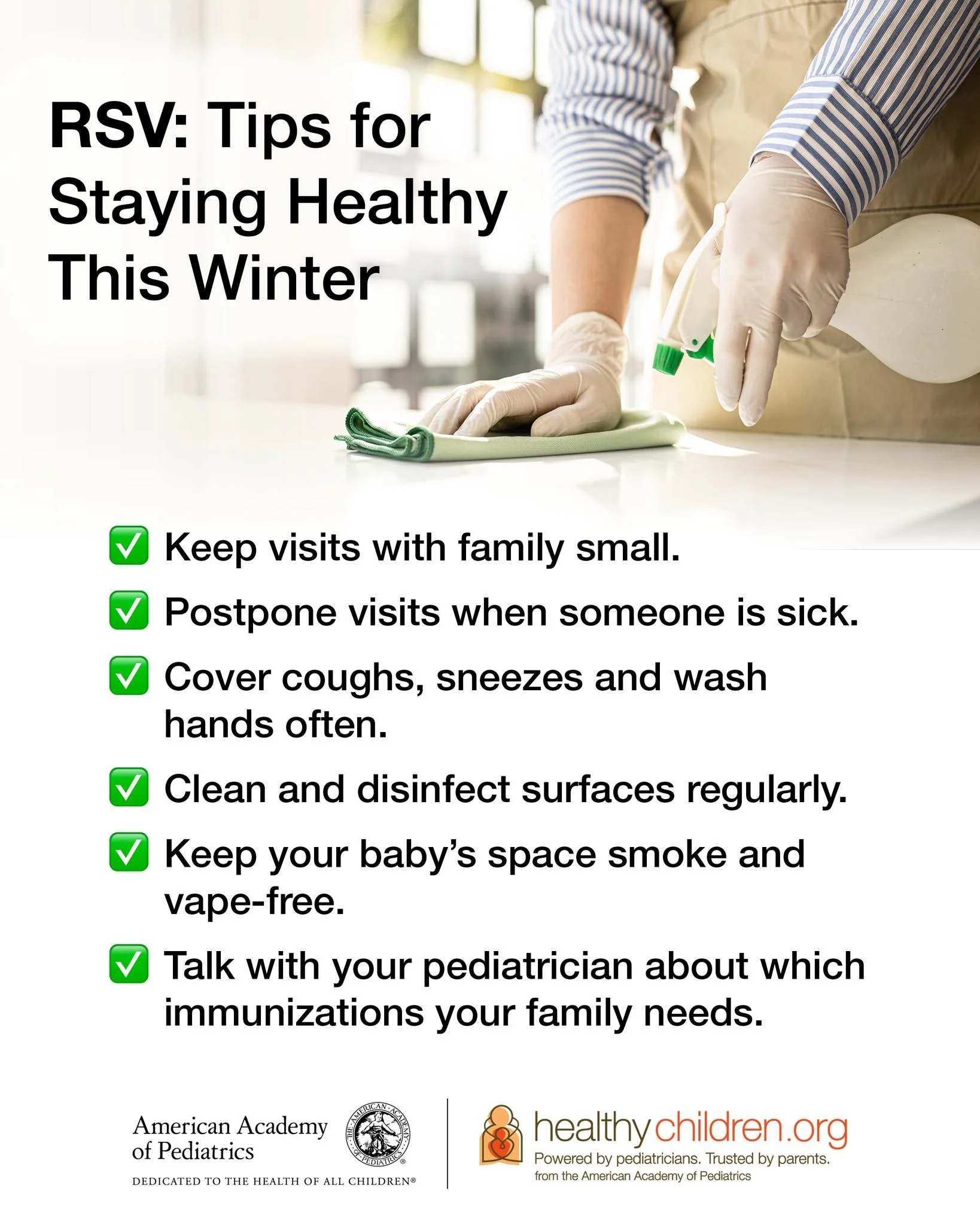
Everyday Steps to Lower RSV Risk at Home
Simple prevention measures can make a big difference in protecting your baby this winter:
Keep visits small.
Limiting the number of visitors — especially during peak RSV season — reduces exposure to germs.
Postpone visits when someone is sick.
Even mild cold symptoms can pose a risk to infants. It’s okay to reschedule visits to keep your baby safe.
Cover coughs and sneezes and wash hands often.
Frequent handwashing is one of the most effective ways to prevent the spread of RSV and other viruses.
Clean and disinfect surfaces regularly.
Focus on high-touch areas like doorknobs, counters, toys, and mobile devices.
Keep your baby’s space smoke- and vape-free.
Smoke and vapor irritate the lungs and can increase the severity of respiratory illnesses like RSV.
Talk with your pediatrician about immunizations.
Your pediatrician can help determine which immunizations or preventive options are recommended for your baby and family.
When to Call Your Pediatrician
If your baby shows signs of breathing trouble, poor feeding, extreme tiredness, or symptoms that are worsening, it’s important to contact your pediatrician right away. Early care can help prevent complications and determine whether additional treatment is needed.
Supporting Families in Jackson and West Tennessee
At The Children’s Clinic, we are committed to helping families in Jackson, Madison County, and throughout West Tennessee navigate RSV season with confidence. Education, prevention, and early care are key to keeping babies healthy during the winter months.
If you have concerns about RSV or questions about how to protect your baby, our team is always here to help.
The Children’s Clinic
264 Coatsland Drive
Jackson, TN 38301
📞 731-423-1500
Proudly caring for children and families across West Tennessee.
