
Helpful Charts for Parents: A Practical Guide to Everyday Pediatric Questions

Parenthood comes with constant decisions — and sometimes, the smallest questions can feel like the biggest ones.
How much Tylenol is safe?
When should my child get their next vaccines?
How long can breast milk stay out?
How much toothpaste should I use?
Which foods are choking hazards?
New parents, we see you — and we’re here to help.
Below are some of the most helpful pediatric reference charts we regularly recommend to families. These tools are designed to give you quick, trusted guidance when you need it most. And as always, if you have any questions, don’t hesitate to reach out to your pediatrician. They can help you make the best and most informed decisions about your child’s health.
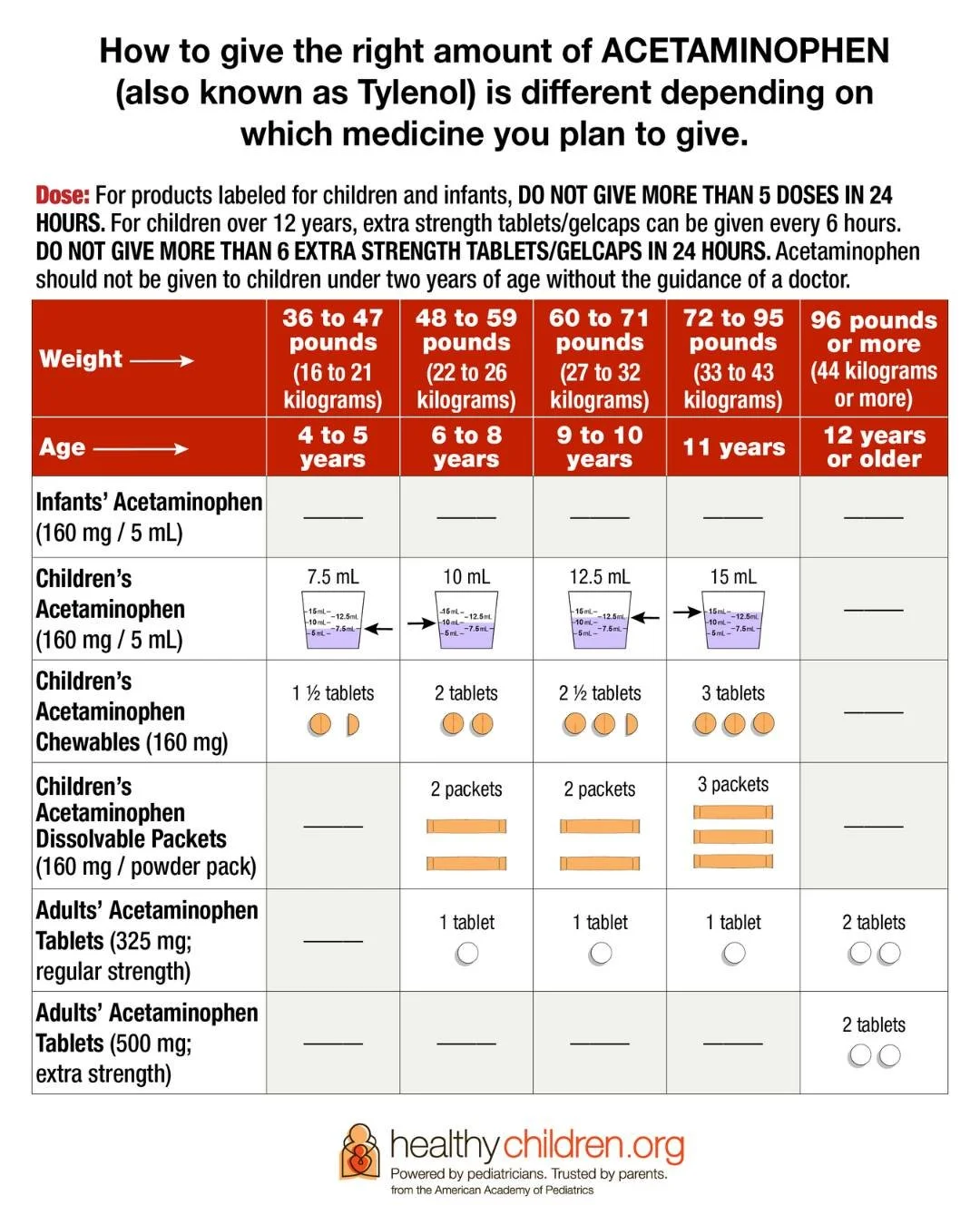
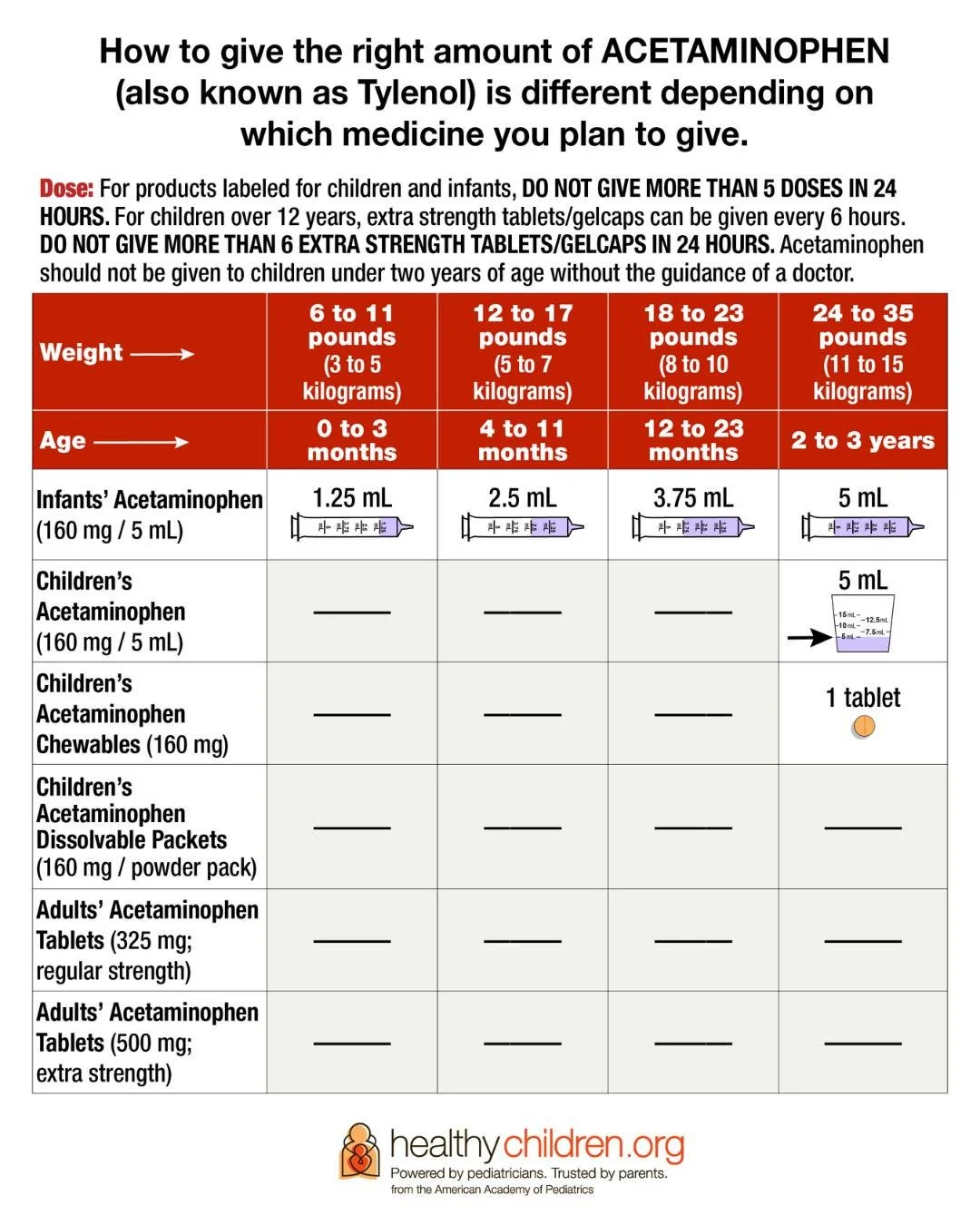
Acetaminophen (Tylenol) Dosing for Infants and Children
One of the most common calls pediatric offices receive is about fever or pain relief.
Giving the correct dose of acetaminophen is extremely important — and dosing depends on your child’s weight and the formulation you’re using.
Key reminders:
Always use the measuring device that comes with the medicine.
Dosing is based on weight, not just age.
Do not give more than 5 doses in 24 hours for infants and children.
Do not give to children under 2 years old without speaking to a doctor first.
Extra strength adult products follow different guidelines.
Because liquid, chewable, and tablet forms vary in concentration, double-check the label every time.
If you’re ever unsure, call us before giving a dose.
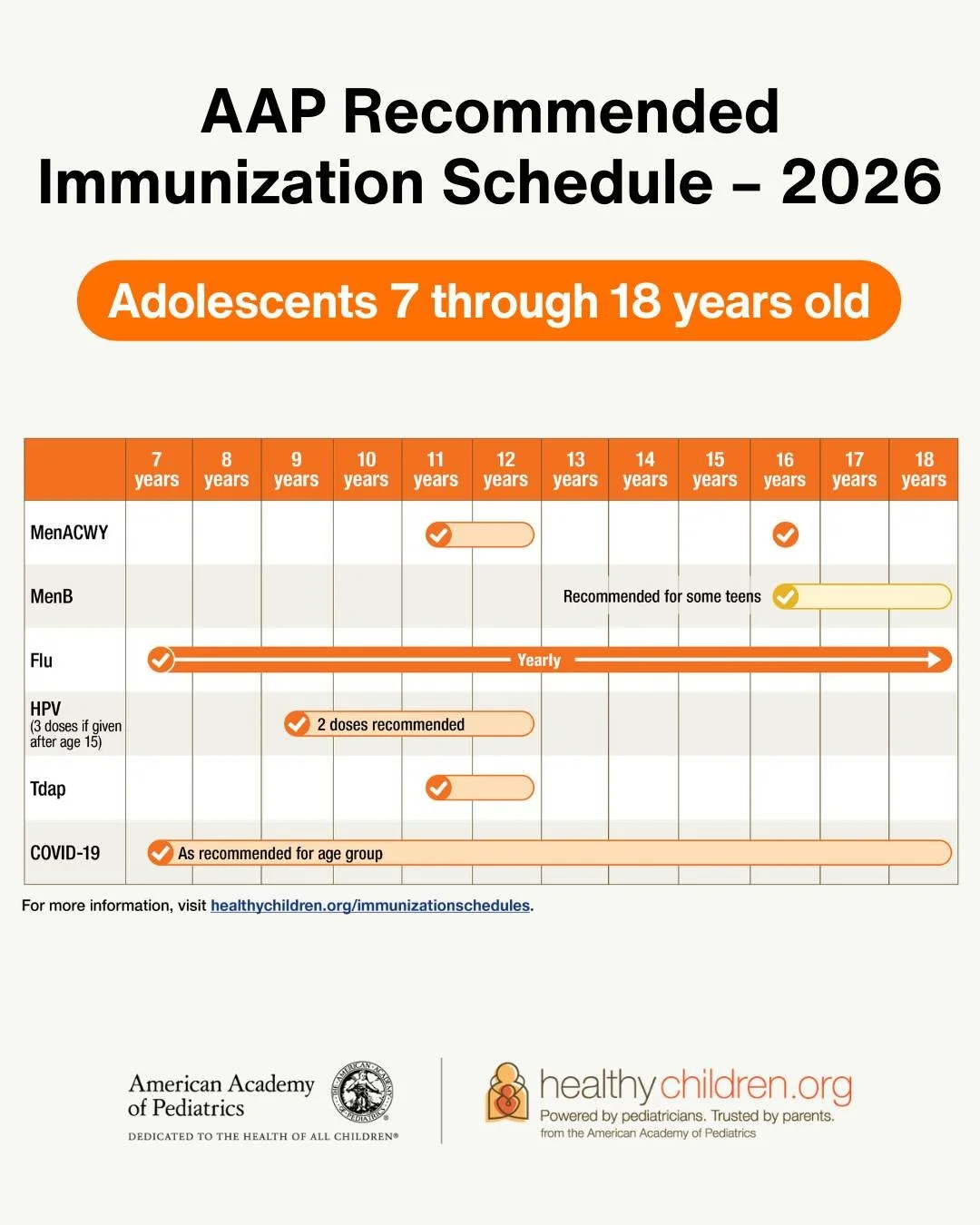
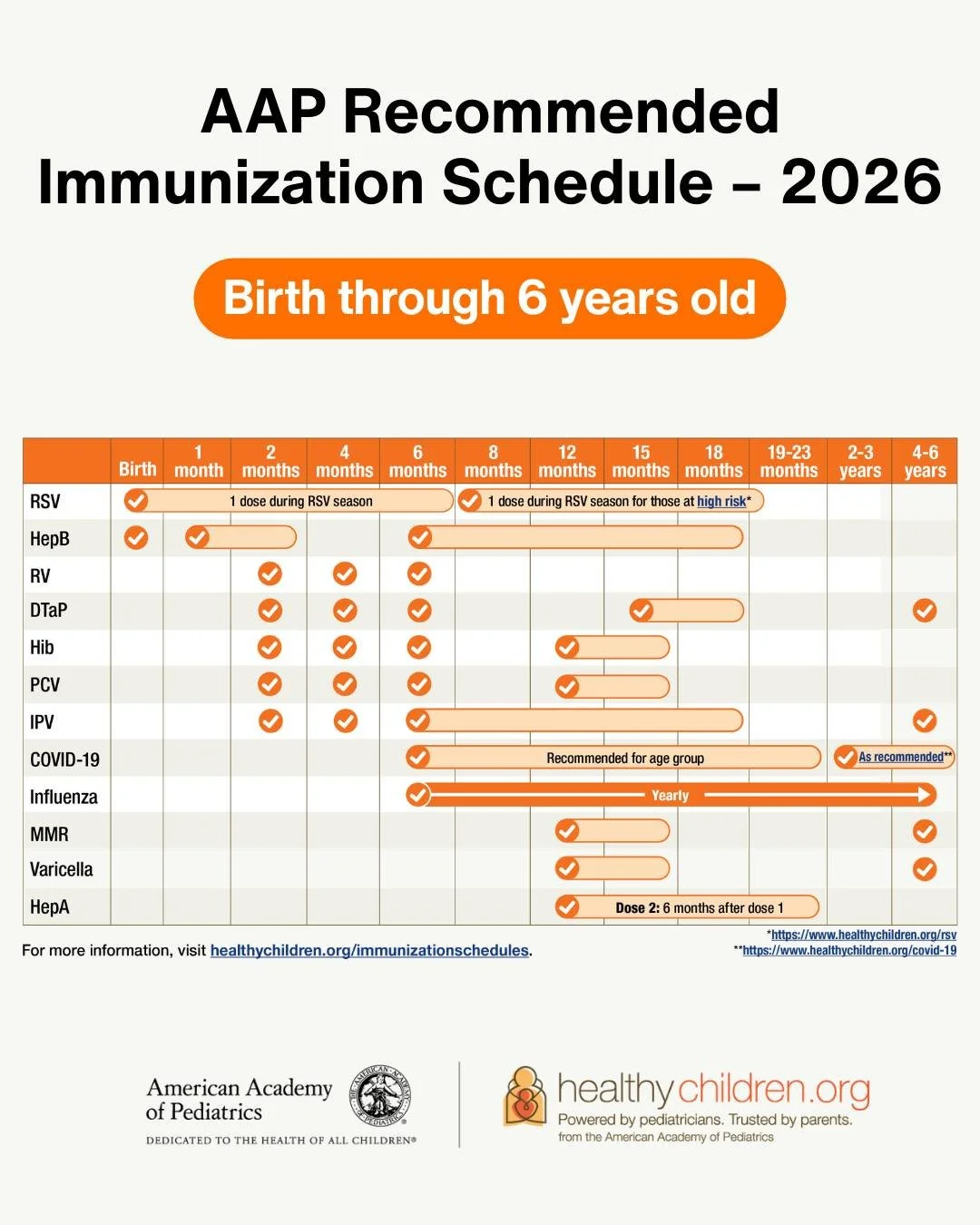
AAP Recommended Immunization Schedule – 2026
Vaccines protect children from serious — and sometimes life-threatening — diseases.
The American Academy of Pediatrics (AAP) provides a recommended immunization schedule divided into:
Birth Through 6 Years Old
This schedule includes vaccines such as:
Hepatitis B
DTaP
Hib
Polio (IPV)
MMR
Varicella
Hepatitis A
Influenza (yearly)
RSV (for eligible infants)
COVID-19 (as recommended for age group)
These early years are critical for building strong immunity.
Adolescents 7 Through 18 Years Old
Older children and teens typically receive:
Tdap booster
HPV series
Meningococcal vaccines (MenACWY and possibly MenB)
Annual flu vaccine
COVID-19 (as recommended)
If you’re unsure whether your child is up to date, we’re happy to review their records and create a catch-up plan if needed.
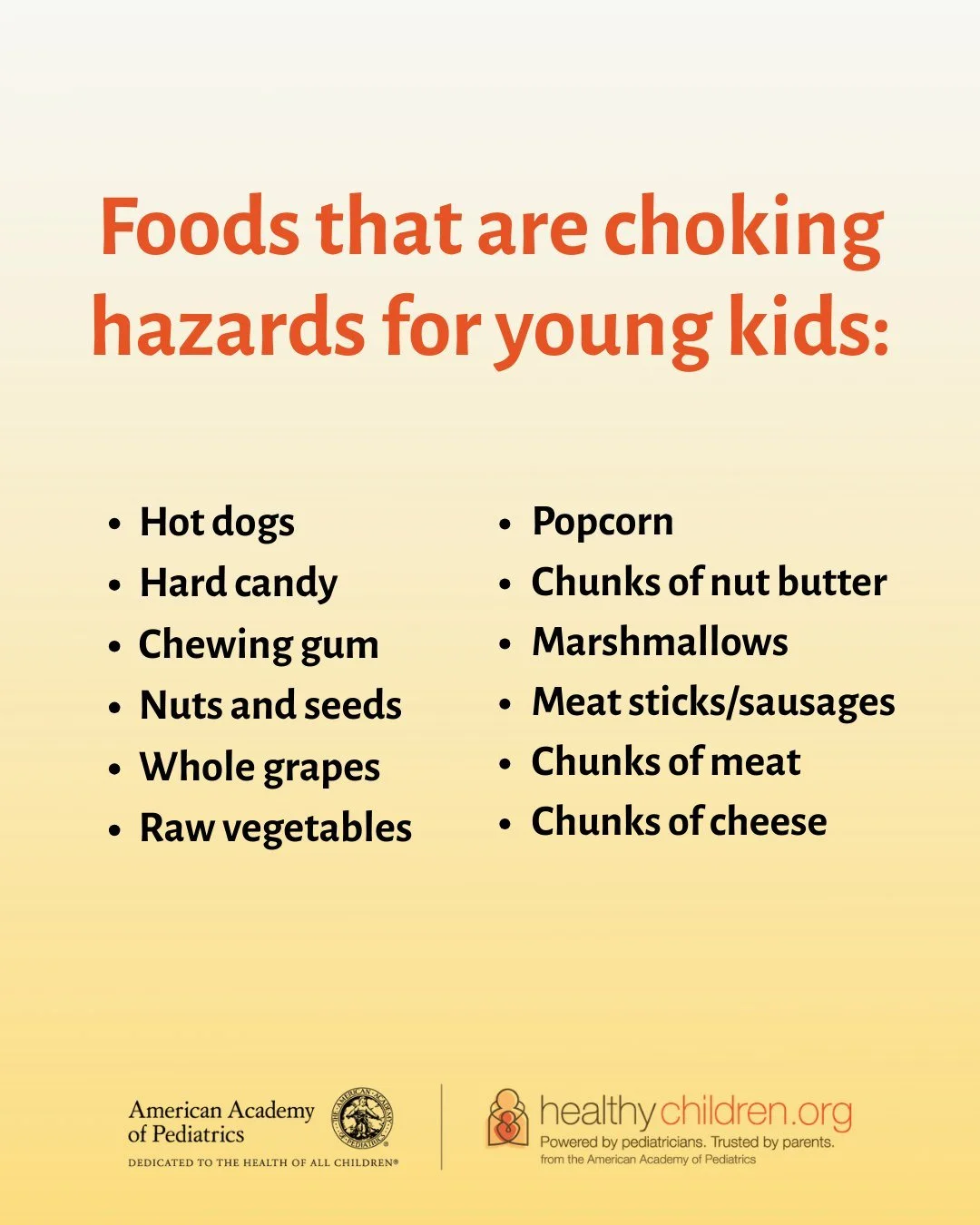
Foods That Are Choking Hazards for Young Kids
Young children are still learning how to chew and swallow safely. Certain foods pose higher choking risks, especially under age 4.
Common choking hazards include:
Hot dogs
Whole grapes
Nuts and seeds
Hard candy
Popcorn
Marshmallows
Chunks of meat or cheese
Raw vegetables
Chewing gum
Large spoonfuls of nut butter
Simple adjustments can reduce risk:
Cut grapes lengthwise.
Slice hot dogs into small, thin strips.
Avoid popcorn and hard candy for young children.
Spread nut butter thinly instead of serving in chunks.
Supervision during meals is always important.
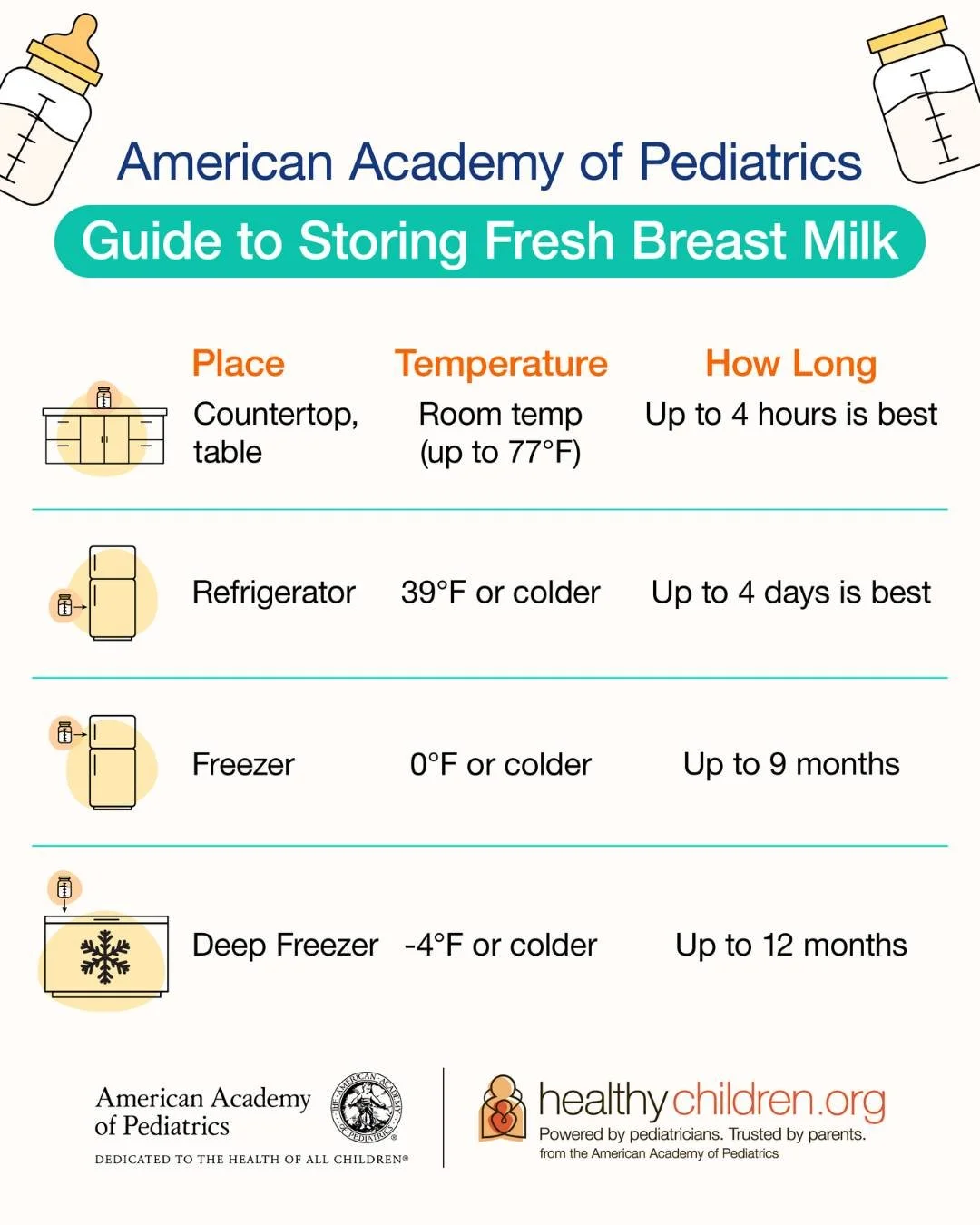
Guide to Storing Fresh Breast Milk
Breast milk storage guidelines can be confusing — especially for first-time parents.
Here’s a simple breakdown:
Room temperature (up to 77°F):
Up to 4 hours is best.
Refrigerator (39°F or colder):
Up to 4 days is best.
Freezer (0°F or colder):
Up to 9 months.
Deep freezer (-4°F or colder):
Up to 12 months.
Label milk with the date, store in clean containers, and always thaw safely in the refrigerator or warm water — never in the microwave.
If you have questions about supply, storage, or feeding concerns, we’re here to support you.
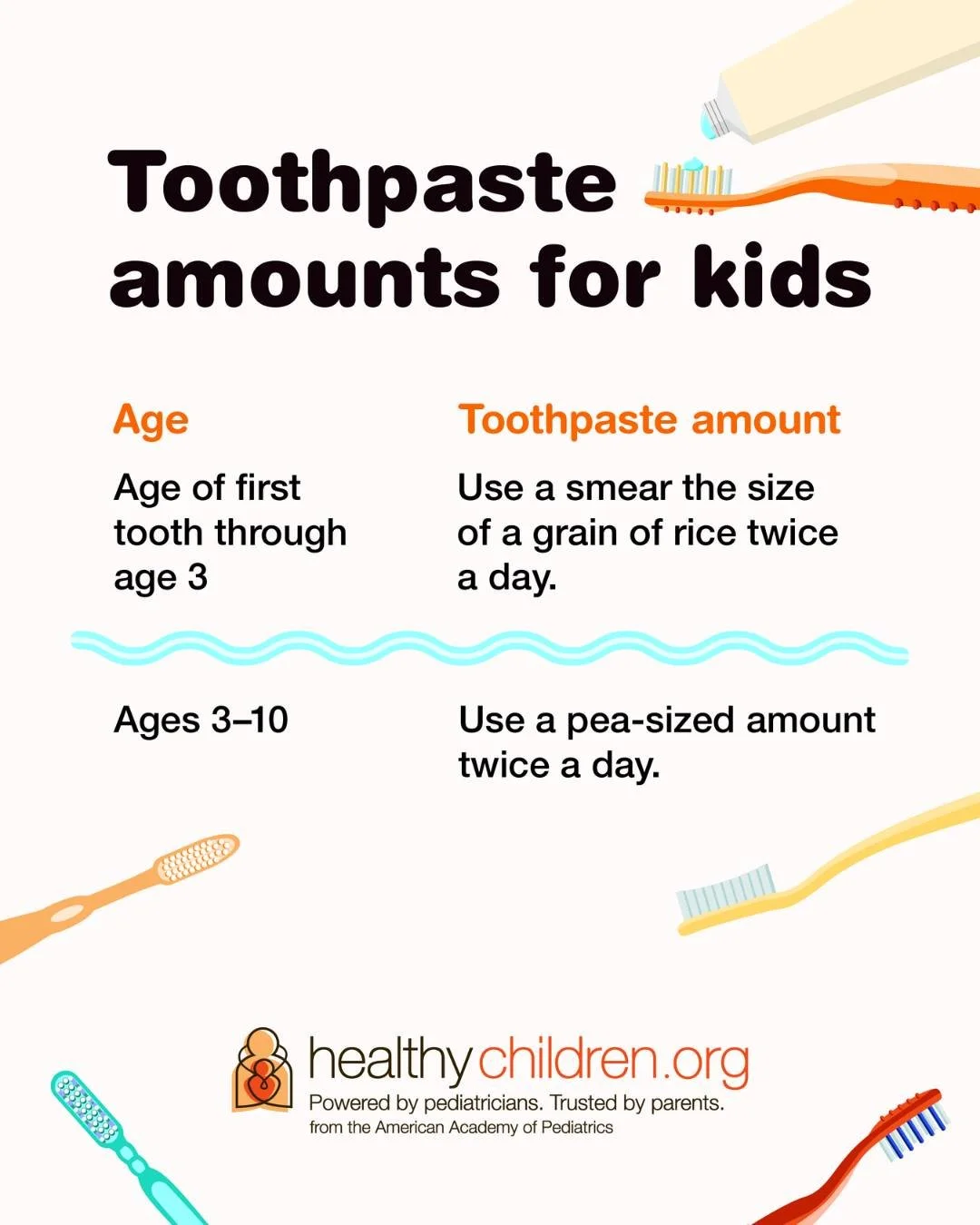
Toothpaste Amounts for Kids
Dental health starts early.
The correct amount of toothpaste depends on age:
From first tooth through age 3:
Use a smear the size of a grain of rice twice daily.
Ages 3–10:
Use a pea-sized amount twice daily.
Using too much toothpaste can lead to swallowing excess fluoride, so a small amount is all that’s needed.
Why These Charts Matter
Parenthood doesn’t come with a manual — but having trusted, pediatric-approved resources makes everyday decisions easier.
These charts are helpful reference tools, but they don’t replace personalized medical advice.
Every child is different.
If you’re ever unsure about:
Medication dosing
Vaccine timing
Feeding or nutrition
Safety concerns
Developmental questions
Call your pediatrician.
We’re Here for Jackson Families
At The Children’s Clinic in Jackson, TN, we are proud to serve families throughout Jackson and Madison County with compassionate, evidence-based pediatric care.
If you ever have questions, don’t hesitate to reach out. We’re here to help you feel confident and informed in caring for your child.
📍 264 Coatsland Drive, Jackson, TN
📞 731-423-1500
Because your child’s health deserves trusted guidance — every step of the way.
