
How to Handle Stomach Bugs Spreading Through Daycare and Preschool
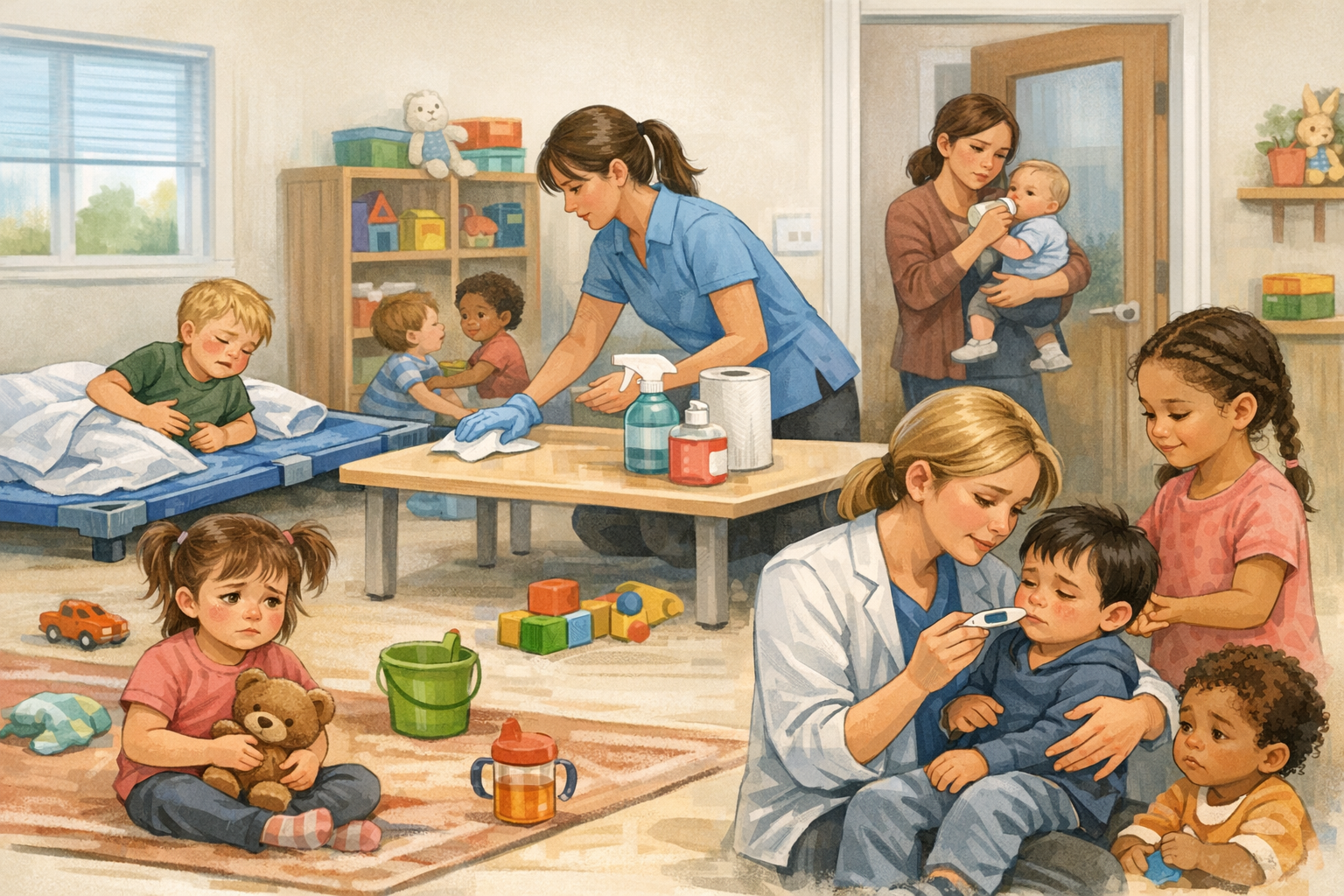
Once stomach bugs start moving through daycare or preschool, parents around Jackson, TN usually hear about it fast. One child goes home vomiting, then another, then someone in the class is out the next day. It can feel like the whole building got hit overnight.
If you’ve got a toddler waking up miserable, a baby who suddenly won’t feed well, or a school-age kid who was totally fine yesterday and now can’t keep breakfast down, you’re not alone. We talk to families about this kind of thing all the time at The Children’s Clinic. It’s stressful. It disrupts sleep, work, school, sports, and everything in between. And yes, it usually shows up right when life is already busy.
Why stomach bugs spread so fast in young kids
Little kids are basically experts at sharing germs without meaning to. They touch everything. They trade snacks. They wipe their noses with their hands. Then they grab toys, tables, and each other’s cups. That’s just real life in daycare and preschool.
Stomach viruses spread easily in those settings because young children are close together all day, and cleanup isn’t always perfect. One child gets sick, and by the time the first parent is reading the note home, half the room may already have been exposed. That’s especially true during back-to-school season and again in winter illness season, when everyone seems to be passing around something.
We see it a lot in Jackson and the surrounding areas too, from Madison County, TN to Medina, Humboldt, Milan, Lexington, and Brownsville. It doesn’t really care where you live. If kids are together, germs find a way.
What a stomach bug usually looks like
Most stomach bugs come on pretty quickly. A child may seem fine at bedtime and then wake up vomiting in the middle of the night. Diarrhea can follow. Sometimes there’s a fever. Sometimes there isn’t. Some kids act tired and pale. Others are grumpy, clingy, and absolutely not interested in getting off the couch.
For a lot of families, the hardest part is the uncertainty. Is this just a short bug? Is it something more? Should you keep them home from daycare one more day? Is the fever normal? Did they drink enough? These are the questions parents are googling late at night, and honestly, that makes sense.
Most stomach bugs get better with time and fluids. Kids may be sick for a day or two, then gradually turn the corner. But every child is different. Babies, toddlers, and children with medical conditions can get dehydrated faster than you’d expect.
What to do at home
Start with small sips of fluids. Don’t worry about big meals right away. A child who’s been vomiting usually needs time before their stomach settles down. Water is fine for older kids in small amounts, but oral rehydration fluids often work better, especially if there’s a lot of vomiting or diarrhea.
Offer a little at a time. A few sips. Wait. Try again. If they throw up, pause for a bit and restart slowly. That can feel frustrating when your child is crying for a drink and then refuses it, but slow and steady usually wins here.
Food can wait. Once vomiting settles, start with bland, simple foods if your child feels like eating. Toast, crackers, applesauce, rice, bananas. Don’t push a full meal too soon. Some kids bounce back quickly, while others need a day before their appetite returns.
Rest matters too. Sick kids often sleep in weird stretches, wake up uncomfortable, and then fall back asleep at odd hours. That’s normal. Give them a quiet place to recover. Keep things simple. No need to wrestle them into a full routine when their body is already working hard.
Babies and younger toddlers need a closer eye
When a baby gets sick, everything feels more serious. Feeding changes are often the first thing parents notice. A baby who usually eats well may suddenly refuse bottles, nurse less, or get sleepy and hard to wake for feeds. That’s a big deal.
If you have a newborn or young infant, especially one seen for newborn care near me concerns or just starting out with routine well checks, don’t wait too long if they’re not feeding normally. Babies can get dehydrated quicker than older children. Fewer wet diapers, very dry lips, unusual sleepiness, or a weak cry all deserve attention.
And if there’s fever in a young infant, that needs a call. Same goes if your baby is vomiting repeatedly, has trouble breathing, or just doesn’t seem like themselves. Parents usually know when something feels off. Trust that feeling.
When it’s probably okay to watch at home
Not every stomach bug needs an urgent visit. If your child is still drinking some fluids, peeing regularly, waking up pretty normally, and slowly improving, home care is often enough. A little loose stool after the vomiting stops is common. So is being tired for a day or two.
Some kids want to eat crackers and then decide they’re done. Others act better in the morning and worse at night. That roller coaster is pretty typical. A child who has one or two episodes of vomiting but then perks up can often be monitored at home.
If you’re unsure, that’s fair. Parents don’t need to wait until things are bad to ask questions. That’s part of what sick visits and phone calls are for.
Warning signs that need a call
Call your pediatrician if your child can’t keep fluids down, has signs of dehydration, or seems unusually sleepy or hard to wake. Dry mouth, no tears when crying, very little urine, or dizziness in an older child can all mean they need help getting rehydrated.
Also call if there’s blood in the vomit or stool, severe belly pain, a stiff neck, trouble breathing, or a fever that’s hanging on longer than you’d expect. A child who looks worse instead of better should be checked.
If diarrhea is lasting several days, or your child has ongoing vomiting beyond the usual stomach bug pattern, it’s time to get some guidance. Sometimes families are trying to juggle school, work, sports season, and a busy house, and they keep hoping it’ll pass. Most of the time it does. But sometimes it doesn’t, and that’s where a same-day sick visit can help.
What to do about daycare, preschool, and school
This part is always tough. Kids hate missing class, and parents hate rearranging schedules. But stomach bugs spread fast, so keeping a child home matters. In general, children should stay home while actively vomiting or having frequent diarrhea. They also need time to recover before returning to group settings.
Even after symptoms improve, a child may still be tired and not fully back to normal. That doesn’t always mean they’re contagious forever. It just means they may need a quiet day before jumping back into a full school schedule, especially if they’re headed into a long day with snacks, nap time, and outdoor play.
During back-to-school season, a lot of families are already dealing with the usual runny noses, coughs that linger, seasonal allergies, and those random fevers that show up the week school starts. A stomach bug layered on top of that can throw off the whole household. We get it. It’s a lot.
How to keep the rest of the family from catching it
Handwashing is the big one. Not the quick rinse either. Real soap-and-water handwashing, especially after bathroom trips, diaper changes, and before eating. Hand sanitizer is okay in a pinch, but it doesn’t always handle stomach bugs as well as good old soap.
Clean high-touch surfaces. Think bathroom fixtures, doorknobs, light switches, toy bins, and anything that gets touched over and over. If a child has been sick on bedding or clothing, wash those items as soon as you can.
Try not to share cups, utensils, or towels. That sounds obvious, but in a busy home it happens. Grandparents helping with childcare, siblings sneaking each other’s drinks, a toddler grabbing someone else’s straw. It all adds up.
If one child is sick, the whole house usually gets extra cautious for a few days. That’s just how families operate. The goal isn’t perfection. It’s lowering the odds that the bug keeps cycling through everyone.
A real local example
We’ll see this exact scenario all the time in Jackson, TN. A parent brings in one child because daycare called about vomiting. By that evening, a sibling is sick too. The baby in the house isn’t throwing up, but feeds are shorter and sleep is off. Then the parent is trying to figure out whether it’s just a 24-hour bug or something that needs a visit before the weekend.
That’s the kind of situation where a quick check can help a lot. Maybe the child just needs fluids and time. Maybe there’s dehydration to watch closely. Maybe the baby needs feeding guidance. Sometimes the biggest relief for families is simply hearing, yes, this fits a stomach virus, and here’s what to watch for over the next day.
We also hear from parents who are balancing all this with sports physicals, wellness visits, and school forms. One child is due for a checkup, another has a lingering cough, and now there’s a stomach bug in the mix. Family life rarely arrives one problem at a time.
What happens during a sick visit
At a sick visit, we usually focus on how your child is drinking, peeing, breathing, sleeping, and acting overall. We ask what the vomiting or diarrhea has looked like, whether there’s fever, and how long it’s been going on. Sometimes we’ll check for dehydration or look for signs that something else is going on.
We also talk through what parents can do next. That may include fluid guidance, return-to-school advice, or simple home care tips. If a child needs more support, we’ll walk through that too. No one needs to leave feeling like they’re guessing.
Actionable takeaways for busy families
If stomach bugs are moving through your child’s daycare or preschool, keep it simple.
Watch how your child is drinking, peeing, and acting.
Offer small amounts of fluids often.
Don’t rush back to regular meals.
Keep sick kids home from daycare or school until vomiting and diarrhea have settled down.
Call if your child can’t keep fluids down, seems dehydrated, has severe pain, or looks worse instead of better.
And if you’re stuck in that middle ground where you’re not sure whether it’s serious, that’s a good time to reach out. Parents shouldn’t have to sort through every stomach bug alone at 11 p.m. with a search engine and a very worried kid on the couch.
Bottom Line
Stomach bugs are one of those childhood illnesses that can spread fast and turn a normal week upside down. Most kids recover fine with rest and fluids, but babies, toddlers, and children who aren’t drinking well need closer watching. If you’re in Jackson, Madison County, or anywhere in West Tennessee and your child seems off, don’t brush it aside just because everyone else in the class has it too.
Sometimes it’s just a rough couple of days. Sometimes it needs a closer look. Either way, we’re here to help families sort it out without all the guesswork.
The Children’s Clinic
264 Coatsland Drive
Jackson, TN 38301
