
When to Keep Your Child Home: A Parent’s Guide to Fall Viruses in Jackson, TN
The leaves are changing, football games are in full swing, and pumpkin patches are buzzing with activity. Fall in West Tennessee is one of the most beautiful times of the year—but it also marks the start of another, less welcome season: cold and flu season.
Every fall, pediatricians across Jackson, TN, see a wave of sniffles, coughs, stomach bugs, and fevers sweep through classrooms and daycares. For parents, it can be tough to know what’s normal and when to keep your child home. You don’t want them to miss school unnecessarily—but you also don’t want to send them when they might be contagious or too sick to function.
At The Children’s Clinic in Jackson, TN, we understand how stressful it can be to make those early morning calls. That’s why our team of pediatricians has put together this simple guide to help you determine when to keep your child home, when to call the doctor, and when it’s okay to return to school or daycare.
Understanding Fall Illnesses: What’s Going Around
As temperatures drop, certain viruses become much more common. Here are some of the illnesses pediatricians see most often during the fall and early winter months:
1. The Common Cold
Colds are caused by a variety of viruses, and they spread quickly—especially in schools. Symptoms include a runny or stuffy nose, mild cough, sore throat, and fatigue. Most children recover on their own within 7–10 days.
Children with mild cold symptoms can usually go to school if they’re fever-free, eating well, and feeling up to it. However, if your child is coughing constantly, very tired, or running a fever over 100.4°F, it’s best to keep them home until they feel better.
2. The Flu (Influenza)
Flu symptoms can appear suddenly and tend to be more severe than those of a cold. Kids with the flu may have high fevers, chills, sore muscles, cough, sore throat, and exhaustion.
If your child has the flu, they should stay home until they’ve been fever-free for at least 24 hours without the use of fever-reducing medicine. Encourage rest, fluids, and call your pediatrician if symptoms worsen or if your child has underlying conditions like asthma or diabetes.
3. RSV (Respiratory Syncytial Virus)
RSV is a common virus that affects the lungs and breathing passages. For most older children, it looks like a mild cold—but in babies and toddlers, RSV can cause serious breathing problems.
Signs of RSV can include wheezing, fast breathing, or chest retractions (when the skin pulls in at the ribs while breathing). If your child is struggling to breathe, has blue lips or nails, or appears extremely tired, call The Children’s Clinic right away or go to the nearest emergency room.
4. Stomach Bugs (Viral Gastroenteritis)
Few things spread faster in a household than a stomach virus. Common symptoms include nausea, vomiting, diarrhea, and stomach cramps.
Most children recover in a day or two, but dehydration can become serious, especially in young kids. Watch for signs such as dry lips, no tears when crying, or going more than six hours without urinating.
Keep your child home for at least 24 hours after their last episode of vomiting or diarrhea, and make sure they’re drinking plenty of fluids.
5. Strep Throat
Strep throat is caused by bacteria, not a virus, and needs antibiotics to treat. Symptoms include a sore throat, fever, swollen glands, and sometimes a fine rash.
Children should stay home until they’ve been on antibiotics for at least 24 hours and are fever-free.
When Should You Keep Your Child Home?
Knowing when to keep your child home can help protect them, their classmates, and teachers from spreading illness. Here’s a general rule of thumb:
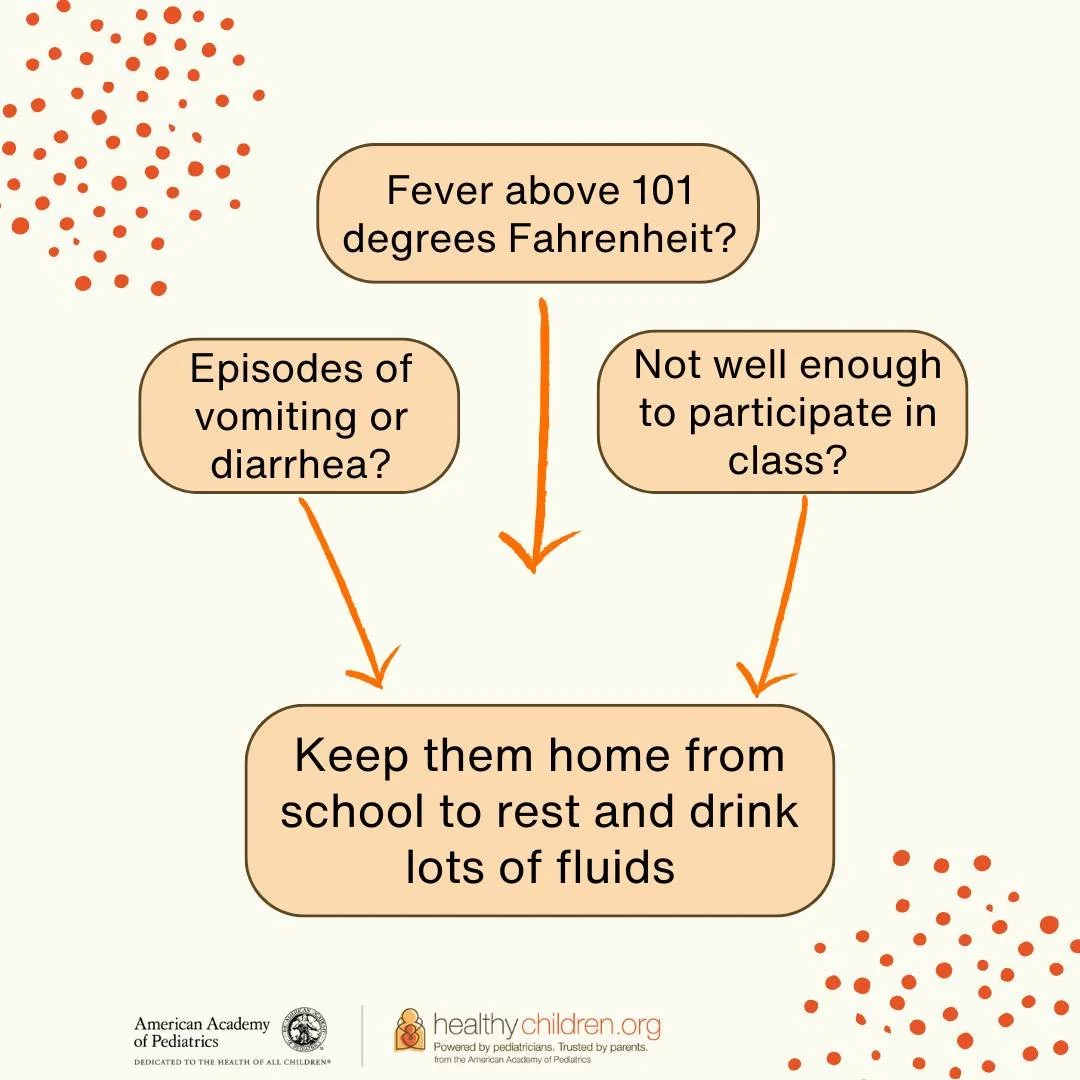
Keep your child home if they have any of the following:
A fever over 100.4°F
Vomiting or diarrhea in the past 24 hours
Persistent coughing or difficulty breathing
Severe sore throat
Unexplained rash
Eye redness with drainage (possible pink eye)
Extreme fatigue, irritability, or weakness
If your child only has a mild runny nose or a little cough but feels well enough to participate in school activities, it’s usually safe to send them. Encourage good hygiene—covering coughs, washing hands frequently, and not sharing utensils—to help prevent spreading germs.
When to Call the Pediatrician
While many seasonal illnesses get better on their own, there are times when you should call your pediatrician right away.
Contact The Children’s Clinic if your child experiences:
Trouble breathing, rapid breathing, or wheezing
Blue lips or fingernails
Persistent high fever that lasts more than three days
Severe sore throat or ear pain
Signs of dehydration (no urination for eight hours, dry mouth, sunken eyes)
Unusual drowsiness or confusion
Persistent vomiting or bloody diarrhea
If your child has a chronic condition—like asthma, diabetes, or a weakened immune system—don’t hesitate to reach out sooner. Your pediatrician can help tailor care and provide advice specific to your child’s needs.
When Can Your Child Return to School?
A good rule of thumb is that children should be fever-free, have normal energy levels, and be able to eat and drink comfortably before going back to school.
Here’s a quick guide:
Cold or mild cough: Return when symptoms improve, and the child feels well enough to participate.
Flu: Stay home until fever-free for 24 hours without medication.
Strep throat: 24 hours after starting antibiotics.
Stomach bug: 24 hours after last vomiting or diarrhea episode.
RSV or COVID-like symptoms: Follow your pediatrician’s guidance on isolation and testing if needed.
Remember—rest is an important part of recovery. Sending kids back too soon can lead to setbacks and longer recovery times.
What You Can Do at Home
When your child is sick, the best medicine is often comfort, hydration, and rest. Here are a few practical tips from our pediatricians at The Children’s Clinic in Jackson, TN:
Hydrate, hydrate, hydrate. Offer water, electrolyte drinks, or popsicles.
Focus on rest. Sleep helps the body heal faster.
Use a humidifier. It eases coughs and stuffy noses.
Offer bland foods. Toast, crackers, bananas, and rice can be easier on the stomach.
Monitor symptoms. Keep track of fevers, coughing, and fluid intake.
Avoid giving over-the-counter cold medicines to young children unless specifically recommended by your pediatrician. Many aren’t safe for children under six years old.
Why Fall Viruses Spread So Quickly
It’s no surprise that illnesses spike in fall. Cooler weather means more time indoors—close contact in classrooms, sports practices, and family gatherings gives viruses plenty of opportunities to spread.
You can help reduce transmission by teaching your child good hygiene habits:
Wash hands regularly with soap and water for at least 20 seconds.
Cough or sneeze into the elbow, not hands.
Avoid touching the face, especially the eyes, nose, and mouth.
Keep hand sanitizer in backpacks and use it when soap isn’t available.
These small habits make a big difference, especially in busy schools like those here in Jackson, Humboldt, and Medina.
Prevention Tips for a Healthy Fall
The best way to handle seasonal illnesses is to prevent them whenever possible. Here are a few pediatrician-approved tips:
1. Get Your Flu Shot Early
Flu vaccines are available each fall and are the best defense against influenza. Pediatricians recommend that everyone six months and older receive the flu vaccine each year.
Getting vaccinated early helps protect your family before the flu begins circulating heavily in the community.
2. Stay Up to Date on Other Vaccines
In addition to flu shots, make sure your child’s routine immunizations are current. This protects against illnesses like whooping cough, measles, and pneumonia, which can have serious complications.
3. Keep Nutrition Balanced
Healthy immune systems start with good nutrition. Encourage plenty of fruits, vegetables, and whole grains. Limit sugary drinks and snacks that can weaken the immune system.
4. Maintain Regular Sleep Schedules
Sleep is crucial for immune health. Younger kids need around 10–12 hours of sleep each night, while teens should aim for at least eight.
5. Avoid Over-Scheduling
Fall is busy, but try not to overload your child’s schedule. Downtime helps their bodies recover and stay resilient during the peak of virus season.
Supporting Parents, Supporting Kids
We know how exhausting it can be to care for a sick child while balancing work, school schedules, and family life. You’re not alone—these challenges are part of every parent’s fall routine.
At The Children’s Clinic, our team of pediatricians is here to help you navigate seasonal illnesses with confidence. Whether you need same-day care for a high fever, advice over the phone, or reassurance that your child just needs rest, we’re always just a call away.
Our goal is to give parents the tools they need to make informed decisions while keeping children safe, healthy, and comfortable throughout the changing seasons.
Final Thoughts
Fall is a wonderful time in West Tennessee—football games, cozy evenings, and family gatherings—but it also brings the arrival of those inevitable sniffles and stomach bugs. Most of the time, kids bounce back quickly with some rest and fluids. But knowing when to keep them home, when to call the doctor, and how to prevent illness in the first place can make all the difference.
At The Children’s Clinic in Jackson, TN, we care for your children as if they were our own. If your child is showing signs of severe illness—such as difficulty breathing, blue lips or nails, extreme fatigue, or dehydration—don’t wait. Call your pediatrician right away.
We’re here to help your family stay healthy and thriving through every season.
📍 The Children’s Clinic
264 Coatsland Drive
Jackson, TN 38301
📞 Phone: 731-423-1500
Serving families across Jackson, Humboldt, Medina, Henderson, and the greater West Tennessee area, The Children’s Clinic provides compassionate, evidence-based pediatric care for every stage of childhood.
