
RSV Timing for Spring & Summer Babies: What Parents in West Tennessee Need to Know
If your baby was born in the spring or summer, you may be wondering how respiratory viruses—especially RSV—fit into your child’s first year of life. Many parents associate RSV with wintertime, but RSV season often stretches well beyond the coldest months. In West Tennessee, RSV activity commonly continues through March, and sometimes longer depending on community spread.
At The Children’s Clinic, we want parents to feel confident and informed when it comes to protecting their infants. One of the most effective tools available today is RSV immunization, which is recommended for all infants under 8 months of age. Timing matters, and your baby’s birth month plays an important role in deciding when protection should begin.
What Is RSV—and Why Is It a Big Deal for Infants?
Respiratory Syncytial Virus (RSV) is a very common virus that infects nearly all children by the time they are two years old. For older children and adults, RSV often looks like a mild cold. For babies—especially those under 6 months—it can be much more serious.
RSV is one of the leading causes of hospitalization in infants, particularly during their first RSV season. It can lead to:
Bronchiolitis
Pneumonia
Breathing difficulties
Feeding problems due to congestion and fatigue
Infants’ airways are smaller, their immune systems are still developing, and they don’t yet have the ability to fight off infections the way older children do. That’s why prevention is so important.
RSV Season Doesn’t End with Winter
A common misconception is that RSV is only a concern in December or January. In reality, RSV season usually begins in the fall and can last through March—sometimes even into early spring.
For babies born in April, May, June, July, or August, this means their first RSV season may still be underway when they are just a few months old. These younger infants are often at the highest risk for severe illness, making timely protection especially important.
RSV Immunization: A Powerful Layer of Protection
RSV immunization is recommended for all infants younger than 8 months during their first RSV season. This immunization works by providing ready-made antibodies that help protect babies from severe RSV illness.
It is especially important for:
Newborns and young infants
Babies born during or shortly before RSV season
Infants who will be exposed to daycare, siblings, or group settings
Even healthy, full-term babies benefit from RSV immunization, because RSV does not discriminate—it can affect any infant.
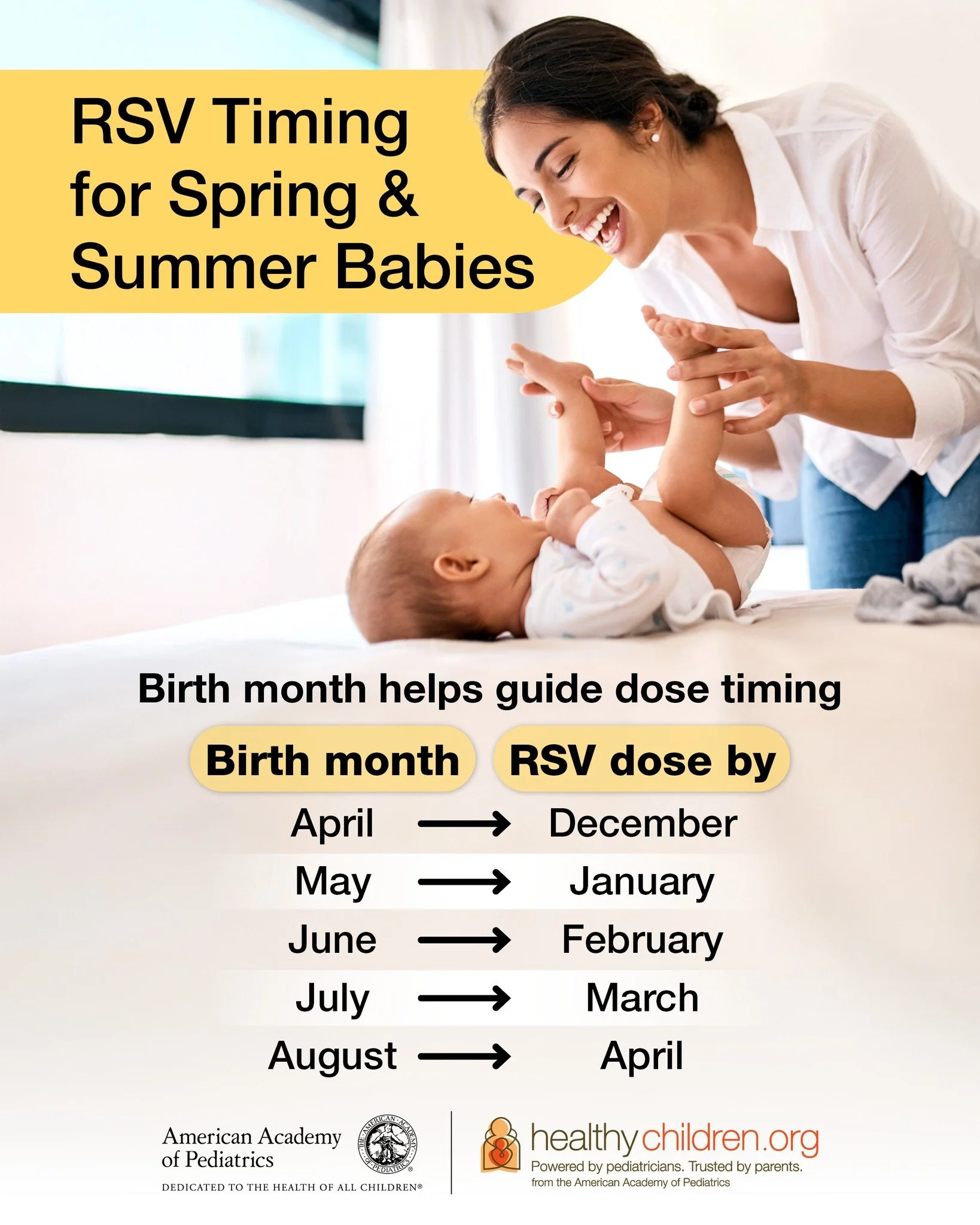
How Birth Month Helps Guide RSV Immunization Timing
One helpful way to think about RSV immunization timing is by looking at your baby’s birth month. Pediatric experts use this approach to help maximize protection during peak RSV activity.
Here’s a general guide:
April births → RSV dose by December
May births → RSV dose by January
June births → RSV dose by February
July births → RSV dose by March
August births → RSV dose by April
This chart is a helpful starting point, but it’s important to remember that timing can vary based on local RSV activity and your baby’s individual health needs. That’s where your pediatrician comes in.
Why Early Protection Matters
RSV spreads easily through:
Coughing and sneezing
Close contact (kissing, holding, sharing space)
Contaminated surfaces like toys and hands
Babies don’t need to be in daycare to be exposed. RSV can spread through family gatherings, older siblings, grocery stores, and routine errands.
Because RSV can progress quickly in infants, preventing severe illness before exposure happens is key. RSV immunization helps reduce the risk of hospitalization and serious complications during your baby’s most vulnerable months.
What Parents of Spring & Summer Babies Should Do Now
If your baby was born this past spring or summer and is under 8 months old, now is the right time to:
Talk with your pediatrician about RSV immunization
Confirm the best timing based on your baby’s birth month
Consider local RSV trends in West Tennessee
Even if RSV season is winding down, protection may still be recommended depending on your baby’s age and exposure risk.
RSV Prevention Still Matters Beyond Immunization
In addition to immunization, parents can help reduce RSV risk by:
Washing hands frequently
Limiting close contact with sick individuals
Avoiding crowded indoor spaces when possible
Cleaning toys and frequently touched surfaces
Asking visitors to postpone visits if they are ill
These steps are especially important during your baby’s first few months.
Personalized Guidance Matters
Every baby is different. Factors like birth timing, exposure to siblings, daycare attendance, and local RSV trends all play a role in deciding the best protection plan.
That’s why we encourage families not to rely on charts alone—but to have a conversation with their pediatrician. Together, you can determine what’s best for your baby and your community.
We’re Here for Families Across West Tennessee
At The Children’s Clinic, our pediatric team is committed to helping parents navigate RSV season with confidence. We proudly care for families in Jackson, TN and throughout West Tennessee, offering evidence-based guidance tailored to your child’s needs.
If you have questions about RSV immunization or want to schedule an appointment, give us a call:
📞 731-423-1500
Protecting your baby’s health starts with informed decisions—and we’re here to help every step of the way.
