
What Parents Need to Know About the Allergic March
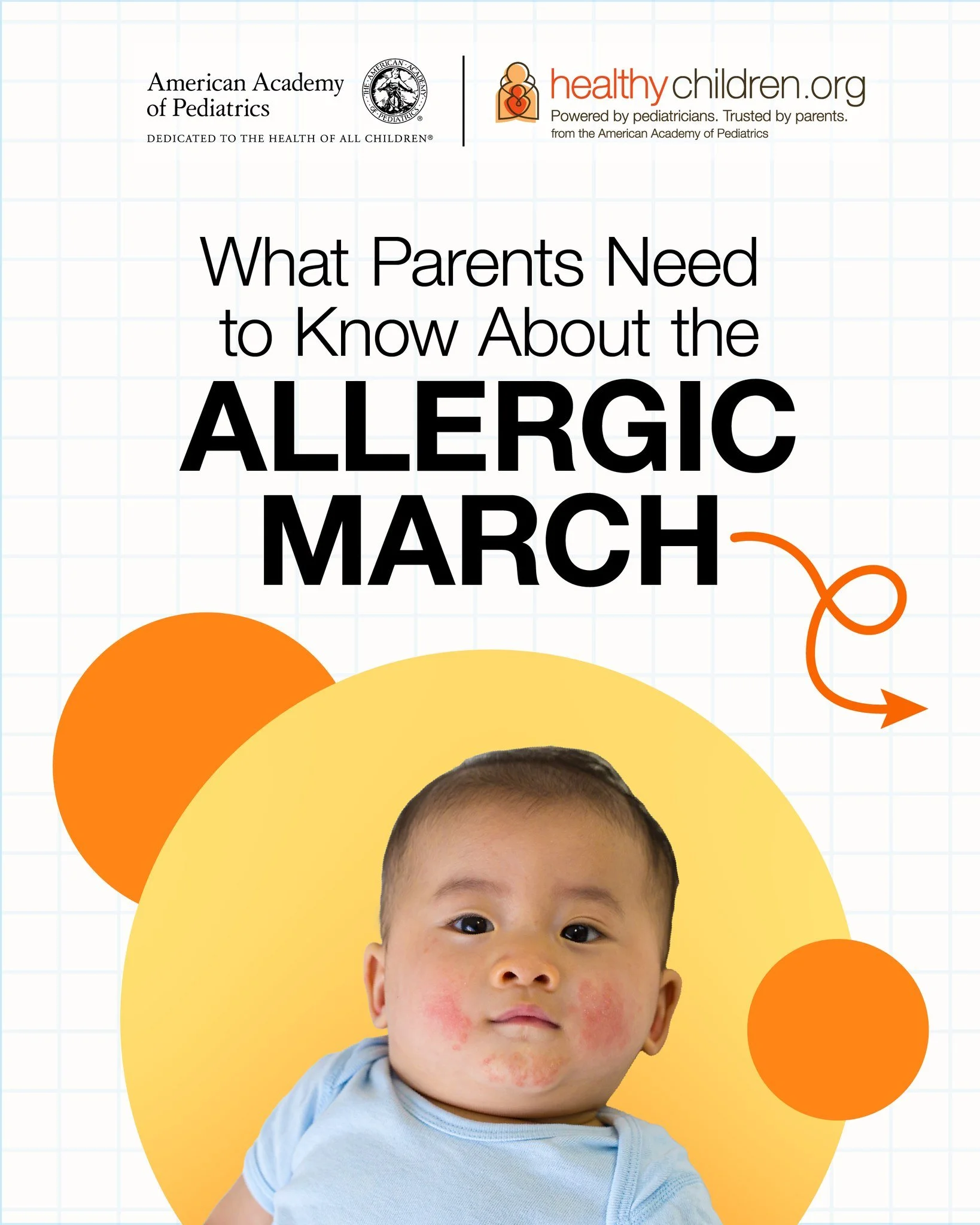
If your child seems to be dealing with more than one allergy-related condition, you’re not imagining things — they may be connected.
The allergic march, also known as the atopic march, is a pattern of allergic conditions that tend to develop one after another during childhood. Understanding this progression can help parents recognize early signs and work with their pediatrician to support long-term health.
What Is the Allergic March?
The allergic march describes how certain allergic conditions often appear in a predictable sequence as a child grows. The first sign is usually atopic dermatitis (eczema), often appearing in infancy. For some children, this may later be followed by:
Food allergies
Allergic rhinitis (hay fever)
Eosinophilic esophagitis (EoE)
Asthma
Not every child with eczema will go on to develop these conditions, but early symptoms can signal an increased risk.
Why Does the Allergic March Happen?
Research suggests the allergic march begins in the immune system. Children who develop allergic conditions early may have more sensitive immune responses that react strongly to common triggers like foods, pollen, or environmental allergens.
Skin barrier health also plays a role. When the skin is inflamed or damaged by eczema, allergens may enter the body more easily, potentially increasing sensitization.
Why Early Identification Matters
Catching symptoms early allows pediatricians to:
Manage eczema more effectively
Monitor for emerging allergies
Reduce inflammation and immune stress
Support healthy growth and activity
Early diagnosis and consistent treatment can help children stay active, comfortable, and engaged in everyday life.
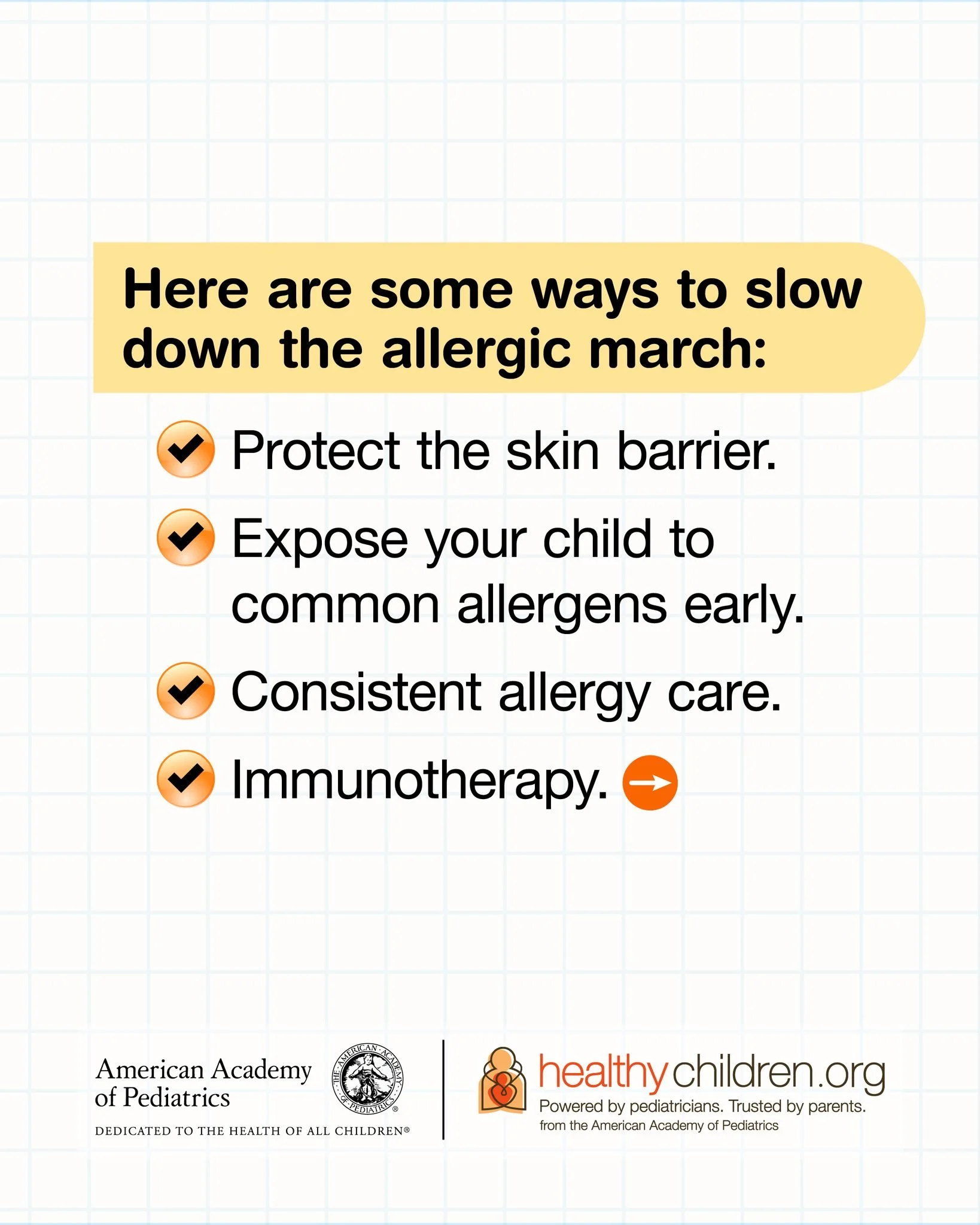
Ways to Help Slow the Allergic March
While the allergic march can’t always be prevented, certain strategies may help reduce progression:
Protect the skin barrier with consistent eczema care
Introduce common allergens early, when appropriate and guided by a pediatrician
Maintain consistent allergy management
Consider immunotherapy when recommended
Every child is different, and care plans should always be personalized.
When to Talk to Your Pediatrician
If your child has eczema, recurring allergy symptoms, or multiple allergic conditions, talk with your pediatrician. Early guidance and treatment can make a meaningful difference in your child’s comfort and long-term health.
