
What’s Really in Vaccines? Understanding Antigens and How They Help Protect Your Child
When it comes to your child’s health, it’s natural to have questions. From choosing the right pediatrician to understanding nutrition and development, parents want to make the best possible decisions. And one topic that often brings up the most questions — and sometimes confusion — is vaccines.
At The Children’s Clinic in Jackson, TN, we talk to parents every day who want to know what’s in vaccines, how they work, and why they’re so important. These are great questions — and the more you understand, the more confident you’ll feel about protecting your child’s health.
Let’s take a closer look at one of the key components of vaccines — antigens — and why they’re not only safe but essential to helping your child’s immune system stay strong.
What Are Antigens?
The term “antigen” might sound technical, but it simply refers to something that triggers your immune system to respond. In nature, antigens are found on viruses, bacteria, and other foreign substances that can cause illness. When your body detects one, it creates antibodies to fight it off. These antibodies “remember” the invader, so if your body encounters it again, it knows exactly how to stop it before you get sick.
Vaccines use that same natural process — but in a safe, controlled way. Instead of exposing your child to an actual illness, vaccines contain a very small, harmless amount of antigens that teach the immune system how to recognize and fight the real germ in the future. This “practice run” builds immunity without the risk of your child getting seriously ill.
Children Encounter Thousands of Antigens Every Day
One of the biggest myths about vaccines is that they “overload” a child’s immune system. In reality, the opposite is true.
Children come into contact with antigens all the time — from playing on the playground to eating, breathing, or even touching surfaces around the house. Their immune systems are constantly learning and responding to new things.
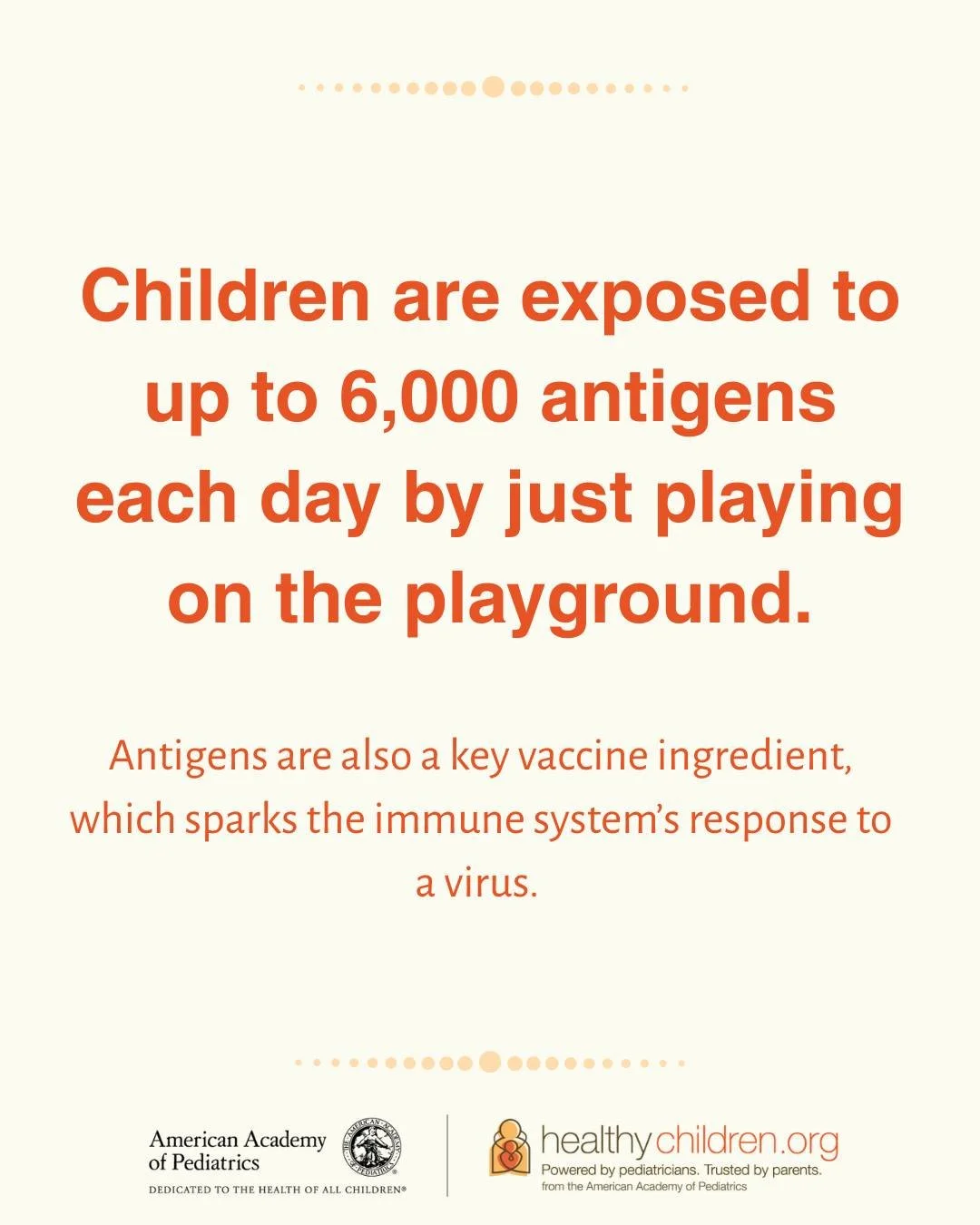
In fact, researchers estimate that children are exposed to up to 6,000 antigens a day just from their everyday environment. Compare that to the small number of antigens in vaccines — most contain only a handful. This means vaccines actually add a very tiny amount of extra work for the immune system compared to what kids already experience daily.
Your child’s immune system is built to handle these exposures — it’s one of the most incredible and resilient parts of the human body.
What’s Actually in a Vaccine?
It’s understandable to wonder what’s in the shots your child receives. After all, parents want to know exactly what’s going into their little ones’ bodies. The good news is that vaccine ingredients are well-researched, carefully tested, and monitored for safety.
Here’s what you’ll typically find in most vaccines:
Antigens: The active ingredient that teaches the immune system how to recognize and fight disease.
Adjuvants: Substances that help the immune system respond more effectively to the vaccine. Aluminum salts are a common example — they’ve been safely used in vaccines for over 70 years.
Preservatives: These prevent contamination, especially in multi-dose vials. The most common preservative, thimerosal, is rarely used today and never in routine childhood vaccines except for some flu shots.
Stabilizers: These help vaccines remain effective during storage and transport, protecting against heat, light, and acidity. Sugars, amino acids, and proteins often play this role.
Water and saline: Most vaccines are primarily made up of sterile water and salt solutions — the same kind used in medical IVs.
Each ingredient serves a purpose. They ensure the vaccine is effective, stable, and safe for your child.
Why Vaccine Safety Is So Heavily Studied
Before any vaccine is approved for use, it undergoes extensive testing — much more than most other medicines. Clinical trials can take years and involve tens of thousands of participants of all ages and backgrounds.
Once approved, vaccines continue to be monitored through systems like the Vaccine Adverse Event Reporting System (VAERS) and the Vaccine Safety Datalink. These programs help track and analyze rare side effects, ensuring every vaccine remains as safe as possible for the public.
At The Children’s Clinic, we understand that parents want reassurance. That’s why we encourage open conversations. If you’ve read something online that makes you uneasy or confused, we welcome those discussions. Our pediatricians will walk you through the science, explain what’s in each vaccine, and help you feel comfortable about your child’s care.
How Vaccines Work With the Immune System
When your child receives a vaccine, their immune system springs into action. The antigens inside the vaccine mimic a disease-causing germ — but without causing the illness itself. This process helps your child’s body build a “memory” of the virus or bacteria.
So, if your child ever comes into contact with the real germ later in life, their immune system can recognize it and attack it immediately. This means they can fight off the infection before it causes symptoms — or avoid getting sick altogether.
Vaccines are like study guides for your child’s immune system: they teach it what to look for and how to respond.
Why Multiple Vaccines at Once Are Safe
Many parents are surprised when their child receives multiple vaccines during a single well visit. It’s easy to worry that this might be too much for a small child’s body to handle, but science shows otherwise.
Remember those 6,000 antigens your child encounters every day just by playing outside? The handful of antigens in vaccines is minimal in comparison. Your child’s immune system can easily manage multiple vaccines at once — and the schedule is carefully designed to provide protection during the most vulnerable years.
In fact, delaying or spacing out vaccines can leave your child unprotected when they need immunity the most. Following the American Academy of Pediatrics (AAP) schedule gives your child the strongest and safest start.
Common Myths About Vaccine Ingredients
Let’s address some of the most common misconceptions parents come across online.
Myth 1: Vaccines contain harmful toxins.
Truth: Every ingredient in vaccines serves a purpose and is present in extremely small, safe amounts. Even ingredients that sound unfamiliar — like formaldehyde — are actually produced naturally by our own bodies in higher amounts than those found in vaccines.
Myth 2: The number of vaccines today is higher than it used to be.
Truth: While today’s vaccines protect against more diseases, they actually contain fewer antigens than vaccines from decades ago. This means they’re easier on the immune system while providing broader protection.
Myth 3: Vaccine ingredients cause autism.
Truth: Decades of studies from around the world have found no link between vaccines and autism. The original study that sparked this claim was retracted and widely discredited due to falsified data. Autism is a complex neurological condition influenced by genetics and brain development — not vaccines.
The Importance of Building Trust Through Facts
We live in a time where information travels faster than ever — and not all of it is accurate. Social media and blogs often share scary stories that sound convincing but don’t tell the full picture. That’s why it’s so important to rely on sources backed by science, research, and clinical experience.
At The Children’s Clinic in Jackson, our goal is to be your trusted resource for reliable health information. We base our recommendations on data from the Centers for Disease Control and Prevention (CDC) and the American Academy of Pediatrics, two of the most respected public health organizations in the world.
We also believe in transparency — because trust begins with open communication. Our pediatricians take the time to explain what’s in each vaccine, how it works, and what you can expect afterward. We encourage parents to ask every question they have.
What to Expect After Vaccination
Most children experience only mild side effects after getting vaccinated, and these are normal signs that the immune system is responding the way it should. Common reactions may include:
Mild soreness or redness at the injection site
A low-grade fever
Fussiness or fatigue for a day or two
These symptoms are short-lived and far less serious than the diseases vaccines prevent.
If your child has a history of allergic reactions or specific health conditions, your pediatrician will review their records and determine the best vaccination plan for them.
We also recommend keeping your child hydrated and providing extra comfort after their shots — sometimes a hug or a favorite blanket is all it takes to make them feel better.
Vaccines Protect the Whole Community
Vaccines don’t just protect individual children — they protect everyone around them. This concept, known as community immunity, helps safeguard those who are too young or medically unable to receive vaccines.
When enough people are vaccinated, it becomes much harder for contagious diseases to spread. That means fewer outbreaks in schools, fewer hospital visits, and a healthier community overall.
By keeping your child up to date on vaccinations, you’re not just protecting your family — you’re protecting your neighbors, classmates, and even newborns who haven’t yet built immunity.
When to Talk to Your Pediatrician
If you’ve read something online that leaves you unsure about vaccines or their ingredients, it’s always better to discuss it directly with your child’s doctor. Pediatricians can help separate fact from fiction and provide reassurance backed by science.
At The Children’s Clinic in Jackson, TN, we encourage open and honest conversations with every parent. Whether you’re worried about antigens, preservatives, or the timing of vaccines, our team is here to listen and help you make informed decisions that keep your child safe.
You never have to navigate this information alone.
Final Thoughts
It’s completely normal to want to understand every detail about what goes into your child’s vaccines. In fact, curiosity is one of the best things a parent can have when it comes to their child’s health.
The truth is that vaccine ingredients, including antigens, are not only safe but essential. They train your child’s immune system to recognize and fight off dangerous germs — helping prevent diseases that once caused serious illness, hospitalization, or worse.
Every ingredient in a vaccine is there for a reason, and each one plays a role in protecting your child’s health for years to come.
If you have questions about vaccines or their ingredients, we encourage you to talk with your pediatrician. At The Children’s Clinic, our doctors are always happy to explain how vaccines work, what they contain, and how they help keep your family and our West Tennessee community healthy.
📍 The Children’s Clinic
264 Coatsland Drive
Jackson, TN 38301
📞 Phone: 731-423-1500
Serving families in Jackson, Humboldt, Medina, Henderson, and across West Tennessee, The Children’s Clinic provides compassionate, evidence-based pediatric care — from newborn checkups and immunizations to adolescent wellness and school physicals.
Your child’s health is our priority. Call today to schedule your next appointment or speak with one of our pediatricians about vaccine safety.
