
Screens Down, Family Up: How Screen-Free Dinners Help Kids Thrive in West Tennessee
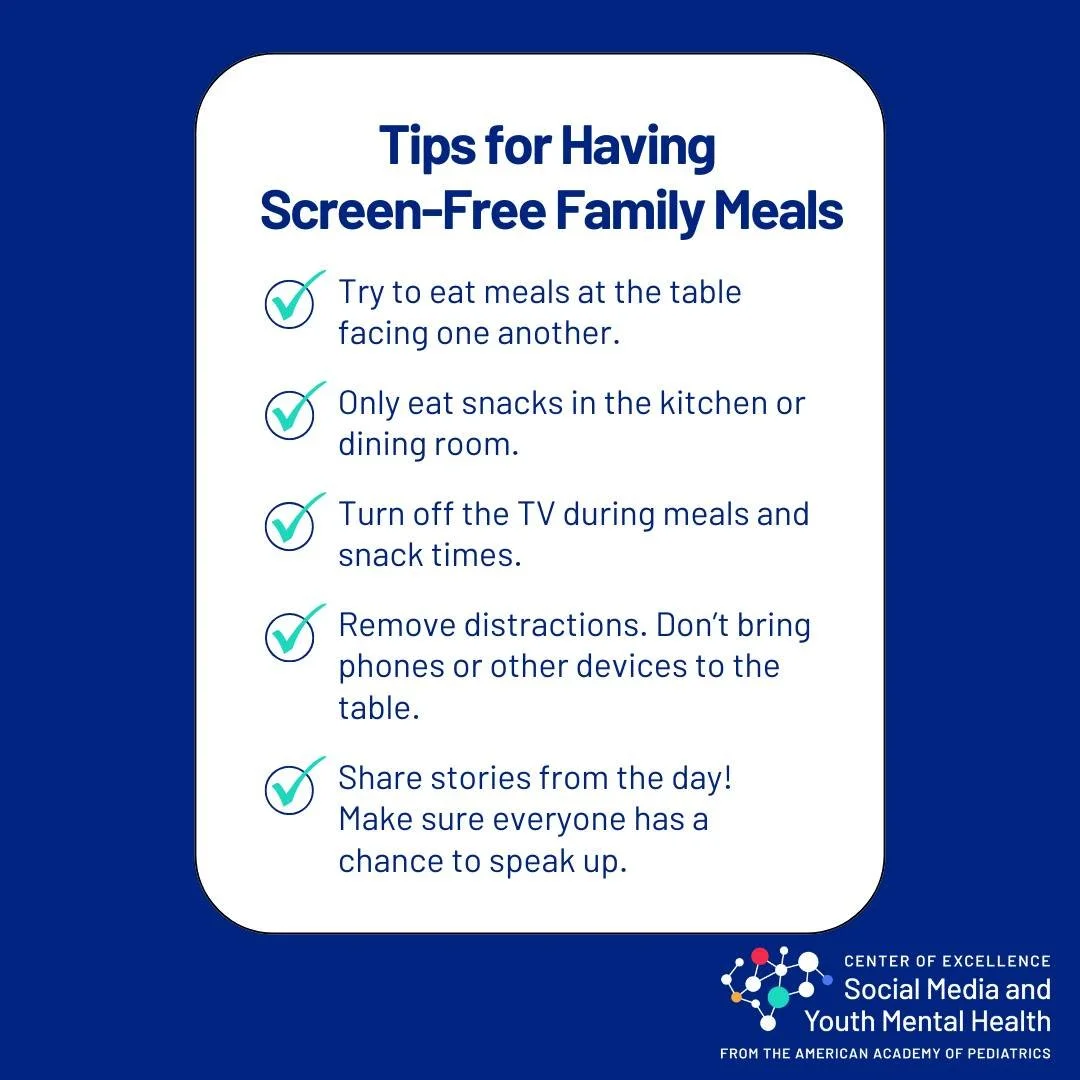
Most families today eat dinner with at least one screen glowing nearby—whether it’s a TV running in the background, a cell phone buzzing on the table, or a tablet propped in front of a child to keep them still long enough to finish a meal. It’s part of modern life, and no parent should feel guilty about it.
But something pretty remarkable happens when families set aside screens, even just a few nights a week, and eat together with no digital interruptions. Kids open up. Parents unwind. And conversations that rarely happen during busy days suddenly have space to grow.
At The Children’s Clinic in Jackson, TN, we talk often with parents about the everyday habits that support children’s emotional and developmental health. One of the simplest—and most overlooked—is sitting down together for even one screen-free meal. Families across West Tennessee are surprised by how manageable and meaningful this small shift can be.
If you’ve been trying to get your family back around the table, here’s a warm, realistic, down-to-earth guide to making screen-free dinners a lasting routine.
🌤️ Why Family Dinners Matter More Than Ever
Family dinners aren’t about food—they’re about connection. And connection is something kids need just as much as nutrition, sleep, and physical activity.
Even two or three shared meals each week can help children:
Build stronger communication skills
Feel more secure and grounded
Develop confidence speaking with adults
Form healthier eating habits
Cope better with stress or emotional challenges
Strengthen their sense of belonging within the family
Researchers have found that children who share regular meals with their family often show better academic performance, fewer behavior struggles, and stronger emotional resilience.
And those benefits show up no matter what’s on the table—homemade soup, takeout pizza, chicken nuggets, or cereal for dinner. The magic isn’t the menu. It’s the togetherness.
📱 When Screens Take Over the Table
Screens aren’t the enemy here. They help with homework, allow grandparents to FaceTime from across the country, entertain children during long errands, and keep parents connected for work.
The issue is distraction.
When screens are on during meals, kids tend to:
Withdraw and talk less
Eat too quickly or too little
Pay less attention to fullness cues
Miss valuable back-and-forth conversation
Disconnect from their own family members
And parents miss out too. Instead of learning how their child’s day went or what they’re worried about, it becomes easy to zone out, scroll, or try to multitask.
This is why pediatricians encourage families to reclaim even a little screen-free time. Not all meals. Not every day. Just enough to keep relationships strong.
🌿 How to Start a Screen-Free Dinner Habit Without a Battle
You don’t have to launch a full-scale “no screens ever” rule. Small tweaks work best—especially with young children or busy schedules.
Here’s how families in Jackson, Medina, Humboldt, Henderson, and the surrounding West Tennessee communities have made this practical:
1. Begin with just two screen-free dinners a week.
Choosing nights that already feel calmer gives you a better chance of sticking with the routine.
2. Set expectations early in the day.
A simple heads-up like:
“Tonight is one of our screen-free dinners, okay?”
helps kids transition smoothly.
3. Use a phone basket or designated drop spot.
Everyone (even the grown-ups!) places their devices in the basket before sitting down. Out of sight really is out of mind.
4. Keep meals simple on screen-free nights.
Make it easy on yourself.
Leftovers, sandwiches, pasta, rotisserie chicken—whatever is low effort works perfectly.
5. Let kids help in small ways.
Children who help even a little feel more connected to the meal.
Ideas:
Placing napkins on the table
Washing fruit
Stirring something
Choosing the music (soft background music is okay!)
6. Have gentle conversation starters ready.
These help break the ice, especially with older kids:
“What made you laugh today?”
“What was one hard thing and one good thing from your day?”
“If you could create a new school rule, what would it be?”
“What’s something you’re looking forward to?”
7. Keep expectations age-appropriate.
Toddlers may not sit still long. Teens may be reserved at first. That’s normal. The goal is connection, not perfection.
🌈 What Screen-Free Meals Look Like in Real Families
A lot of parents imagine screen-free dinners require a perfectly calm household, long meaningful conversations, or gourmet cooking. In real life, it looks much simpler.
In homes across West Tennessee, screen-free meals look like:
A toddler eating three bites and wanting down.
A five-year-old telling endless stories about school.
A teenager rolling their eyes at first—but staying to talk longer than expected.
Parents eating in shifts between after-school activities—and still having five minutes together.
Laughter, spills, interruptions, and moments of connection tucked in between.
Family meals don’t have to be quiet or polished to matter. They just have to happen.
🧠 The Developmental Benefits You Don’t See Right Away
Kids might not say, “Thank you for helping me develop social skills at dinner tonight!”
But parents often notice subtle shifts:
Kids become more talkative and expressive.
Even small children learn how to share stories, take turns speaking, and stay engaged.
Eating habits improve naturally.
Without a screen, children learn to slow down and notice hunger and fullness cues.
Family relationships strengthen.
Kids feel seen, heard, and supported—something that’s especially important during stressful school periods or developmental transitions.
Parents get a clearer sense of their child’s emotional world.
Screen-free dinners give adults a window into what their children are thinking, struggling with, or excited about.
🥗 Simple Ways to Make Screen-Free Meals Fun
Some families like to build small traditions that kids look forward to. Here are a few ideas that work well:
• “Rose, Thorn, Bud”
Each person shares:
A Rose — something good from their day
A Thorn — something challenging
A Bud — something they’re excited about
• The “Choose the Vegetable” Night
Let one child pick the veggie for dinner. Kids love the control, even if they choose something funny like peas and pickles.
• Theme Nights
Not every week, but once in a while:
Taco Tuesday
Breakfast for Dinner
Pasta Night
“Build Your Own” bowls or sandwiches
• Dinner Music Playlist
Kids can choose soft background music that fits the vibe.
• Story-from-the-Day Sharing
Each person shares something from their day—even small things count.
🌙 When the Routine Starts to Stick
After a few weeks, many families notice:
Less arguing
Less rushing
Kids opening up more
More laughter
A calmer evening rhythm
It doesn’t happen overnight, but small, steady habits become natural family anchors. Parents often tell us their kids eventually begin reminding them it’s a screen-free dinner night.
👶 Why Pediatricians Recommend Family Meals
At The Children’s Clinic in Jackson, TN, we care deeply about supporting the whole child—emotionally, socially, and physically. Strong family connections play an enormous role in setting children up for long-term well-being.
Pediatricians recommend screen-free dinners because they support:
Healthy emotional regulation
Better behavior
Stronger communication skills
Social development
Lower stress levels
Healthier eating and growth
A stable sense of family identity
It’s one of the easiest, most meaningful habits a family can build—no special equipment, schedules, or costs required.
🏡 Final Thoughts: Start Small, Stay Consistent, and Enjoy the Moments
You don’t need a perfect household, perfect timing, or perfect meals. A few nights a week is enough to make a real difference. What matters most is the intention behind it: to slow down, connect, listen, and be fully present with the people who matter most.
Even on the busiest days, children feel the difference. They notice when you’re truly focused on them. And the moments you create around the table today become the memories they carry forward into adulthood.
If you ever have questions about healthy routines, child development, eating habits, or screen use, the pediatricians at The Children’s Clinic are always here to help.
📍 The Children’s Clinic
264 Coatsland Drive
Jackson, TN 38301
📞 Phone: 731-423-1500
Serving families throughout Jackson, Medina, Humboldt, Henderson, and the entire West Tennessee region, The Children’s Clinic provides compassionate, evidence-based pediatric care from infancy through adolescence.
For more information on healthy habits and screen-time guidance, visit:
https://www.aap.org/EarlyChildhoodScreenTime
